Skip to content
Menu
Vige
Quick foot

Bloggtoons

Effective coaching

Back in the days when I was starting my work as a software developer I used a method that was called “rubber duck programming”. The concept was that you put a rubber duck, it could be anything but why not a rubber duck, next to you monitor so that you could have a discussion with “someone” abut your problems. We humans need to discuss things, and when we speak out our thoughts it is easier for our brain to find the threads that we miss when we “only think”. Of course if you get the possibility to interact with a human or even a professional coach, someone that listen to you and your needs, helps you to reflect on things that you might not have done is of course even better. But sometimes a rubber duck is all you need.

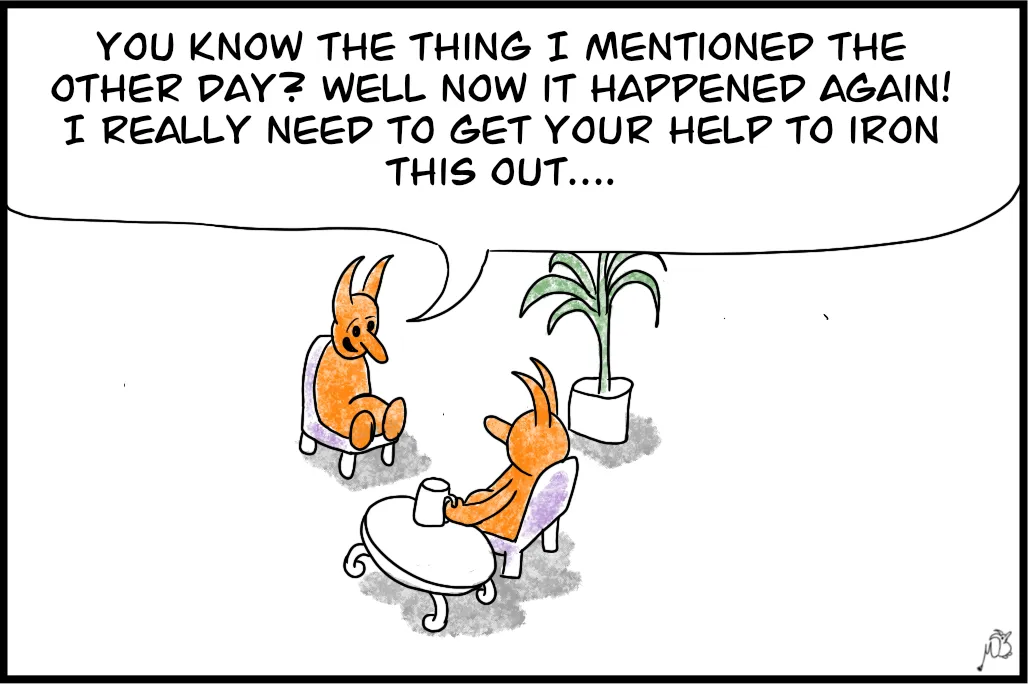
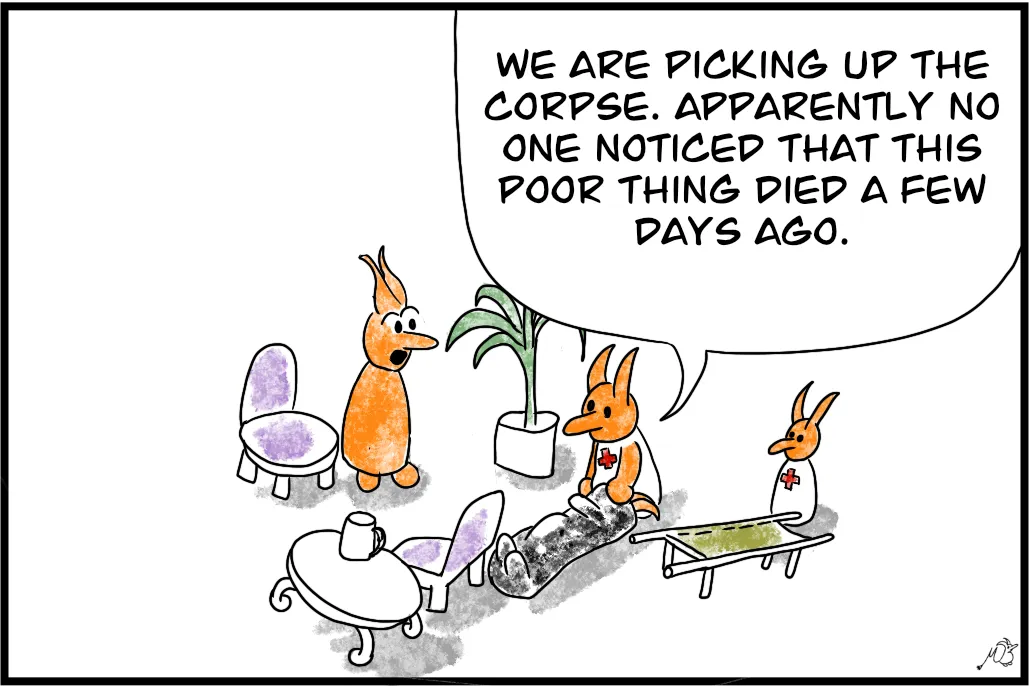
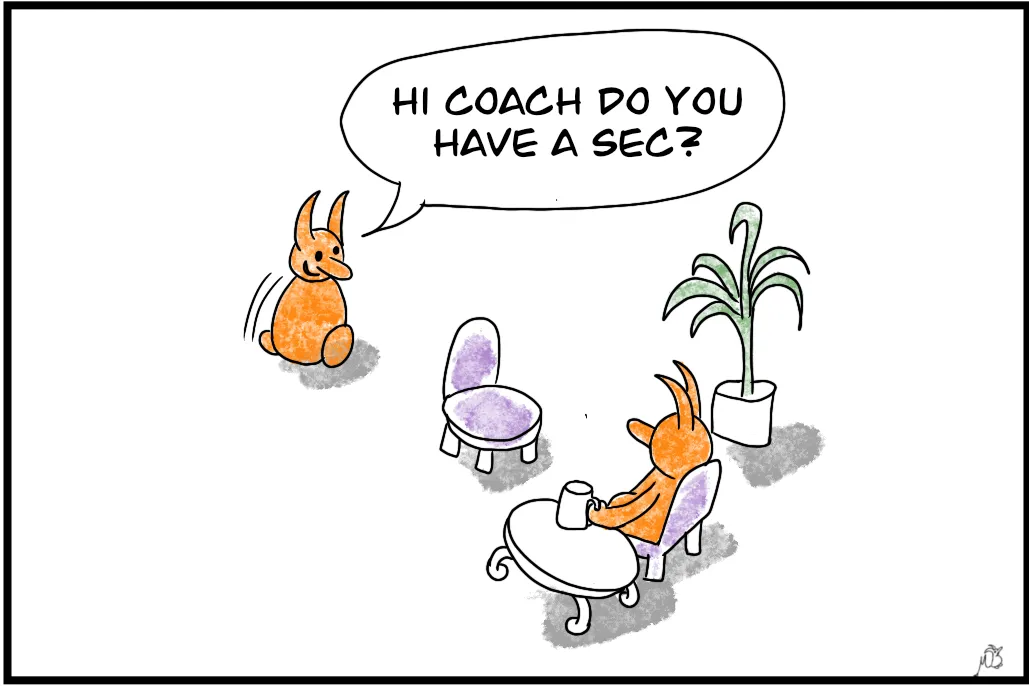
Comic, panel 1. A team member hurries up to a coach drinking coffee: “Hi coach do you have a sec?”

Panel 2. The team member sits down: “You know the thing I mentioned the other day? Well now it happened again! I really need to get your help to iron this out....”

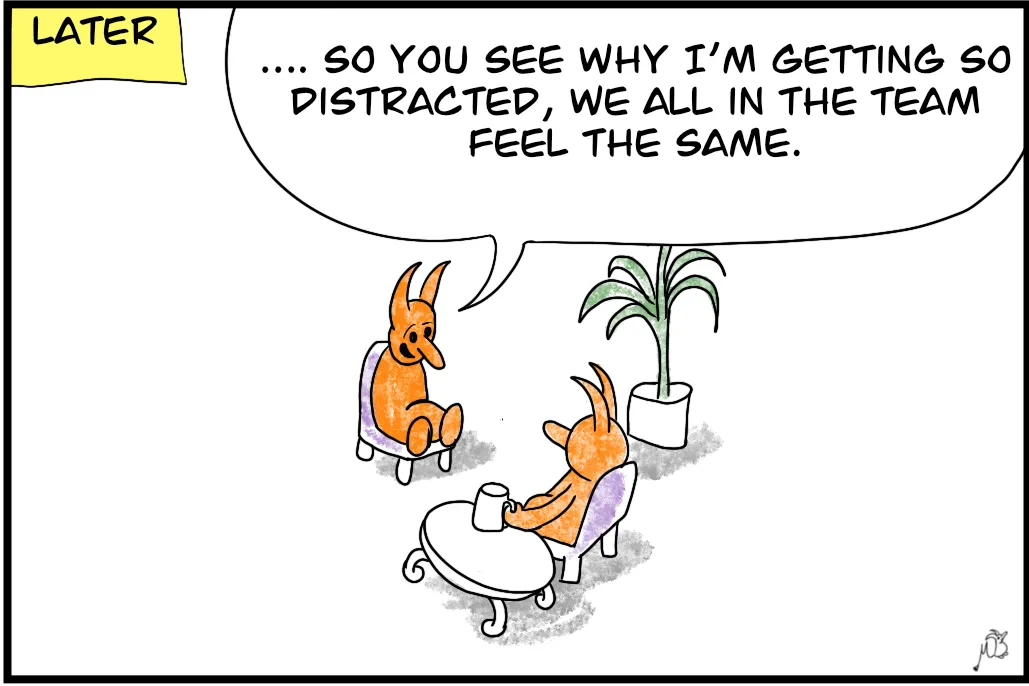
Panel 3. Caption: “Later”. The team member: “.... so you see why I’m getting so distracted, we all in the team feel the same.”

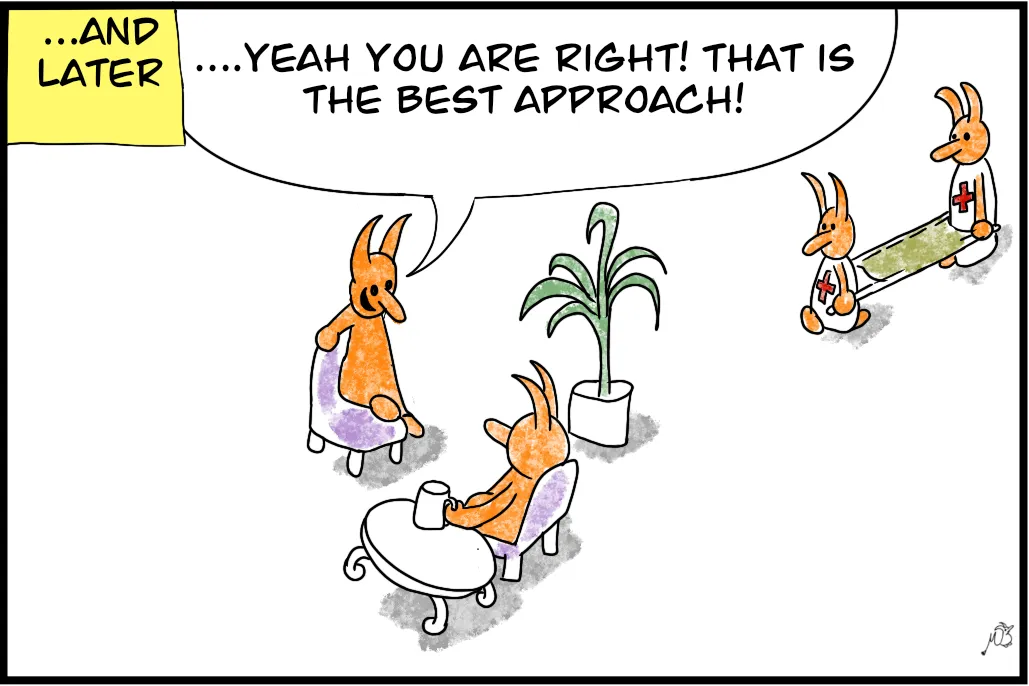
Panel 4. Caption: “...and later”. The team member: “....Yeah you are right! That is the best approach!” Two paramedics with a stretcher arrive.

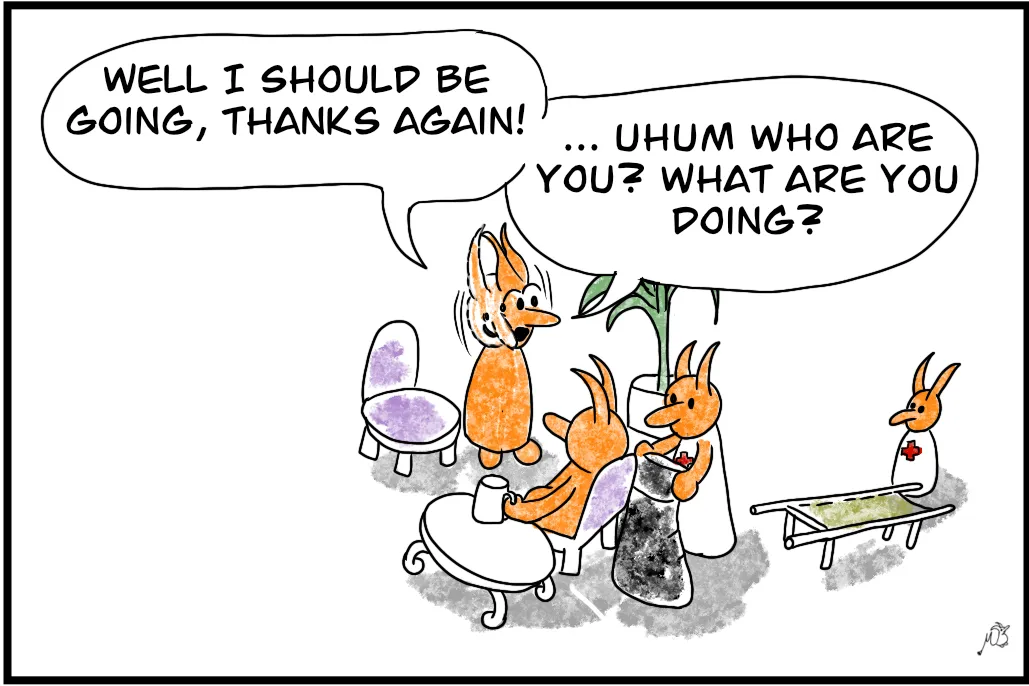
Panel 5. The team member gets up: “Well I should be going, thanks again!” then asks the paramedics: “... uhum who are you? What are you doing?” They are lifting the coach out of the chair.

Panel 6. A paramedic: “We are picking up the corpse. Apparently no one noticed that this poor thing died a few days ago.”

Happy Agile holiday 🥰

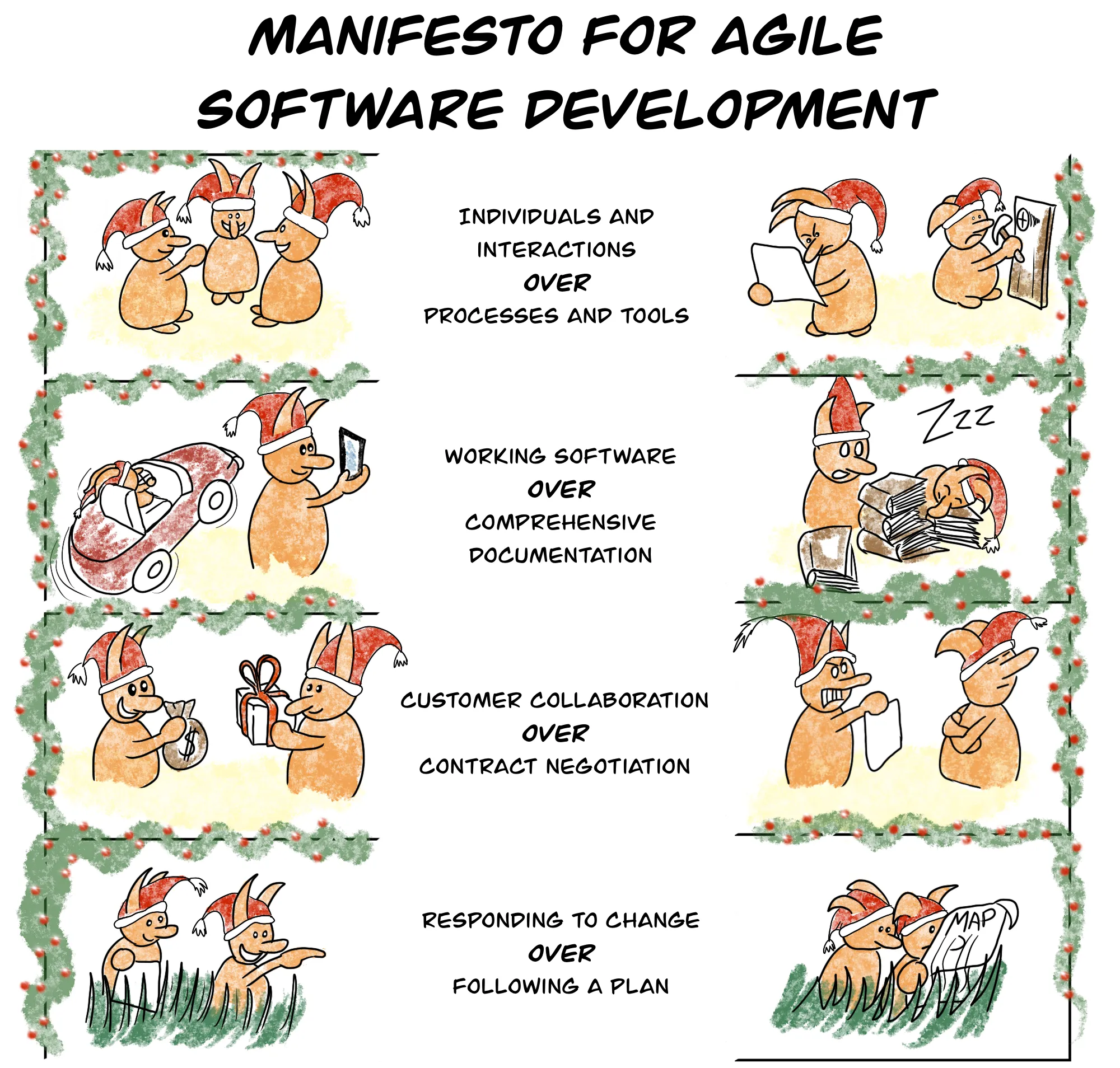
The Vige crowd would like to wish you all a happy holiday, please make sure to focus on individuals and interactions over processes and tools with friends and family 🥰

Poster titled “Manifesto for Agile Software Development” in a Christmas version, with garlands and Vige figures in Santa hats. The four values: Individuals and interactions over processes and tools; Working software over comprehensive documentation; Customer collaboration over contract negotiation; Responding to change over following a plan. Each value has a drawing of the left side and the right side.

How to illustrate a Value Stream - a proposal and a request for input

One of the key concepts in both Lean and Agile is Value Streams, this is the wikipedia definition “A *value stream *is the set of actions that take place to add value to a customer from the initial request through realization of value by the customer.” This is usually illustrated by a set of boxes with arrow pointing in one direction.

Like this:

The usual picture of a value stream: the word “Input”, a row of arrow boxes, and the word “Value”.

If you ask me this picture is no fun at all, and we all know that reality is much more complex than this. There are millions of ways to make that more fun and possibly more educative.

I started to think about this and did some play with words to see what I could come up with.

  • Value Stream = Water streaming, feels logical somehow.
  • Value Creators = Teams, if Im to have any possibility to draw some fun thing I must have people acting in it. And in my case it has to be the Vige Squad. In other words orange trolls
  • Fulfilled customer need = Gift, or Christmas present

Ok so what might these words look like in drawing? Maybe something like this:

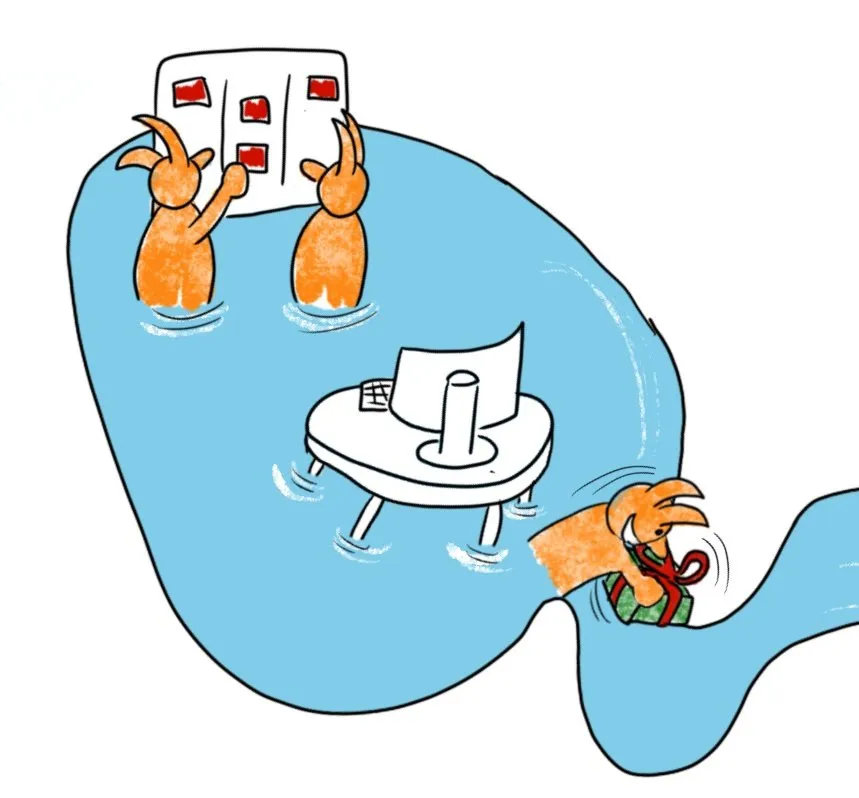
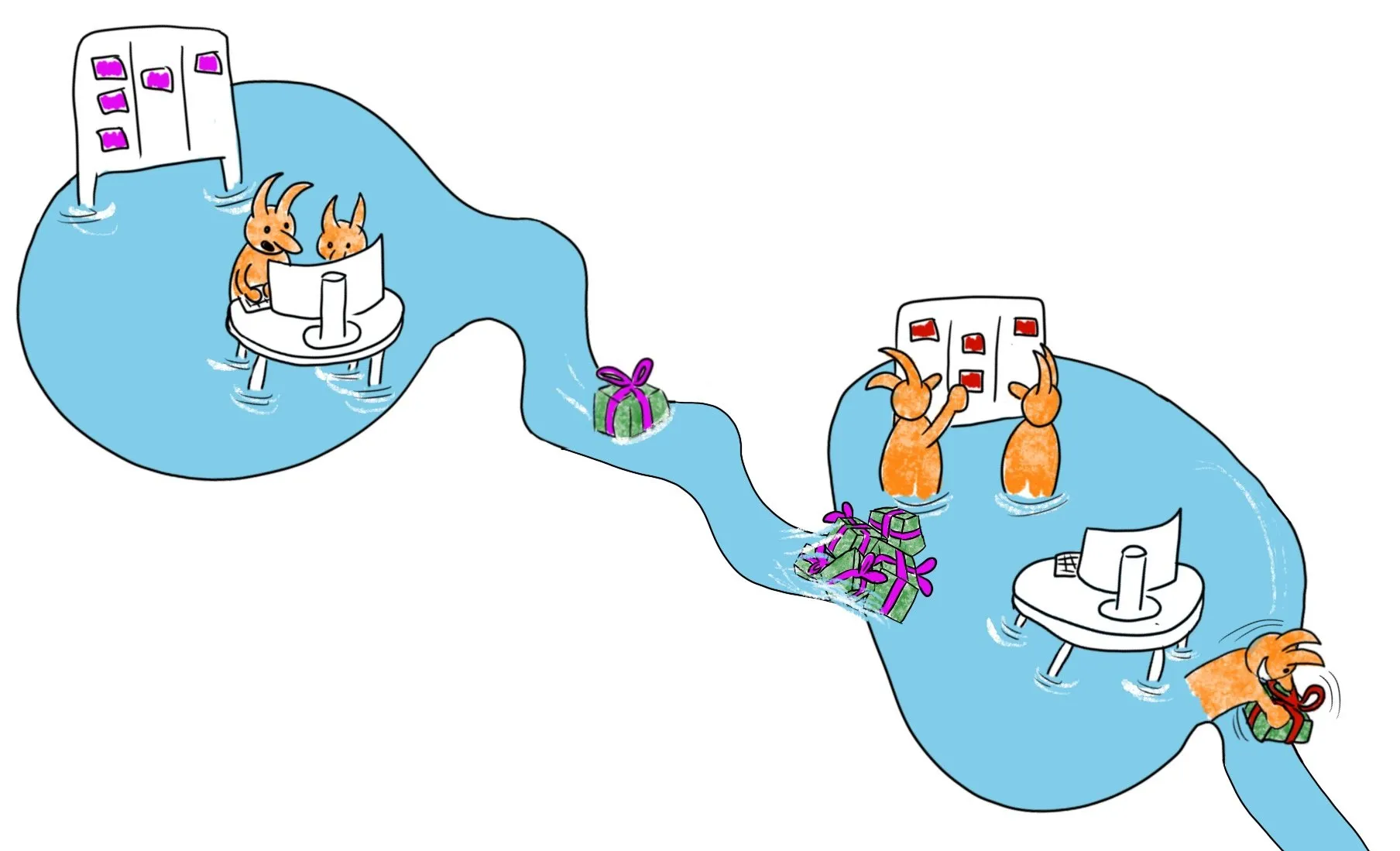
A team stands in a pool of water with a task board and a computer. One of them adds to a gift, which floats away down the stream.

Ok we have a team, contributing to value (adding to the gift) in a stream, that is nice. But a value stream is much more complex than that right. We have all the other arrows and steps, let’s assume that teams do different parts to add to the value realisation, then we need another team, let’s put it upstream to this team.

A second team, upstream, sends a gift down the stream to the first team.

Ok good it is starting to look liks some kind of value stream, but wait there is a package floating down the stream to the other team. Who will take care of that? I do have the feeling that it doesn’t look like this at all. More like this maybe?

Gifts pile up in a queue in front of the downstream team.

Great we have a queue, well not great for the value delivery but that is sort of reality and that is what happens when we have dependencies in our value delivery stream. But that is not all, take a look at this:

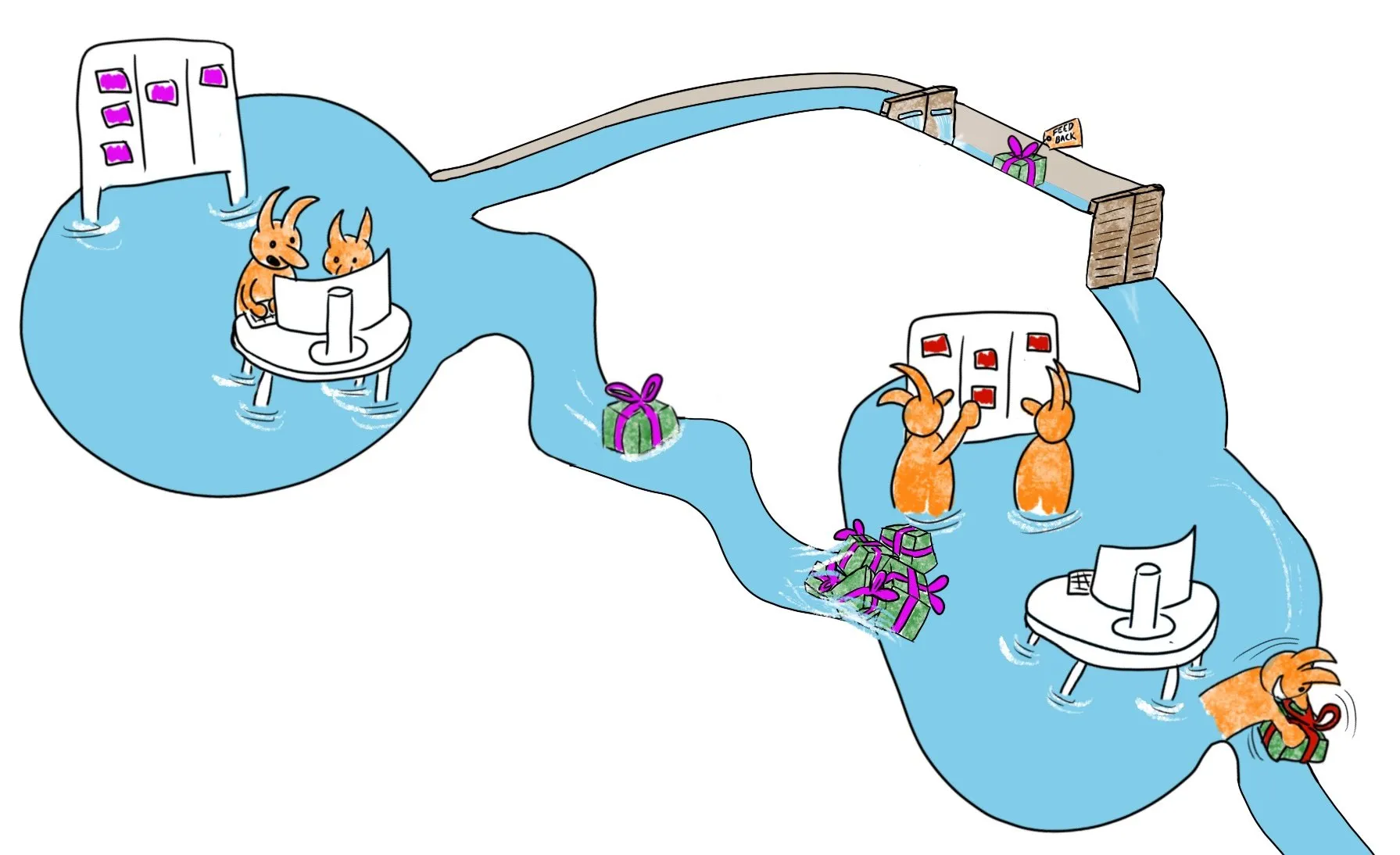
A canal lock leads from the downstream team back up to the upstream team, carrying a gift marked feedback.

This is what I would call a circular dependency, meaning that one team has a dependency to one team in order to be able to deliver value to the team, it could be a bug, a miss-understanding of the need etc. In this case I illustrated that as canal lock, the feedback or new addition to the value delivery needs to take another turn before it is done in this part of the delivery.

Ok now i think we have the basics, two teams, Team Pink and Team Red, a queue and a feedback illustration, let’s scale this thing up a bit, I’ll add two more teams downstream. Team Blue combines the first two teams delivery with the delivery of the forth team, Team Yellow. Team Blue also has a dependency back to Team Red. What team Yellow do nobody knows but they like to drink coffee.
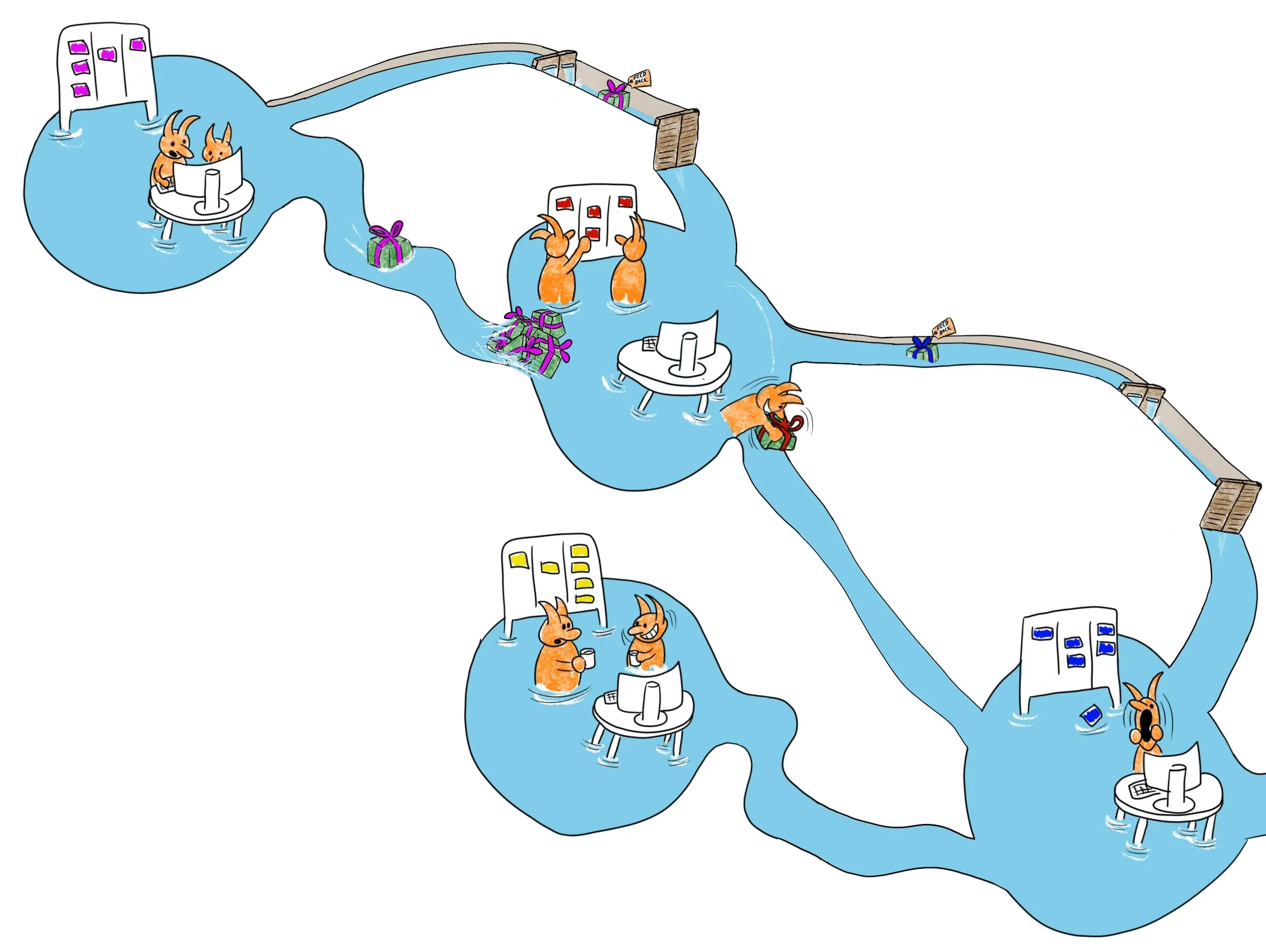
Four teams in pools connected by streams and canal locks. In the team furthest downstream, one member panics. In a separate pool, a team drinks coffee.

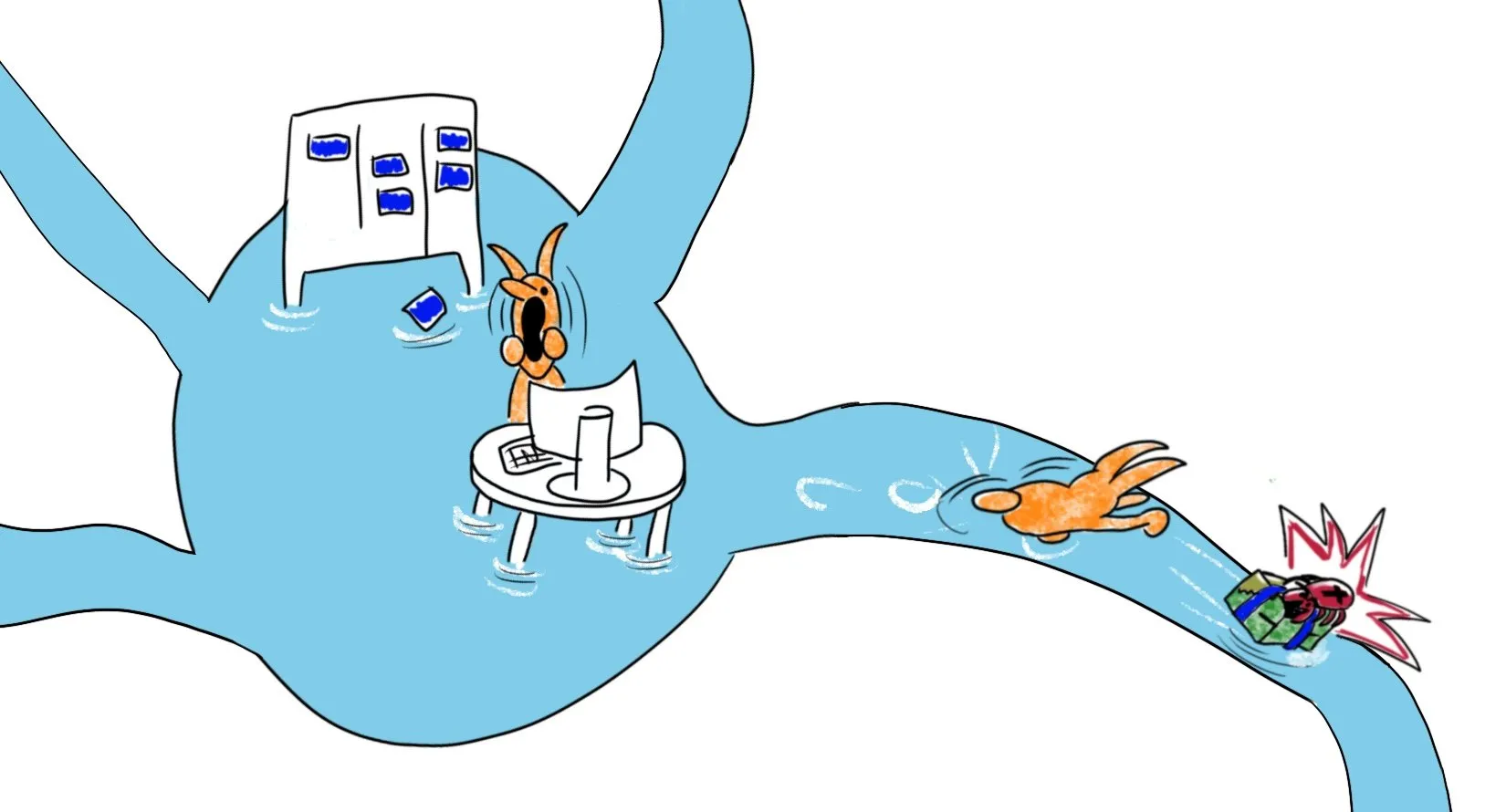
Nice isn’t it? But why is the troll in Team Blue panicking? I’ll tell you, there has been a deploy to production, le’t’s have a look.

The team member at the computer panics, while a teammate swims after a gift further down the stream that has burst open with a red bug in it.

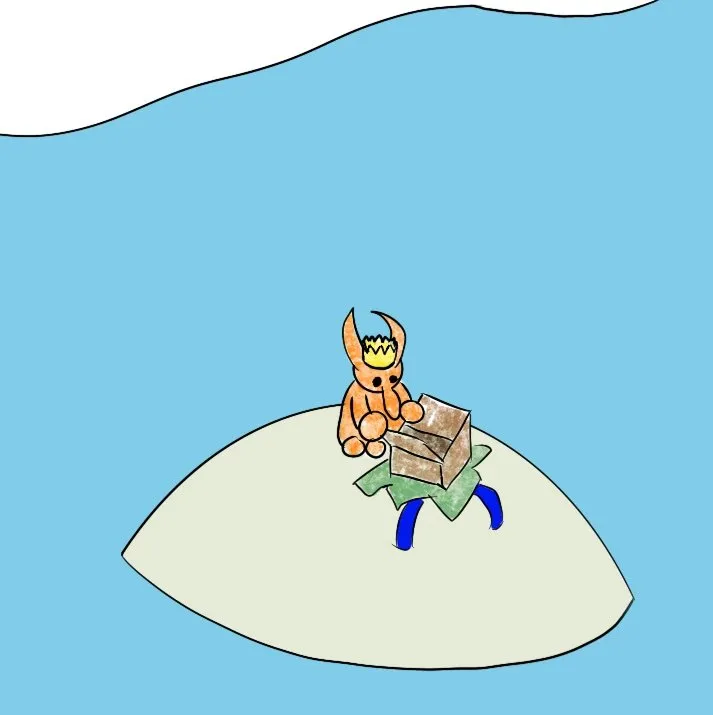
Good that they found it before it reached the customer huh. Yeah where is the customer in alls this, you know the one that wants and will get the value for his/here desire. Well maybe after the stream follows the ocean. So why not put the customer there. Something like this maybe?

A customer with a crown sits on an island in the sea and opens a gift.

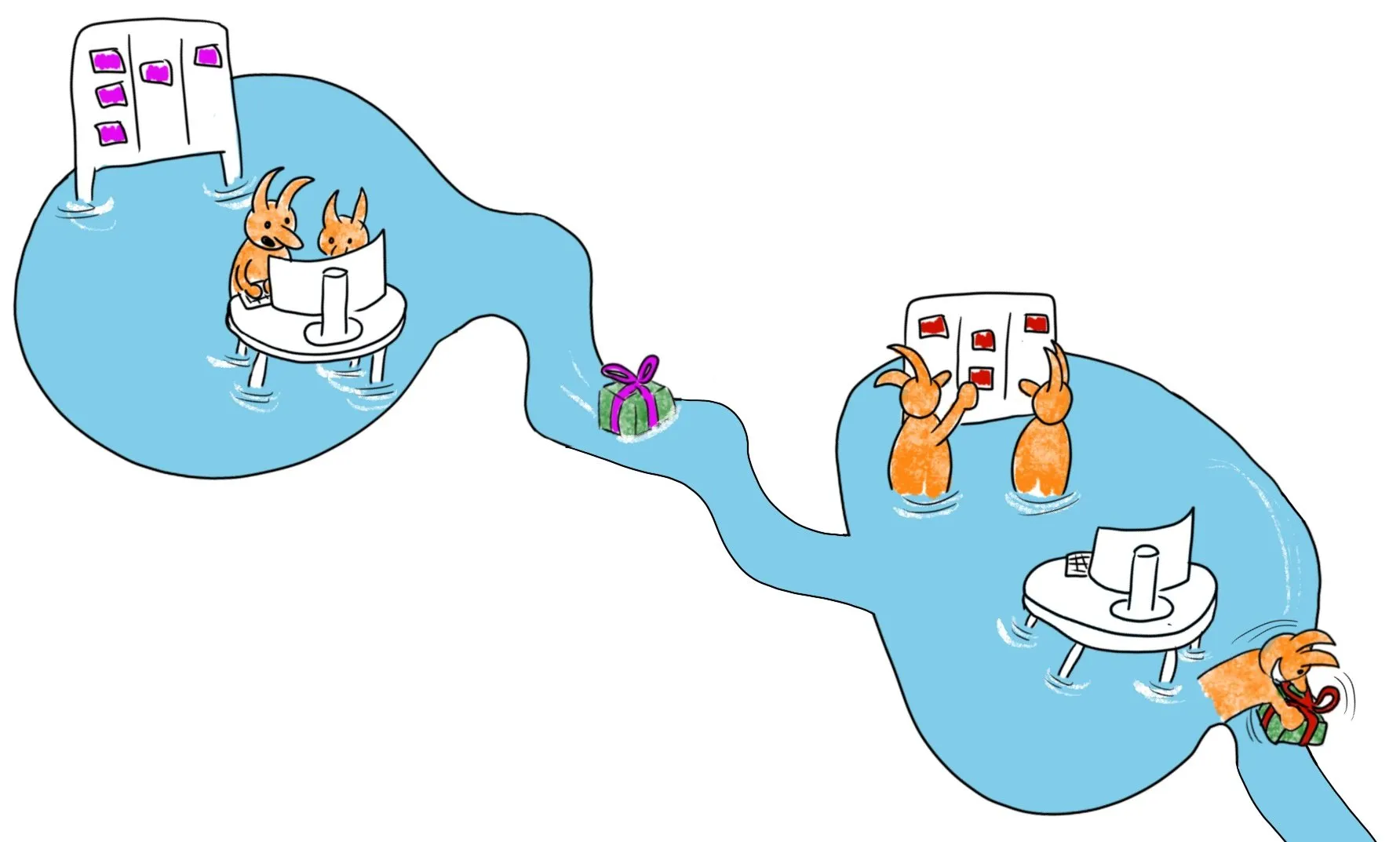
So that is it, we have a more fun way of looking at our Value Stream and as a bonus we also have an illustration of some concepts that is important to remember when you work with Value Stram Mapping. Here is the whole illustration in one picture. I hope you liked it. If you have any other ideas of how I could illustrate different parts of the value stream Im all ears. Get into contact with me on LinkedIn or on my webpage
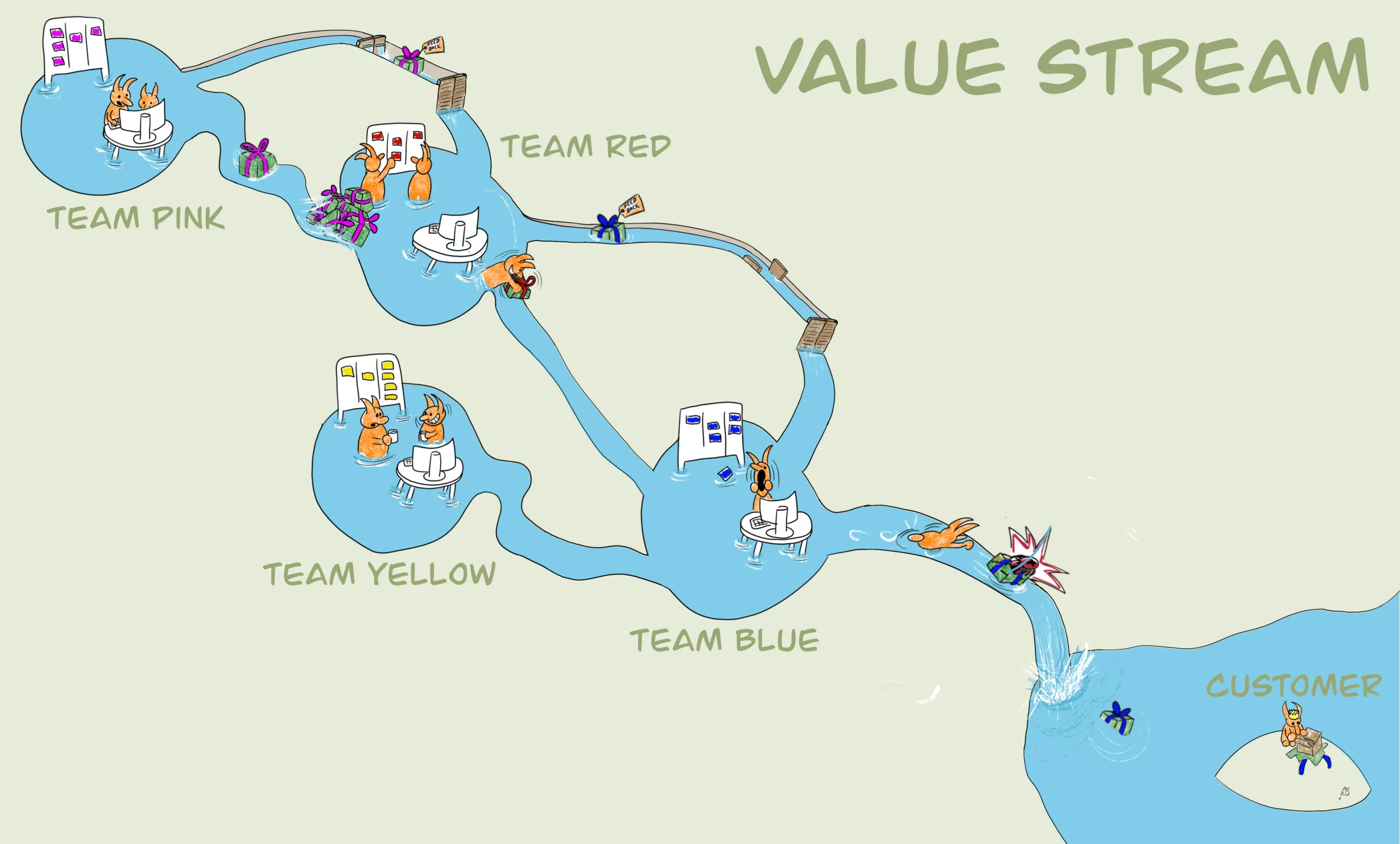
The whole value stream: Team Pink and Team Red upstream, Team Yellow drinking coffee, Team Blue downstream, queues and feedback locks between them, and the stream flowing out into the sea to the customer on an island.

New versions of Cynefin in 3D

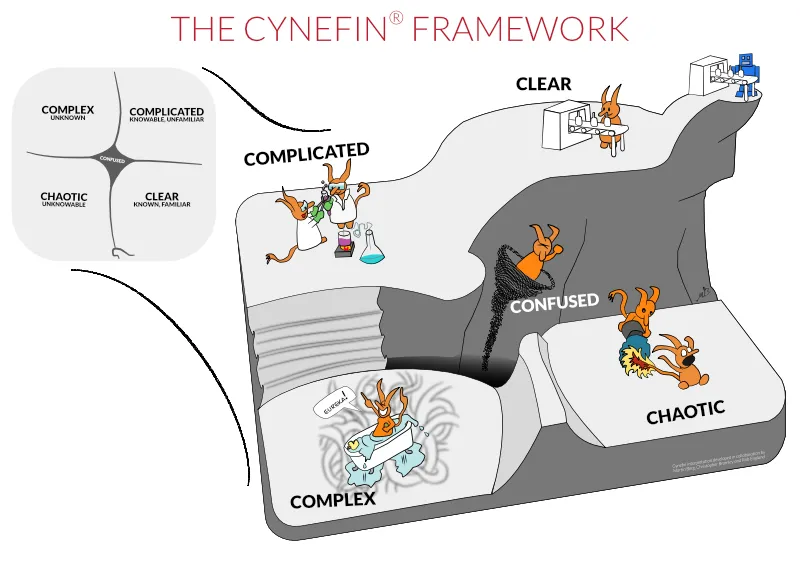
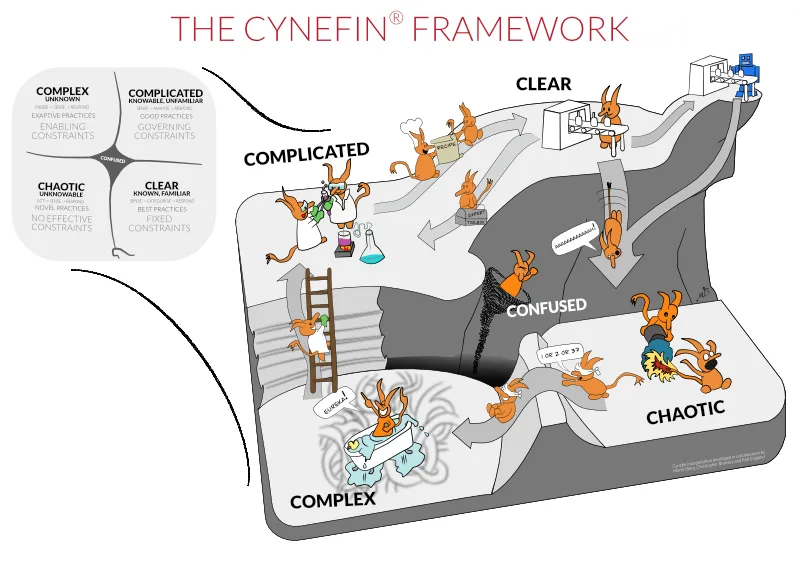
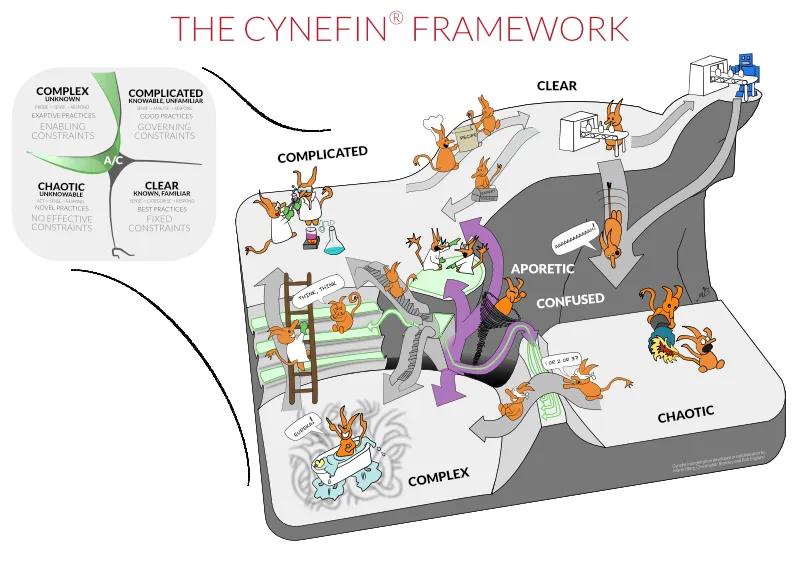
I have heard that a few of you use my illustrations of the Cynefin Framework in 3D that is great! I also heard that there is a need to get a more slimmed down version so now I created three versions of it, Basic, Basic with transactions and Full version. I hope you will like it. You can find them in high resolution here:

The Cynefin framework drawn as a 3D landscape with Vige figures, basic version: Clear, Complicated, Complex, Chaotic and Confused, with a small Cynefin diagram on the left.

Basic

The same Cynefin landscape with transactions between the domains shown as arrows, and each domain’s practices and constraints in the small diagram.

Basic with transactions

The full Cynefin landscape, adding the aporetic area and the liminal zone (A/C) to the small diagram.

Full version