Skip to content
Menu
Vige
Quick foot

Bloggtoons

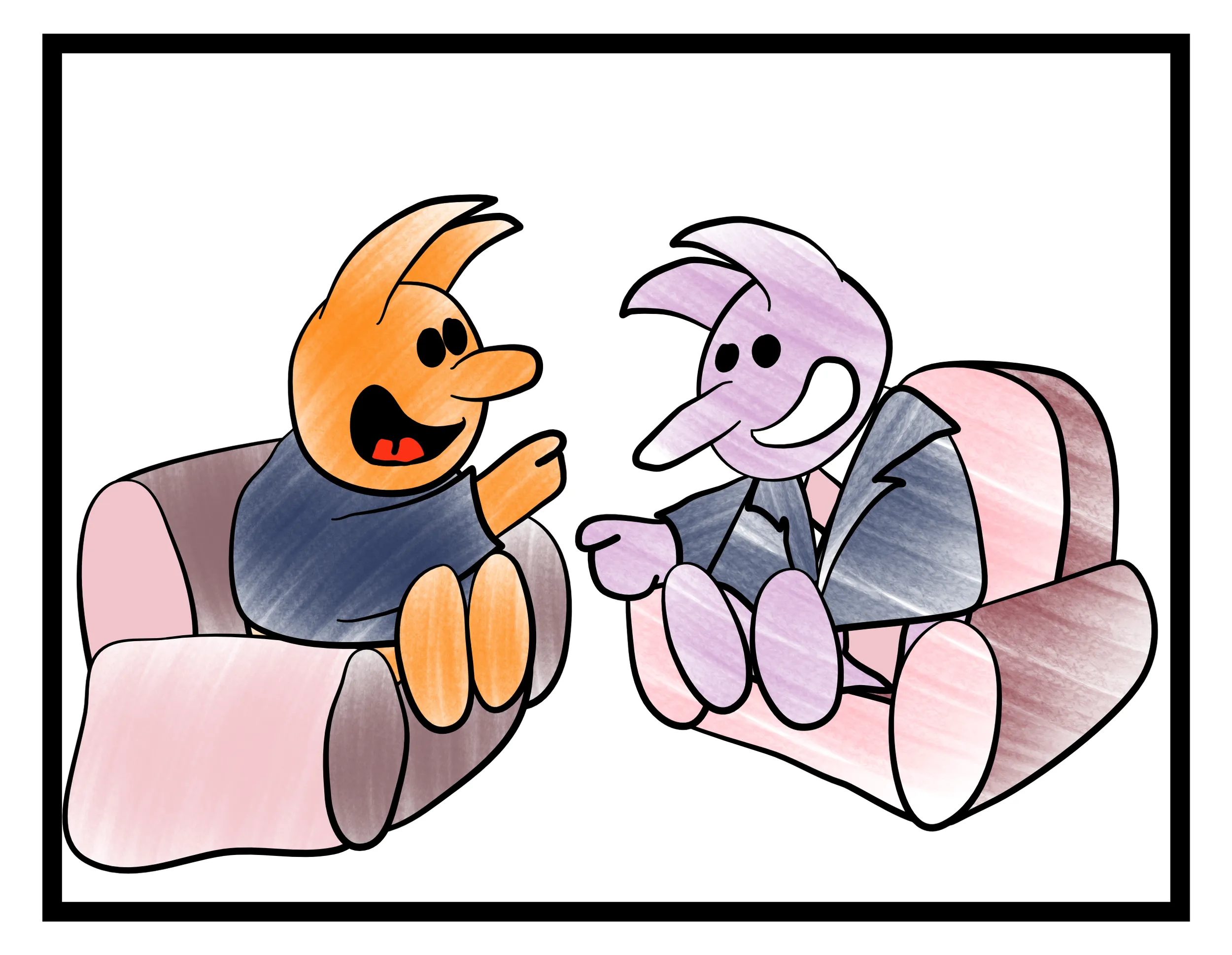
Vige in an armchair talking eagerly and pointing at a purple figure in a suit, who listens with a big smile from the armchair opposite.

Vige and Agile People Speaks at Agile Tour Vilnius 2023

Vige and Agile People returns as a featured speaker at Agile Tour Vilnius 2023. This year, the topic of our speech was “It Needs to Be a Mess,” co-hosted with David Symhovens, where we explored the intricate world of modern organizations.


Shades of Complexity

In our talk, we first dived into the world of organizations, which, as we emphasized, is far from black and white. Instead, it resembles a vivid tapestry of shades of gray where opposing polarities coexist. In a landscape with no one-size-fits-all solution, every decision ripples with consequences, some expected, others not. We stressed that authentic leadership involves embracing the tension between the known and the unknown.


Unconventional Storytelling

We presented our ideas unconventionally, employing the power of storytelling alongside our animated companion, Vige, whose captivating journey can be followed at www.vige.se. This approach and a real-world context held the audience’s attention from start to finish.


A Remarkable Response

The feedback we received from our fellow attendees was nothing short of heartwarming. One participant expressed appreciation, saying, “Thank you for sharing the presentation; this is top of the art for me. I loved the Vige journey, and thank you for the answers; it was a remarkable experience for me at the conference!” We felt this feedback reinforced the value of our storytelling, as did the insights we shared.


The Essence of Our Message

At the core of our talk lies a pivotal message: organizations are living communication ecosystems shaped by the decisions they make and influenced by the perceptions of those within. Whether it’s dissent, conflict, agreement, or indifference, these factors contribute to the complexity of organizational life. To thrive in this ever-evolving landscape, we stressed the importance of avoiding restrictions on actions and the creation of polarization, as these hinder effectiveness and resilience. Our key takeaway is that embracing the messiness is the path to success.


Practical Principles

In addition to our insights, we introduced a set of principles designed to guide individuals and organizations through the complexities we discussed. These principles are a practical roadmap for fostering better communication, understanding, and adaptability in a dynamic world.


In conclusion, “It Needs to Be a Mess” offered a fresh perspective on the intricate world of organizational dynamics. David and I demonstrated that in an uncertain environment, organizations can learn to navigate the chaos and discover its beauty.


Our different presentation style and the richness of our content left a strong mark at Agile Tour Vilnius 2023, reminding us that, in an increasingly complex world, embracing the mess can be the pathway to success.

Vige in a grey suit and pink tie, carrying a briefcase and waving hello.

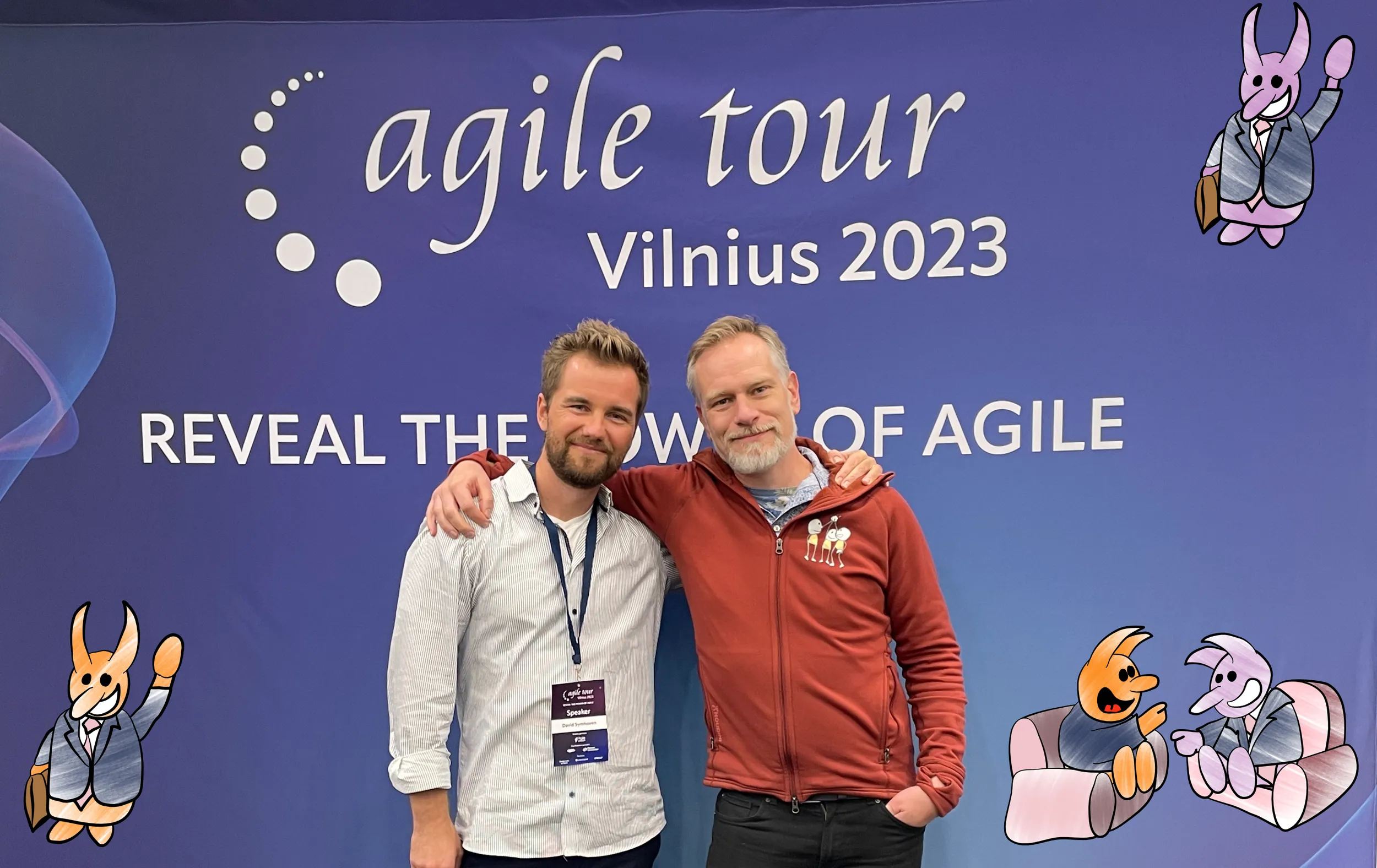
Martin Berg and David Symhowen stand arm in arm in front of the Agile Tour Vilnius 2023 backdrop, “Reveal the power of agile”. Drawn Vige figures wave from the corners of the photo.

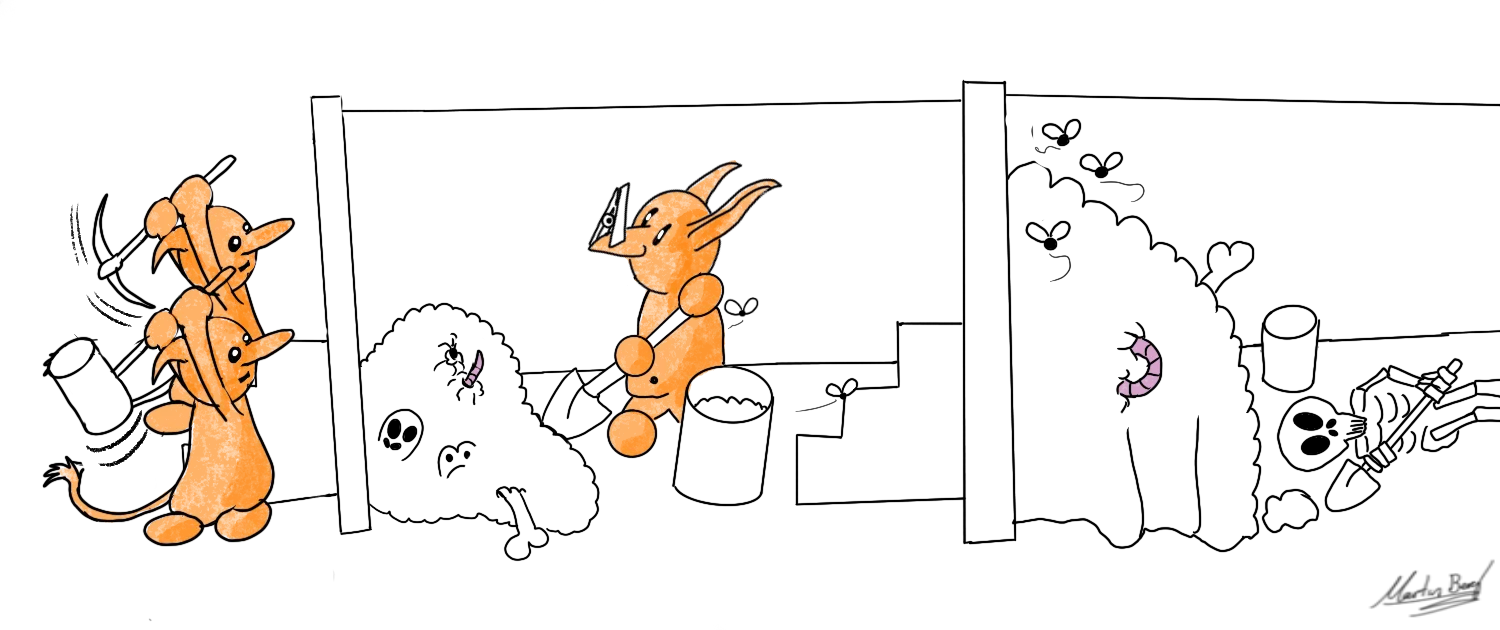
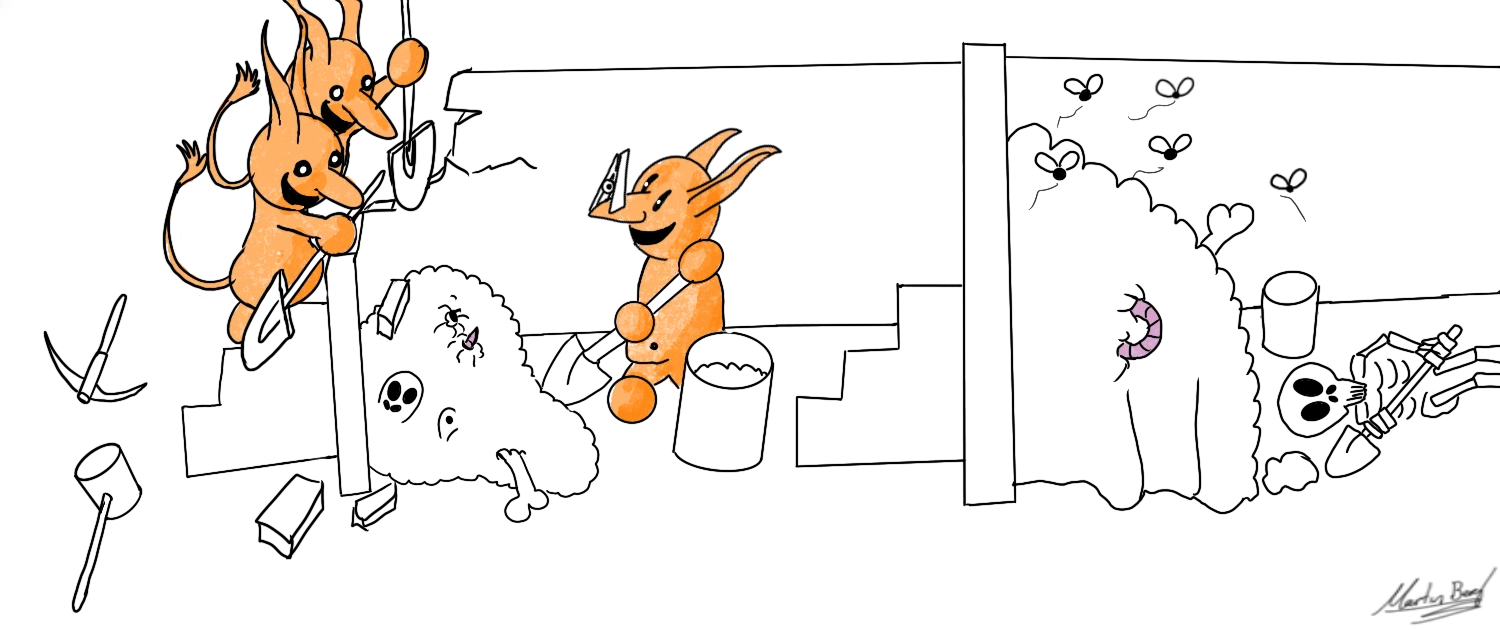
Breaking down silos

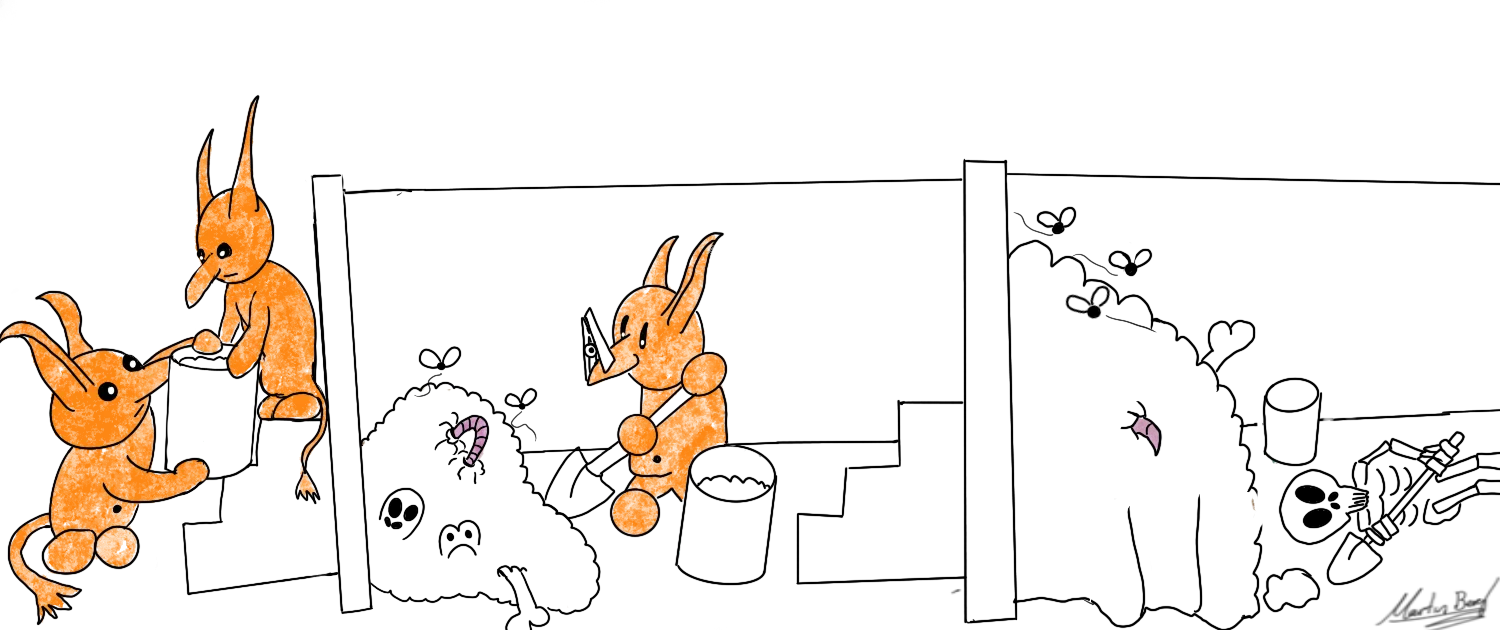
Realizing you have silos is the first step to doing something about it. The next step is hard work, so bring a friend 🙂🤜🤛🙂

Comic without words, panel 1. Two figures carry a bucket up the steps to a wall. On the other side, a figure with a clothes peg on its nose shovels a smelly heap of rubbish into a bucket. Beyond the next wall lies an even bigger heap and a skeleton holding a shovel.

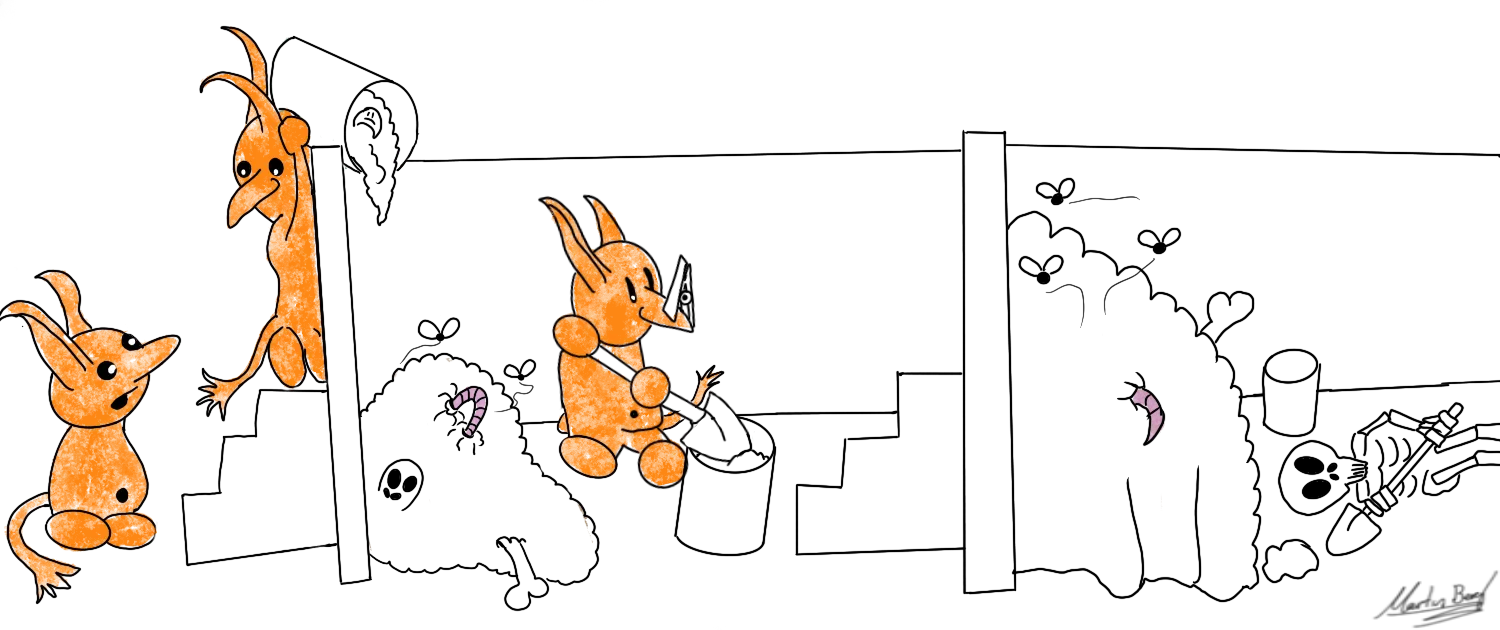
Panel 2. One figure climbs the wall and tips the bucket over onto the other side, while the figure with the peg keeps shovelling.

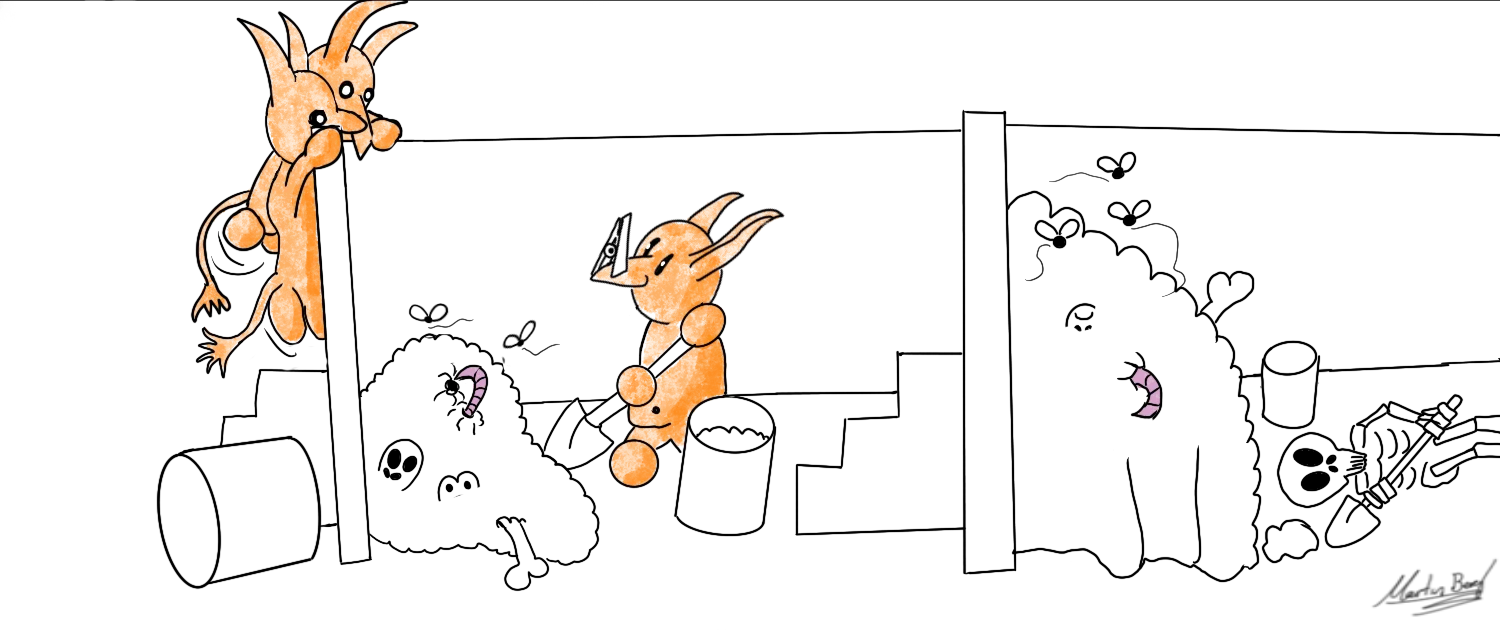
Panel 3. The empty bucket has fallen. Two figures hang over the top of the wall and stare at the heap.

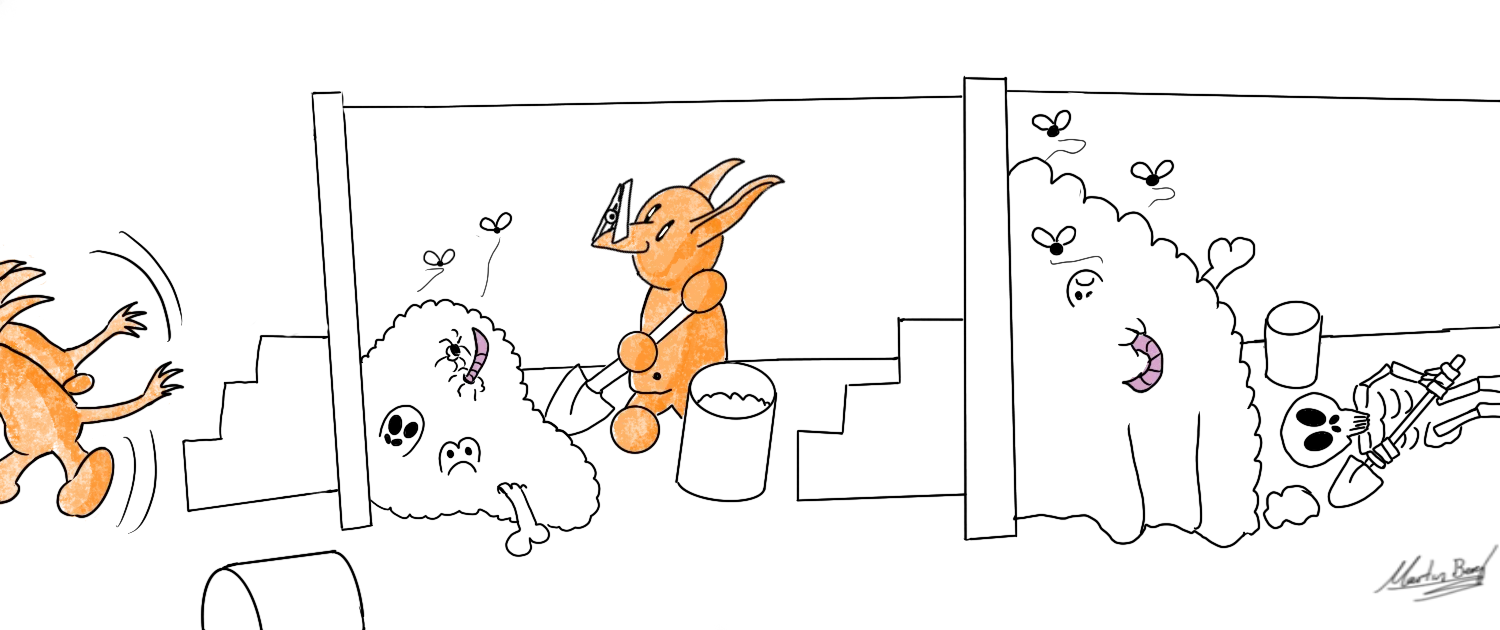
Panel 4. A figure runs off to the left. The figure with the peg keeps shovelling.

Panel 5. Two figures come back with a pickaxe and a sledgehammer.

Panel 6. They have broken a hole in the wall and climb through with shovels. All three smile and shovel together.

Monolithic Value stream

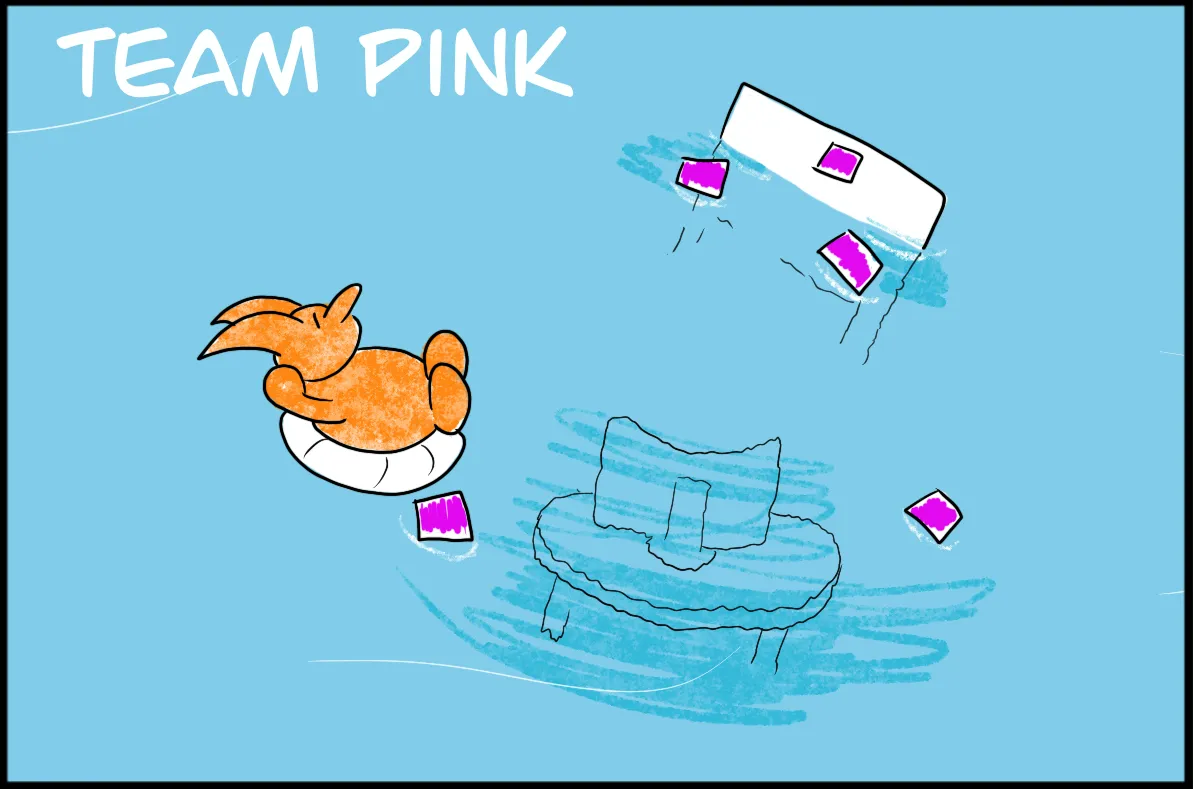
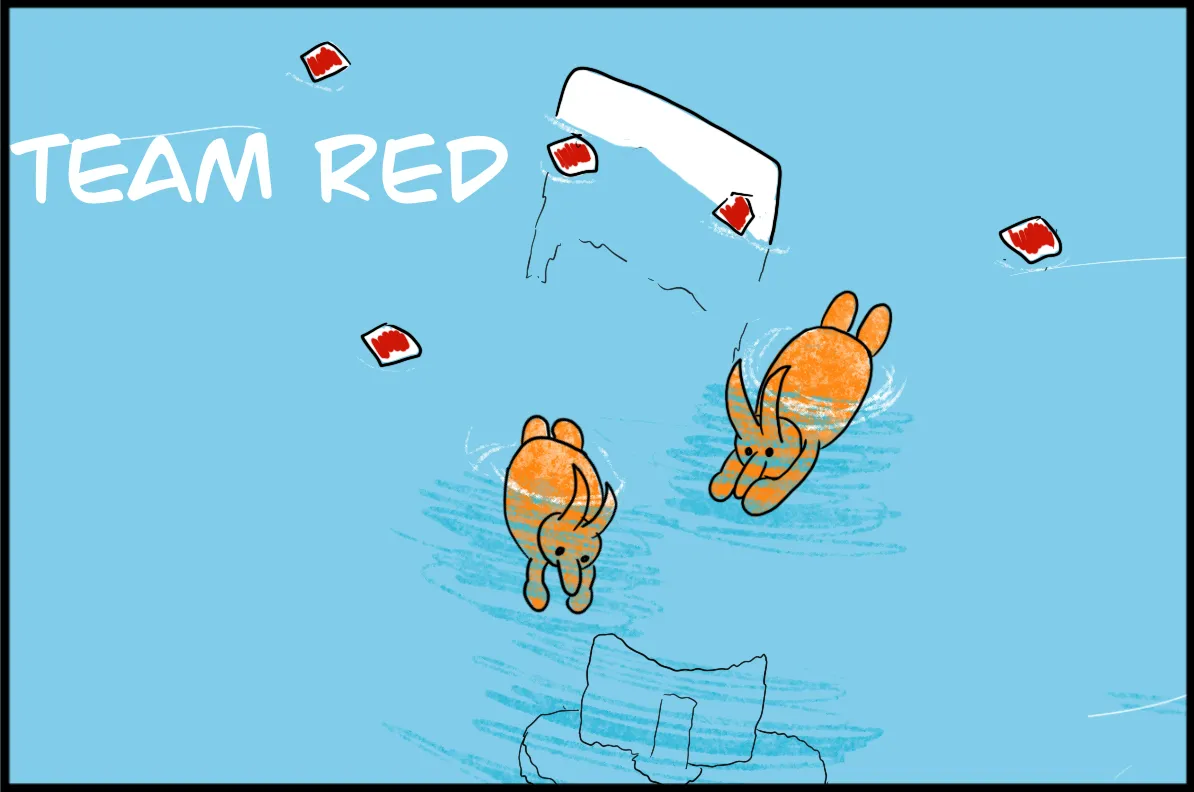
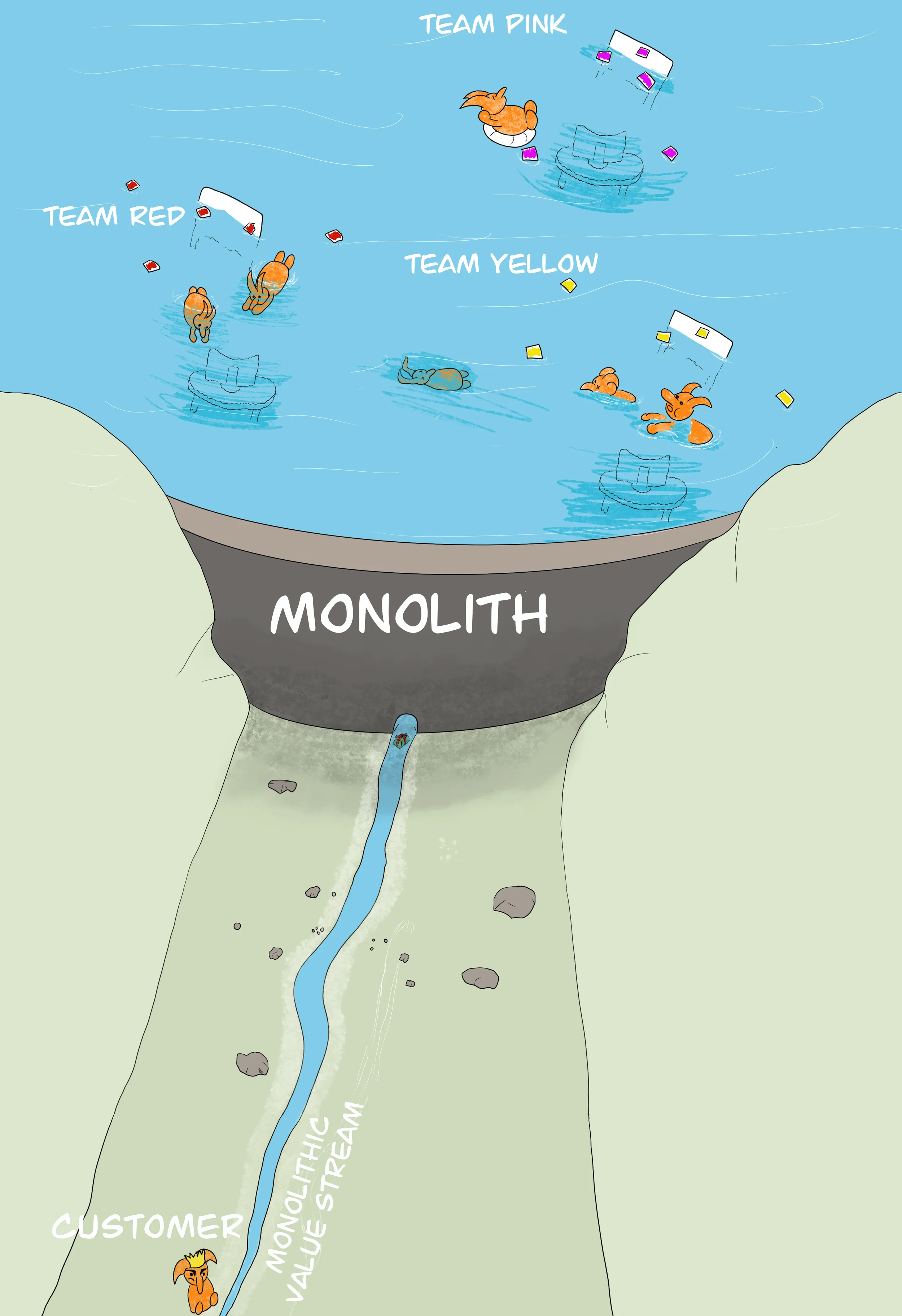
A while ago, I first attempted illustrating a value stream in a Vige Crowd context; since then, many things have been going on, but this has always been on my mind. Expect more things to come in this area soon. But in the meantime, I have a new illustration for you. This time, I’m after the feeling a team has when caught up in a monolithic code that has grown so big that it requires several teams, but at the same time, people are stepping on each other’s toes to get anything out.

So lets see what we have, first the teams…

Team Pink floats around in a large lake on a rubber ring. Their desk and board are under water and the notes drift away.

Team Red swims in the same lake. Their desk is under water and the red notes float around.

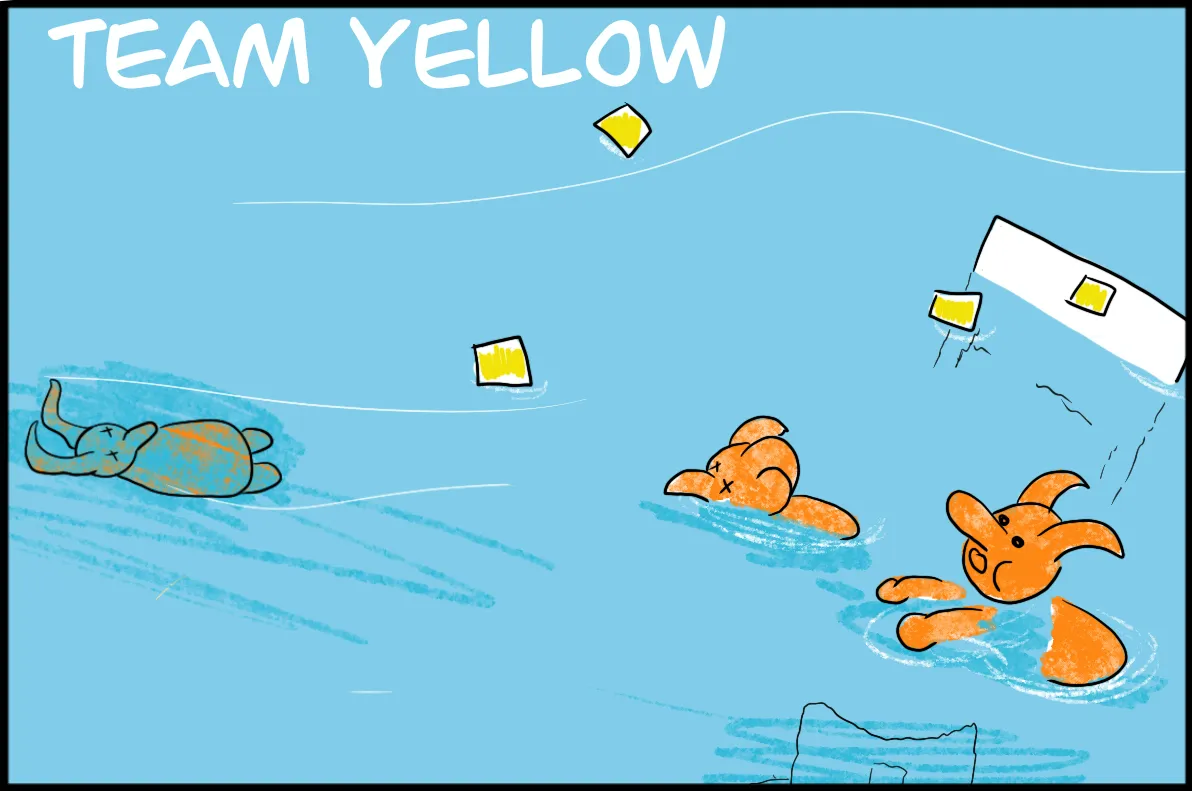
Team Yellow in the lake: one figure floats lifeless, one is half under water, one struggles to stay up.

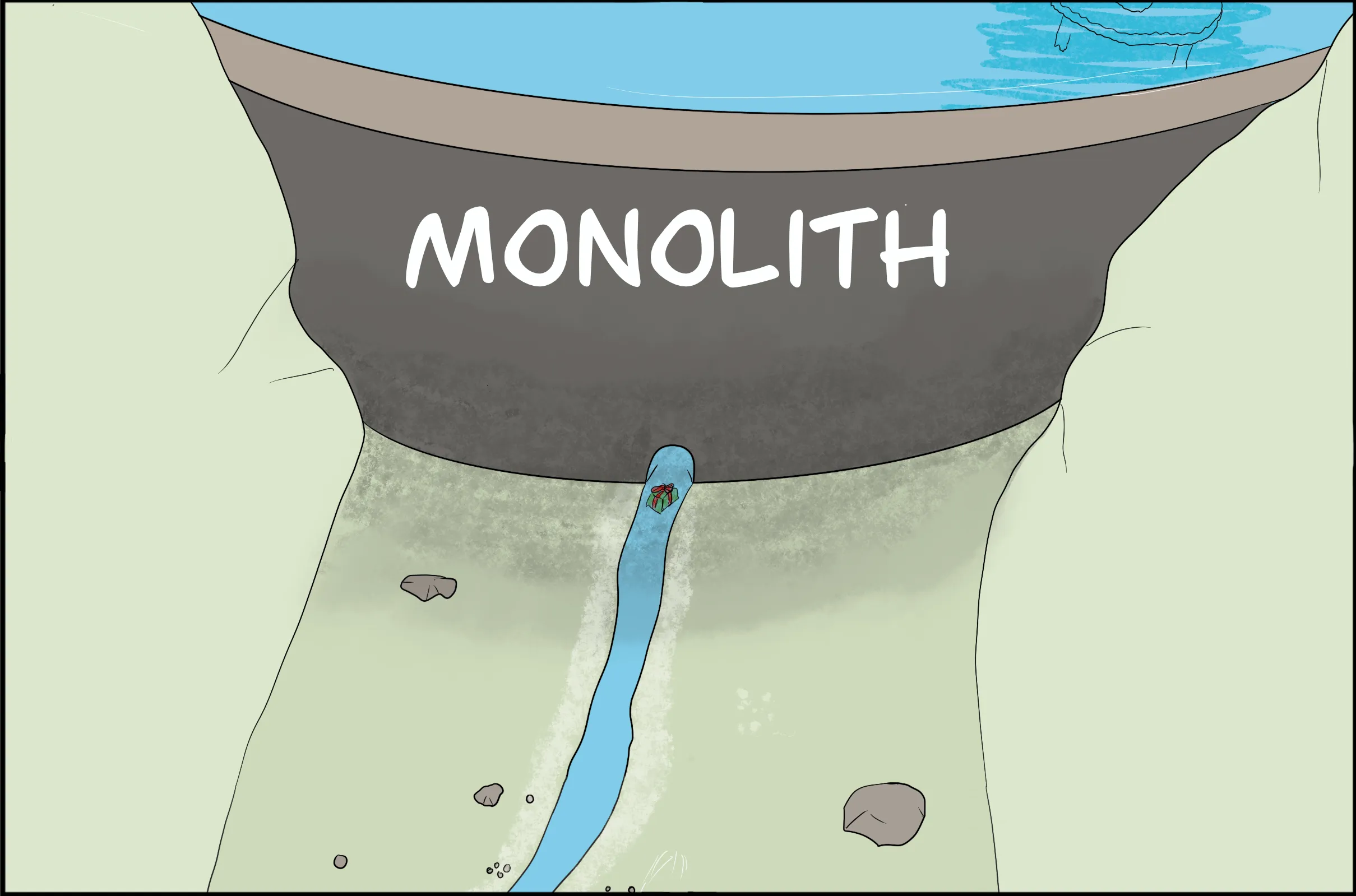
…and now the monolith…

A huge dam with the word “Monolith” holds back the lake. Only a thin stream with one gift trickles out below it.

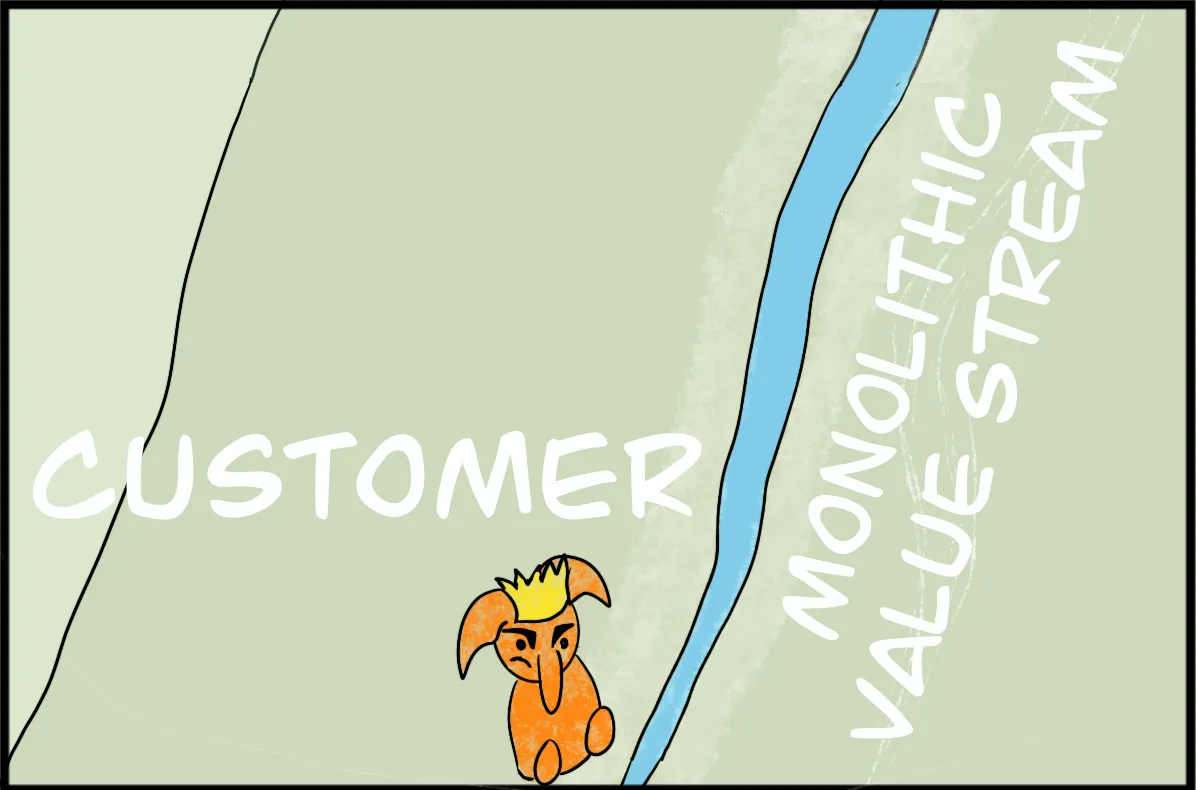
… and finally the customer.

A grumpy customer with a crown sits next to the thin stream, labelled “Monolithic value stream”.

Here is the full picture.

The whole picture: the teams in the lake above the dam called Monolith, and the thin monolithic value stream running down to the customer.

Multicultural teams and psychological safety

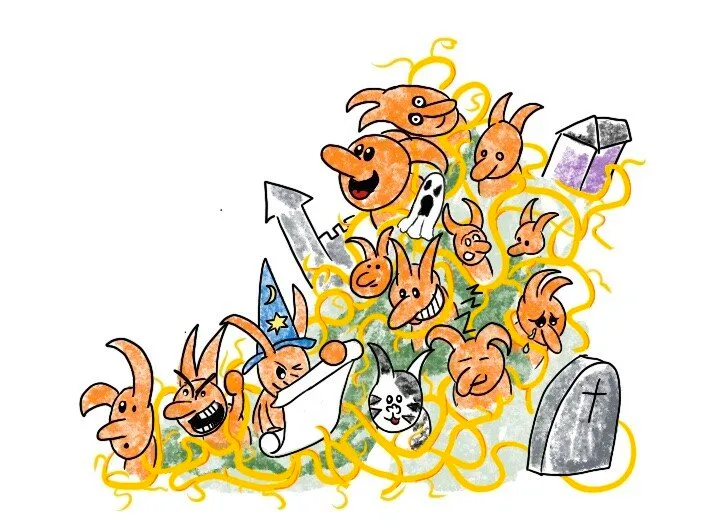
A tangled pile of many Vige figures with different expressions, among them a wizard with a scroll, a ghost, a cat, a gravestone, a box and an arrow pointing upward, all wrapped in yellow threads.

I meet many teams in my work, often multicultural in their setup. This is a great asset that can help teams to add multiple perspectives and be stronger as a team. But it is also a hindrance for team development. The more different we are the harder it is to reach #psychological safety, align towards a shared team purpose, agree on rules, way of working, take decisions etc. All needed in a high performing team. So in other words multicultural teams have greater potential but also some extra steps that are important to be aware of. How we interact and what assumptions we have on each other is habitually formed by the culture we come from, most of us are unaware of this. We feel that what I do is the normal/obvious way, and when we meet people from other cultures we tend to think that their behaviour is strange and wrong. This is of course also connected to our set of self-serving biases that serve to explain away our own actions in a way that props up our self-esteem. This hindrance for a team can be hard to break through and could block teams from developing into high performance. Awareness is the first step.

In my work as Team Coach I follow teams from the outside, coaching them and the Team Leads / Scrum Master, or whoever has the main responsibilities to enable team development. I often make use of a tool called GDQ, developed by Susan Wheelan, with 60+ self assessment questions that helps to identify in what stage of team development the team is in. In one company that I work with, all teams are free to sign up for a GDQ and then also to repeat the GDQ once every six months to better support and help them in their journey. One of these teams did recently run their second GDQ, the result showing some early signs of entering Stage 2 (Fight and countertendency) but also strong indication that they still were in Stage 1 (Dependency and Inclusion). In 8 months a team should have been able to move further in the team development, we needed to investigate this further to give better support. In the report we saw indications of silence, lack of involvement and decision making were important areas to focus on. After discussing the result with the team and then also in a 1 on 1 session with the Scrum Master we decided to dive into the cultural aspects of these areas. We devised a WS consisting of three parts, cultural differences, personal preferences and analysis.

Cultural differences

I invited all team members to consider the following question: “In the culture that I come from, how do we look at engagement and decision-making. How do we enable it and how does it look like”, using an adapted 1-2-4-All pattern we created a list of all cultures (7 nations in a 11 person big team). Each nationality shared their different perspectives, we then reviewed the similarities and differences. We also discussed what we liked with the different cultures and what we did not like. Some members in the team emphasised that even though some things were part of their culture he/she did not like, follow or felt detached from it in some way. I had anticipated that and that is why we also stringed in another part, their personal preferences.

Personal preferences

To continue our investigation and collective learning we continued into the personal preferences. In this session I made use of the exercise “my washing instructions” in which each team member writes down answers to the following statements “what brings you energy”, “how to best communicate with me”, “what makes me frustrated”, “what people misunderstand about me.”. This is then shared with an other person in the team, she/he listens actively, notes things down and prepares to share his/her understanding of this person with the others in the team. We ended the session with some reflections on what we have heard, what is common, what stood out as important and what we need to take into consideration.

Analysis and actions

So now we have helped to bring forward a lot of information to the team, both helping each other to see what cultures we have in our habitual behaviours but also how we are unique. I like to use the liberating structure What, So What, Now What to make sure that we first list the facts that stand out, analyse the facts to see if there are any hypotheses that we can form and then based on that device actions. This to avoid jumping directly into faulty assumptions and actions, if you have not tried it i encourage you to do so you will be surprised on what will happen when we combine our brains in these steps.

I’m sure that this session helped the team to take the next step in team development, to make their own team culture, to be more aware of the cultural habits and most of all the personal needs and traits so that they can make use of it when they continue their journey. I hope that this short post encourages you to try something similar. Below I have added my script for the session.

If you have questions please let me know and I will support you the best I can.