Skip to content
Menu
Vige
Quick foot

Bloggtoons

New habits

In the strip “we have always done it this way” I wrote about how hard it can sometimes be to see that you need to change, perhaps defending yourself with old routines and customs. But it can be just as hard for someone who already realises that a change is needed. It takes strength and will to change yourself and your ingrained patterns; it is the old ghosts of habit that come and control you, and you let them. Which habit are you working on right now? I am trying to get better at giving positive feedback; I want it to come automatically, as part of my conversation with a person.
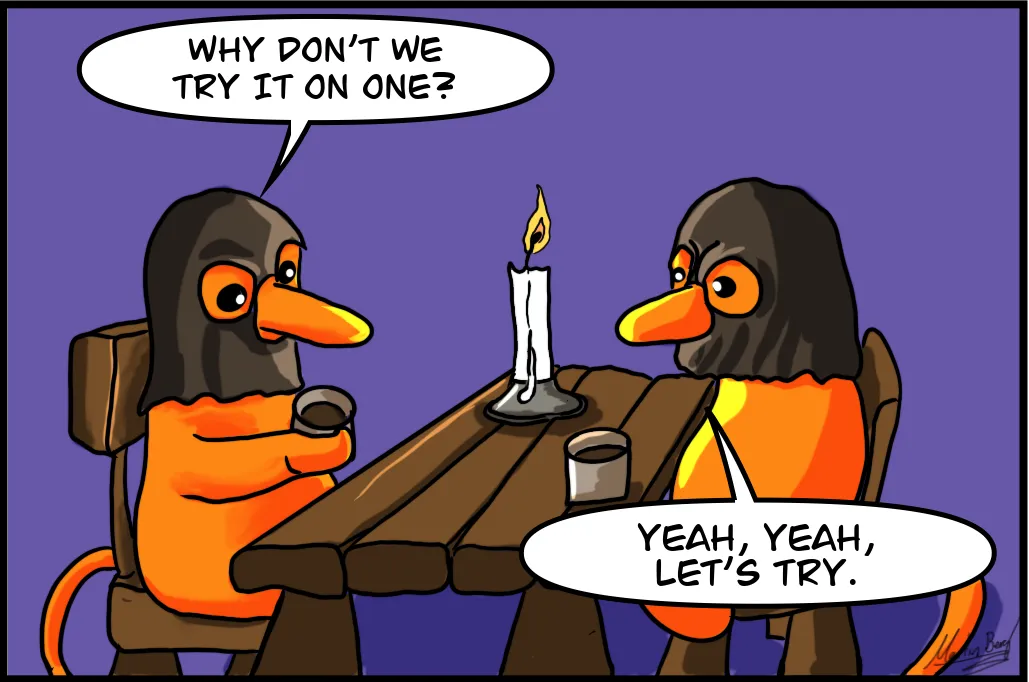
Comic, panel 1. Two executioners in black hoods at a table with a candle. One: “Why don’t we try it on one?” The other: “Yeah, yeah, let’s try.”

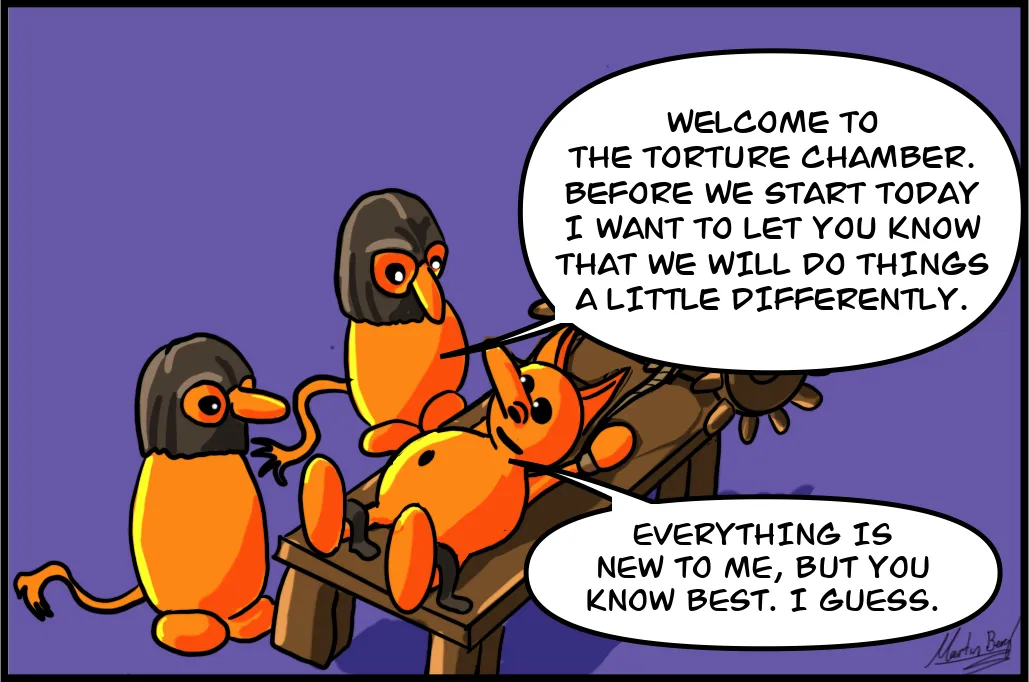
Panel 2. A prisoner lies strapped to a rack. An executioner: “Welcome to the torture chamber. Before we start today I want to let you know that we will do things a little differently.” The prisoner: “Everything is new to me, but you know best. I guess.”

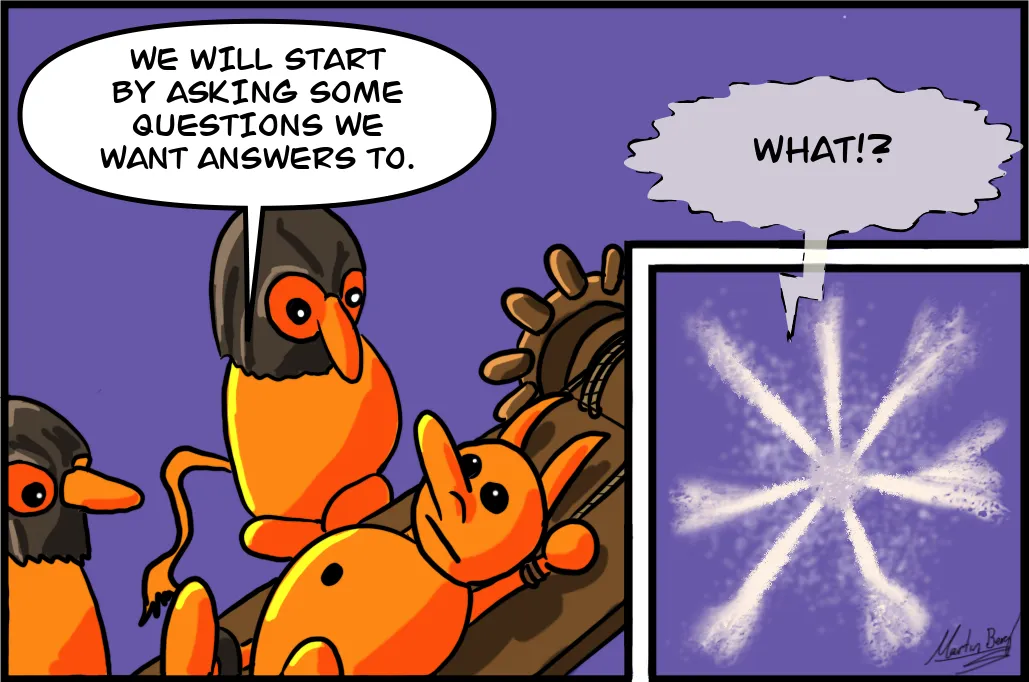
Panel 3. The executioner: “We will start by asking some questions we want answers to.” A voice cries: “What!?” A white glow appears in a small panel.

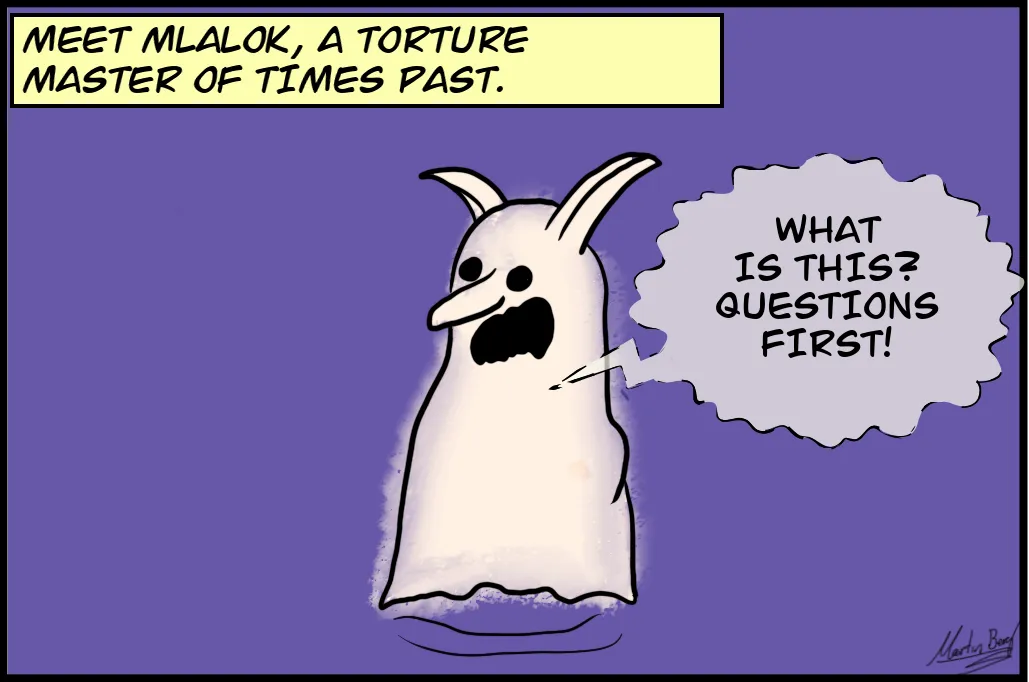
Panel 4. Caption: “Meet Mlalok, a torture master of times past.” A ghost: “What is this? Questions first!”

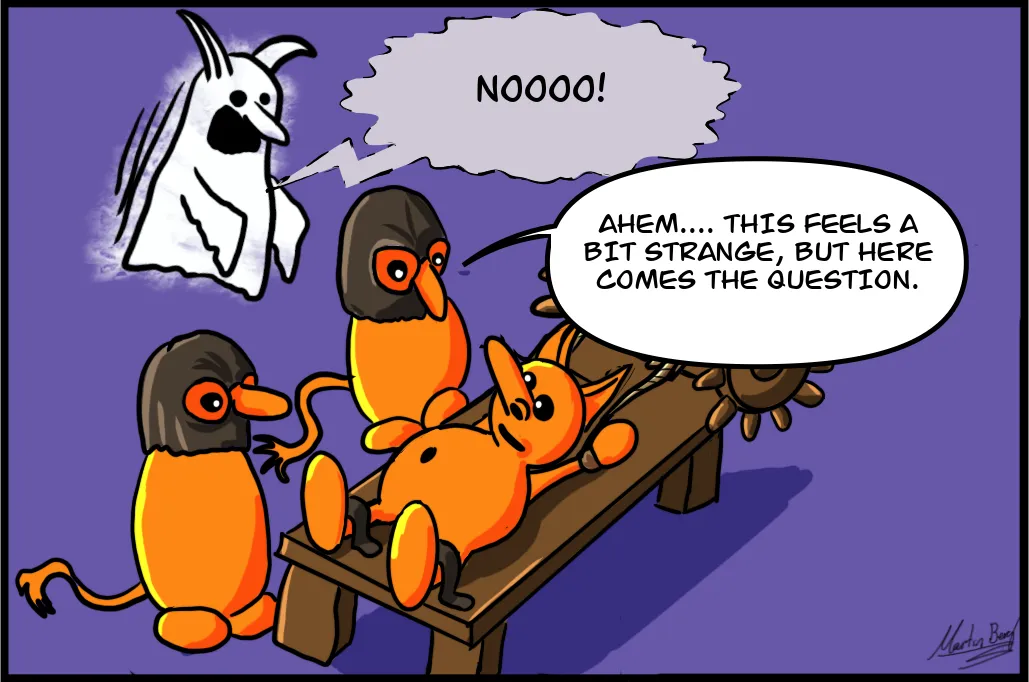
Panel 5. The ghost cries: “Noooo!” The executioner by the rack: “Ahem.... this feels a bit strange, but here comes the question.”

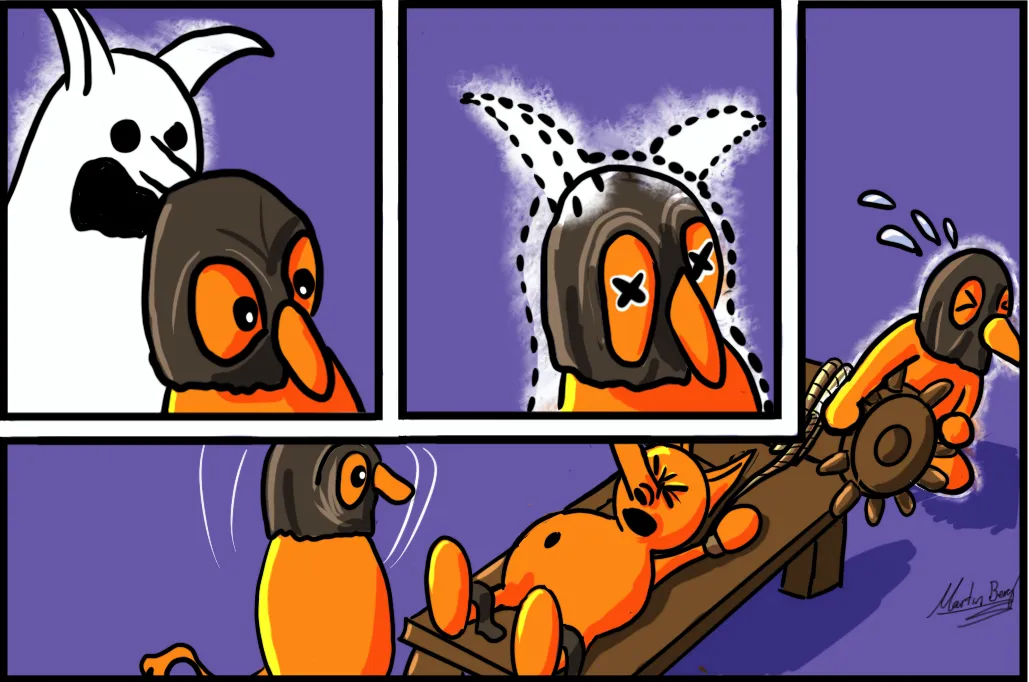
Panel 6. The ghost enters the executioner, whose eyes turn into crosses. The executioner turns the wheel of the rack.

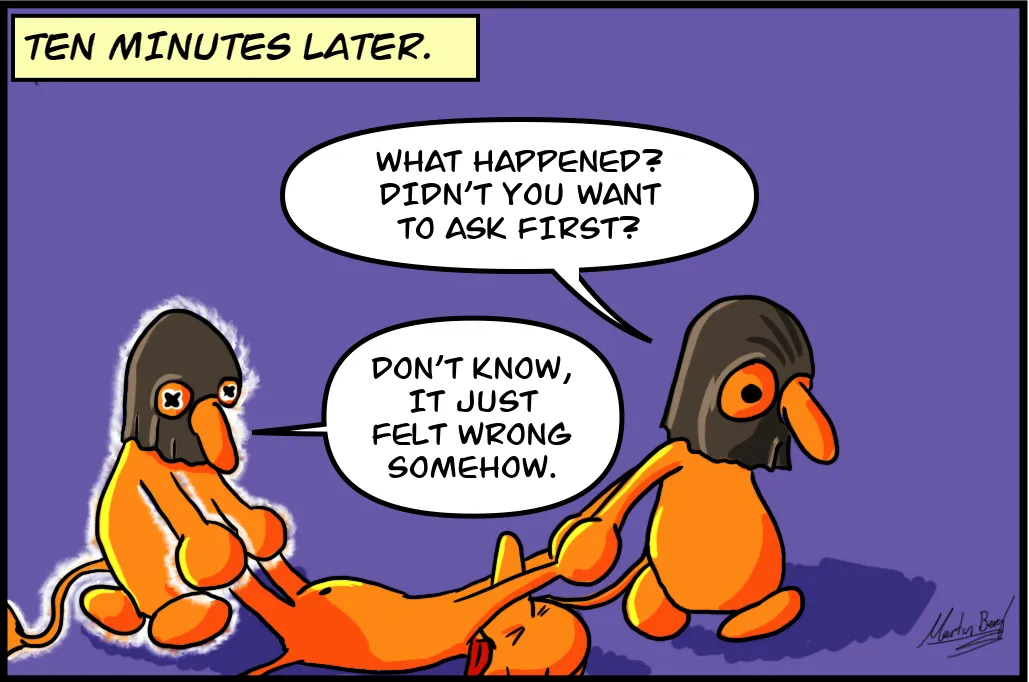
Panel 7. Caption: “Ten minutes later.” The executioners carry away the dead prisoner. One: “What happened? Didn’t you want to ask first?” The other, with crosses for eyes: “Don’t know, it just felt wrong somehow.”

Transparency

Transparency: when is it important, and when is it wrong to be transparent? How do you be transparent in the right way? It is not always easy to know which information is the right information to be transparent about. In my strip below we meet one of the first situations where you have a chance to be transparent: recruitment. What do you think a good recruitment process looks like? In the strip I have chosen to include the employees in the first panel, to show that it is not only the manager who has the opportunity and the responsibility in a recruitment.

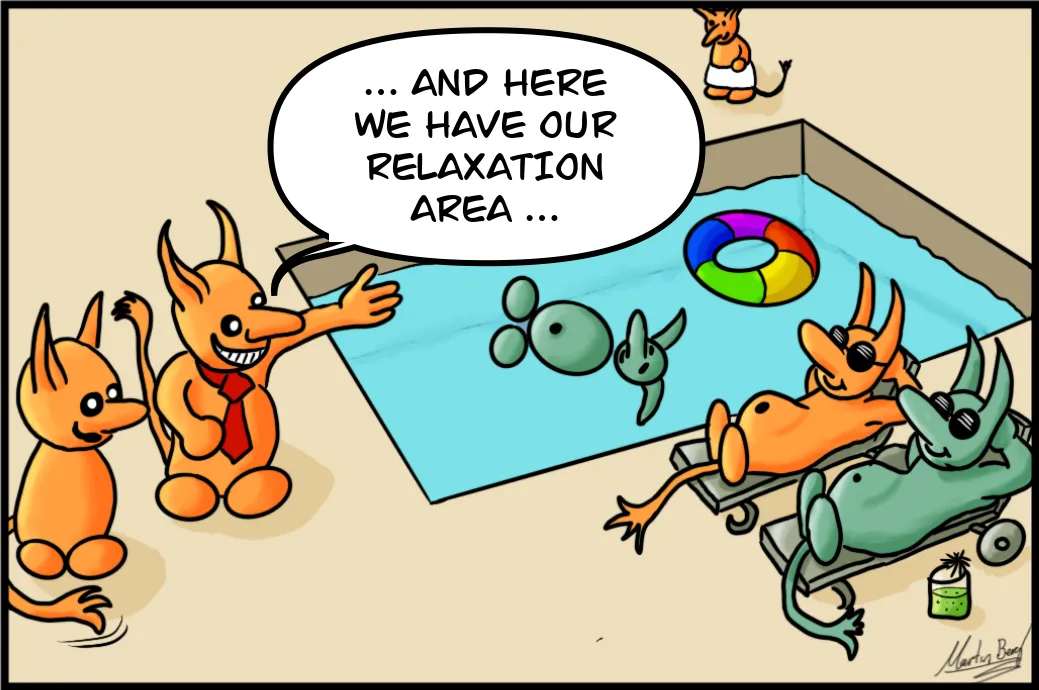
Comic, panel 1. A manager in a red tie shows a new employee around: “… and here we have our relaxation area …” Behind them a pool with a rubber ring, where two figures sunbathe in deck chairs.

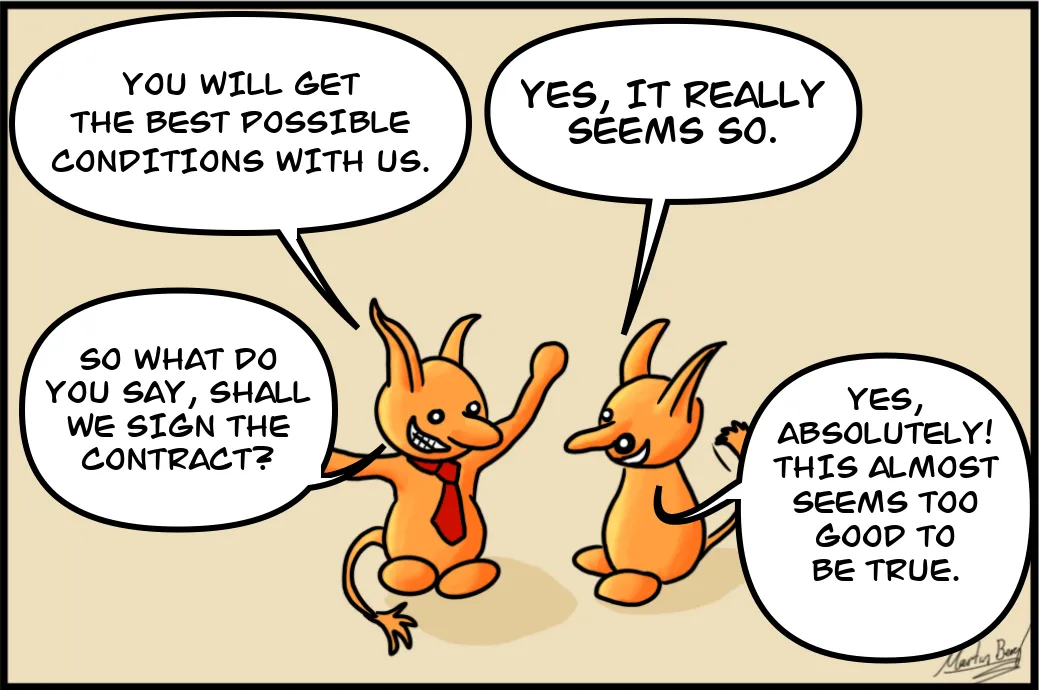
Panel 2. The manager: “You will get the best possible conditions with us.” The new employee: “Yes, it really seems so.” The manager: “So what do you say, shall we sign the contract?” The new employee: “Yes, absolutely! This almost seems too good to be true.”

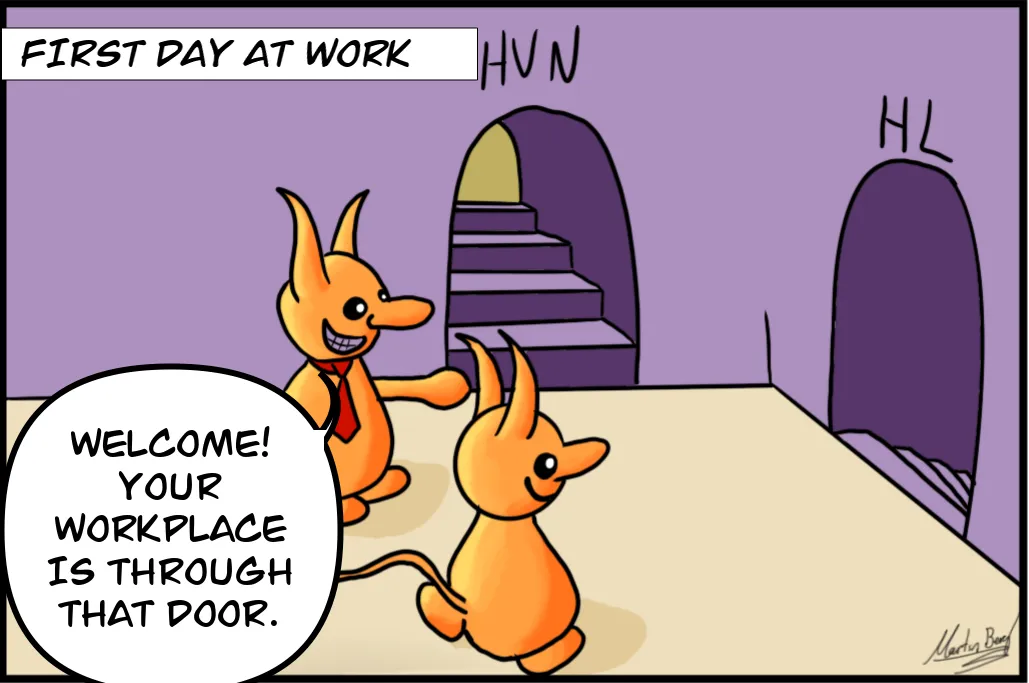
Panel 3. Caption: “First day at work”. The manager points towards two doorways marked HVN and HL: “Welcome! Your workplace is through that door.”

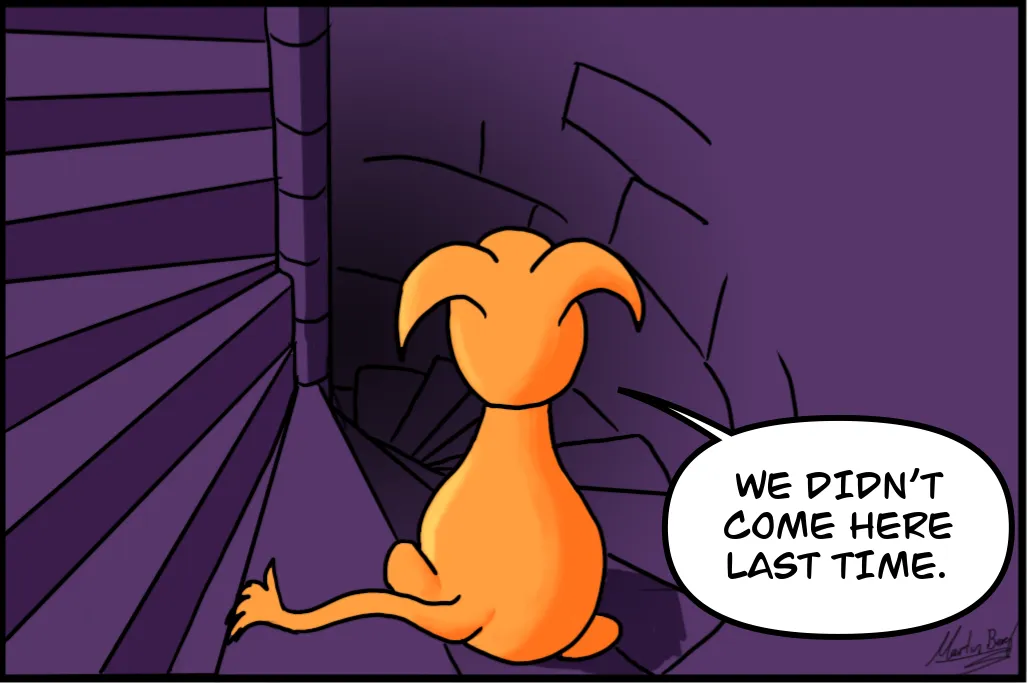
Panel 4. The new employee walks down a dark spiral staircase: “We didn’t come here last time.”

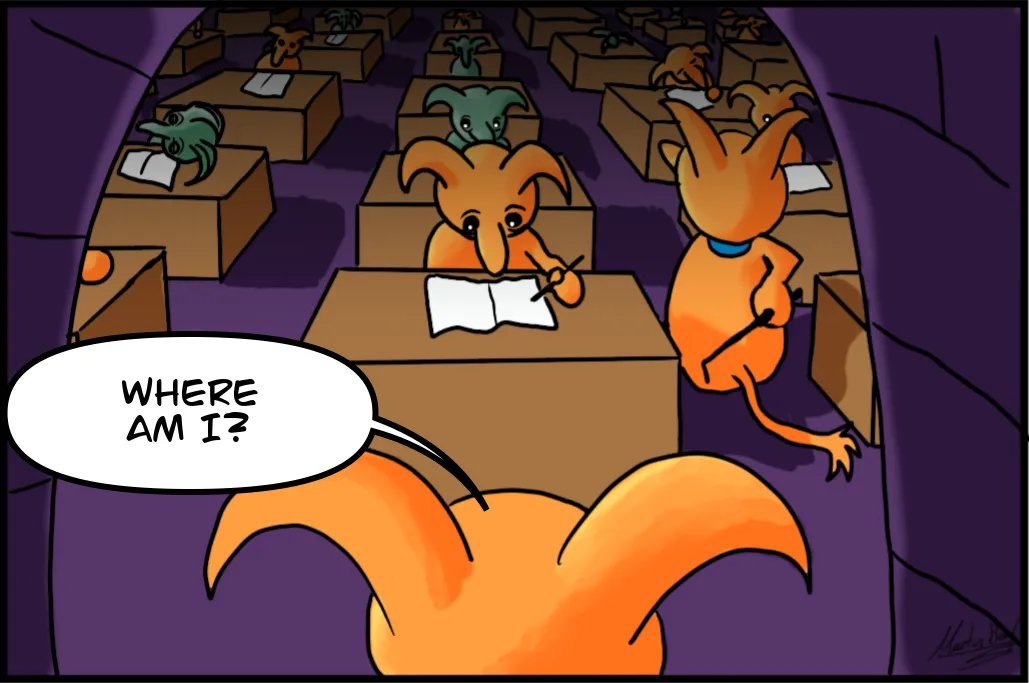
Panel 5. The new employee enters a gloomy hall full of desks where figures sit writing: “Where am I?”

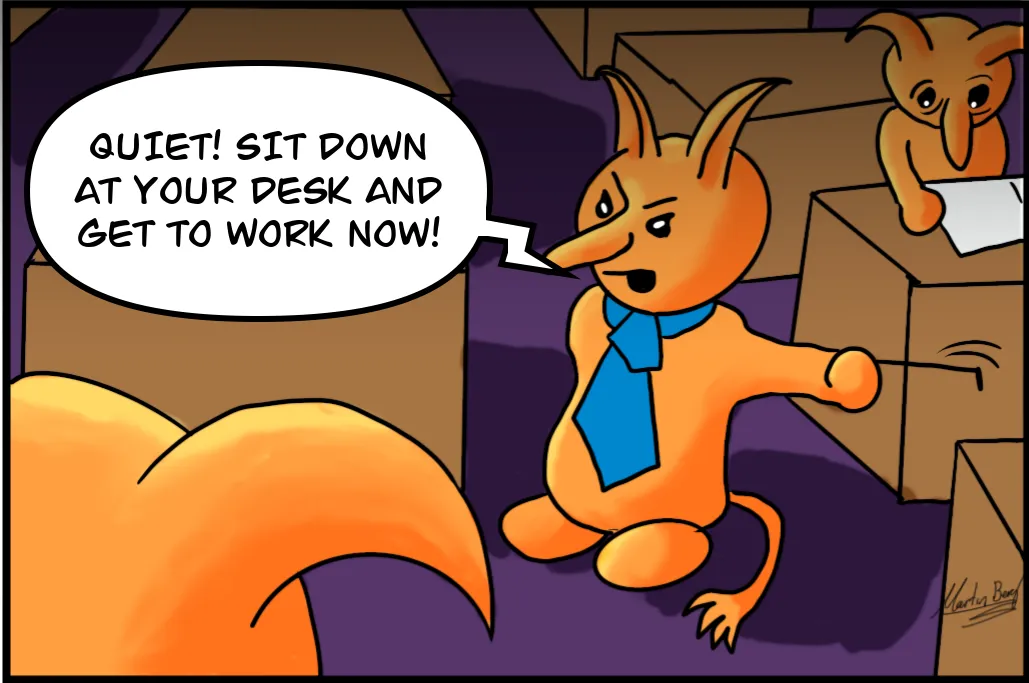
Panel 6. An angry supervisor in a blue tie points: “Quiet! Sit down at your desk and get to work now!”

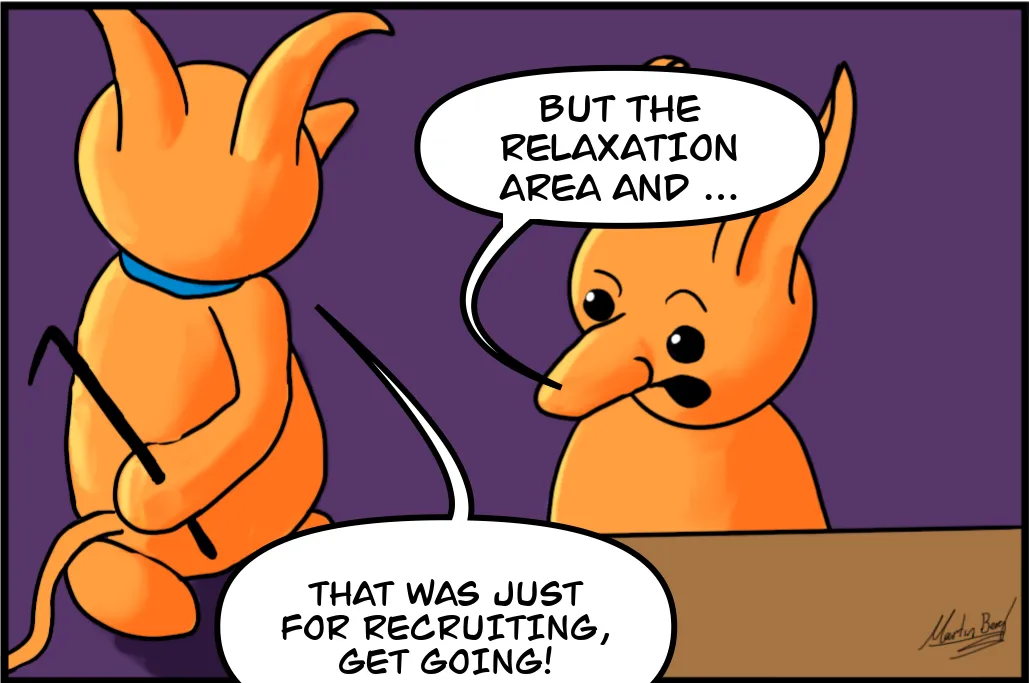
Panel 7. The new employee: “But the relaxation area and …” The supervisor, holding a pointer: “That was just for recruiting, get going!”

More resources

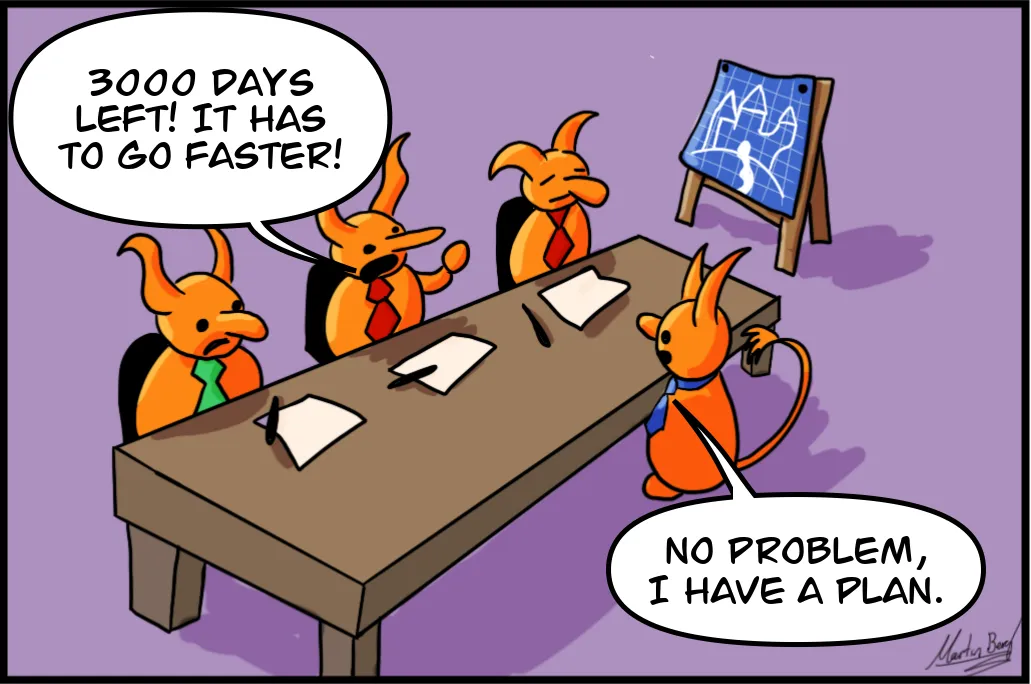
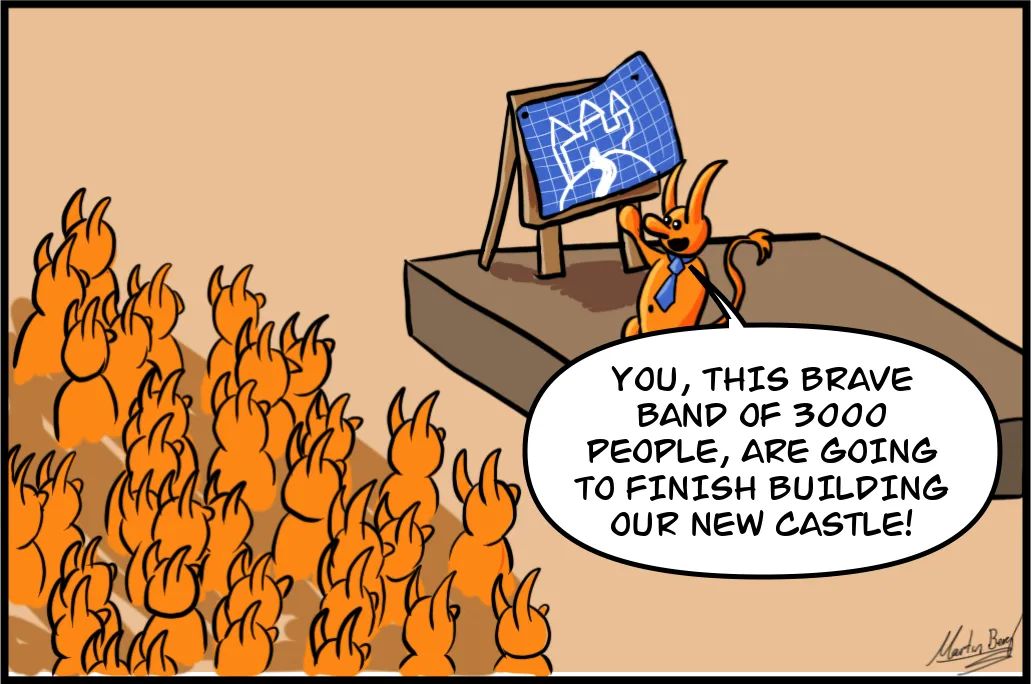
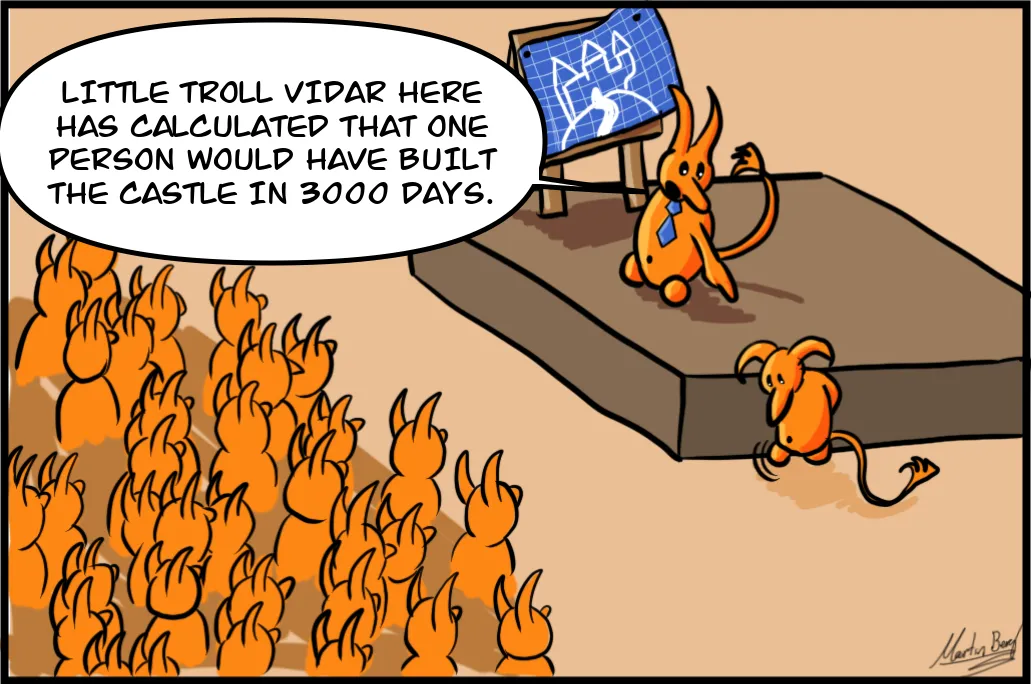
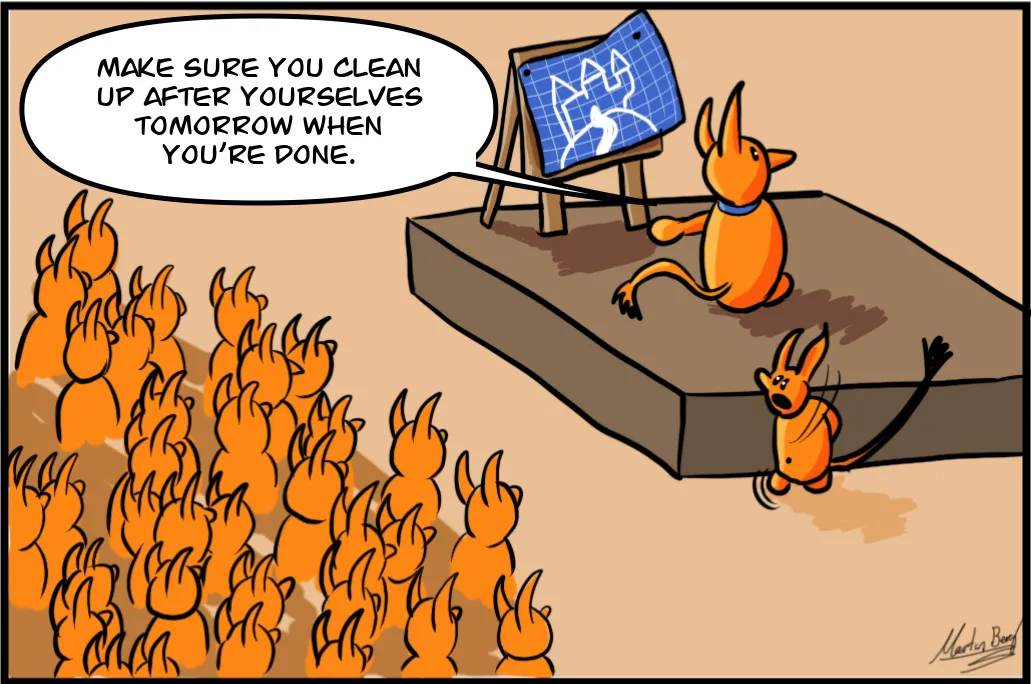
Let’s add more resources to a project and presto, it goes faster. Or does it? Brooks’s law, which says “Adding manpower to a late software project makes it later” (https://en.wikipedia.org/wiki/Brooks%27s_law), makes it pretty clear. And it still holds, almost 50 years later. Why? Because adding new teams comes at a big cost: you have to train these new people or teams. And if you also bring in freelance consultants and/or individual employees who form a new team, that team has to go through a number of phases before it becomes effective: it has to form, storm and mature. All of that takes time, and during that time neither the new team nor the teams around it are fully effective.

Thank you Jimmy, Mattias and Daniel for an interesting discussion on the subject, which contributed to this and some future strips on related topics.

Comic, panel 1. Managers at a table: “3000 days left! It has to go faster!” A project manager next to a drawing of a castle: “No problem, I have a plan.”

Panel 2. The project manager speaks from a stage to a large crowd: “You, this brave band of 3000 people, are going to finish building our new castle!”

Panel 3. The project manager points at a small figure: “Little troll Vidar here has calculated that one person would have built the castle in 3000 days.”

Panel 4. The project manager: “Make sure you clean up after yourselves tomorrow when you’re done.” Little troll Vidar looks horrified.

Document and forget

Have you ever been in a team and had a really good discussion about how you are going to work together? It feels so good! SO good that you decide to write it down and document it, on Confluence or some similar service, but when you open your team page you notice that it is already damn well there! How do you keep your improvement initiatives alive? I have some ideas if you want to know more…

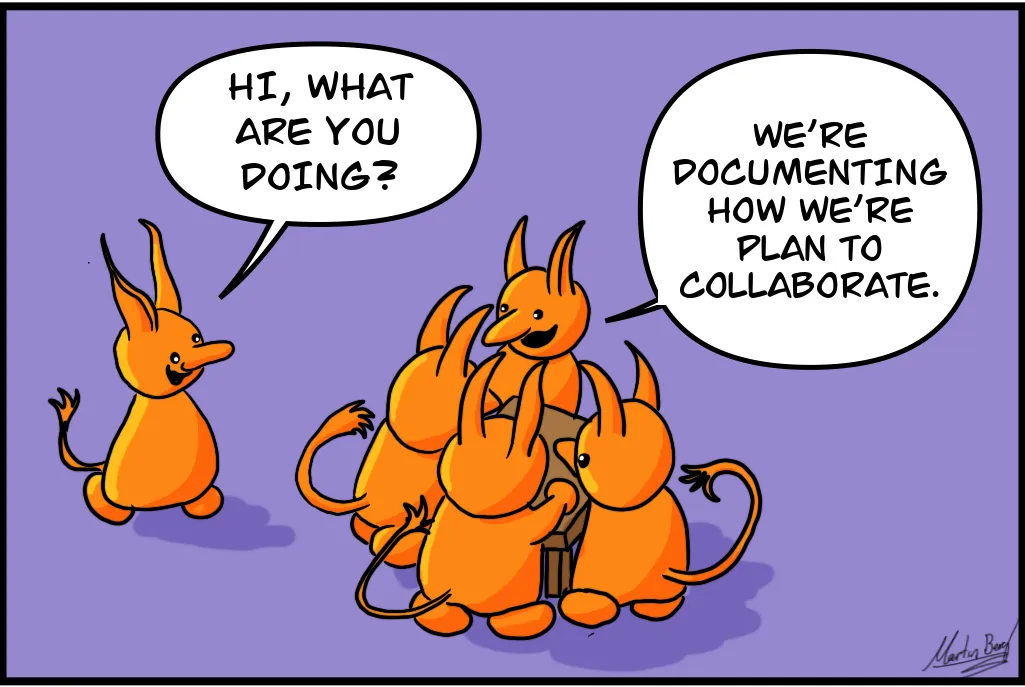
Comic, panel 1. Vige walks up to a group sitting close together around a table: “Hi, what are you doing?” One of the group: “We’re writing down how we’re going to work together.”

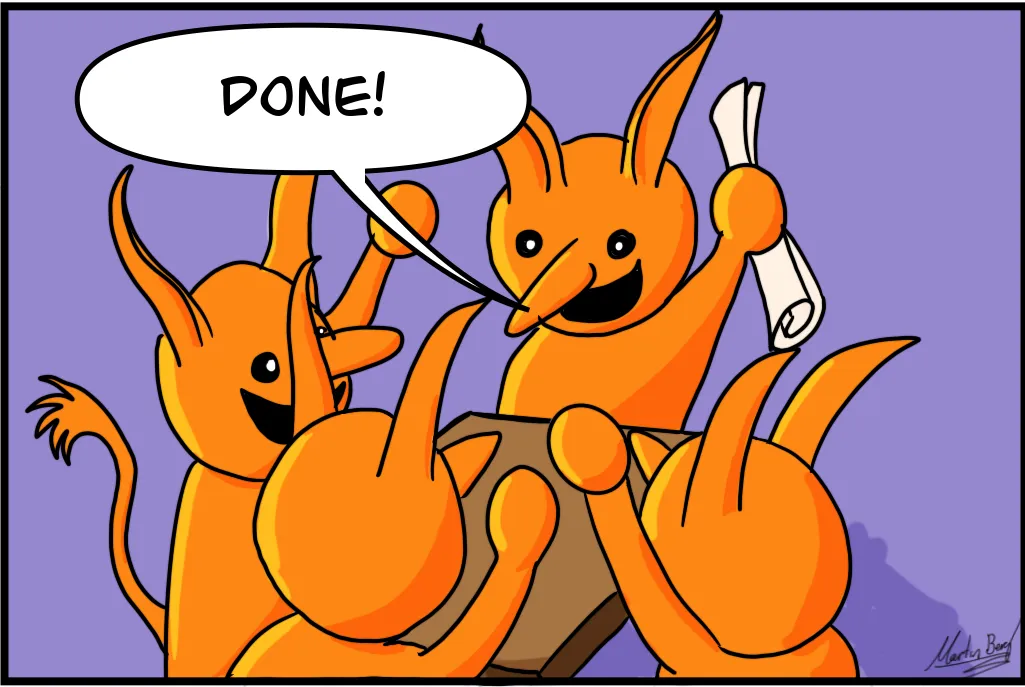
Panel 2. One of the group happily holds up a paper scroll: “Done!”

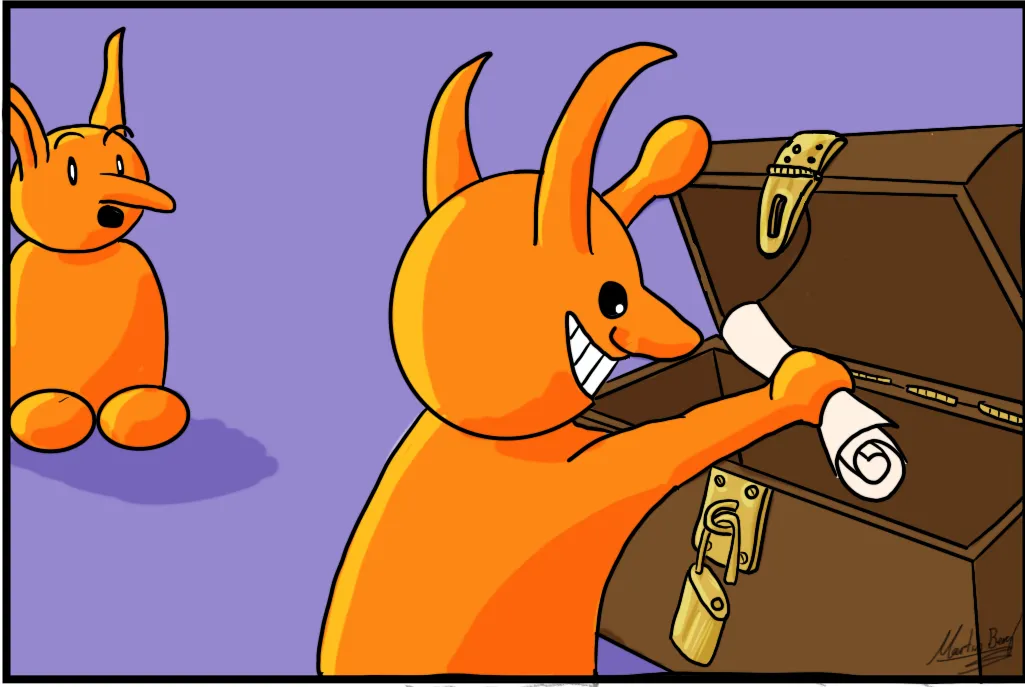
Panel 3. He puts the scroll in a chest with a padlock while Vige looks on in surprise.

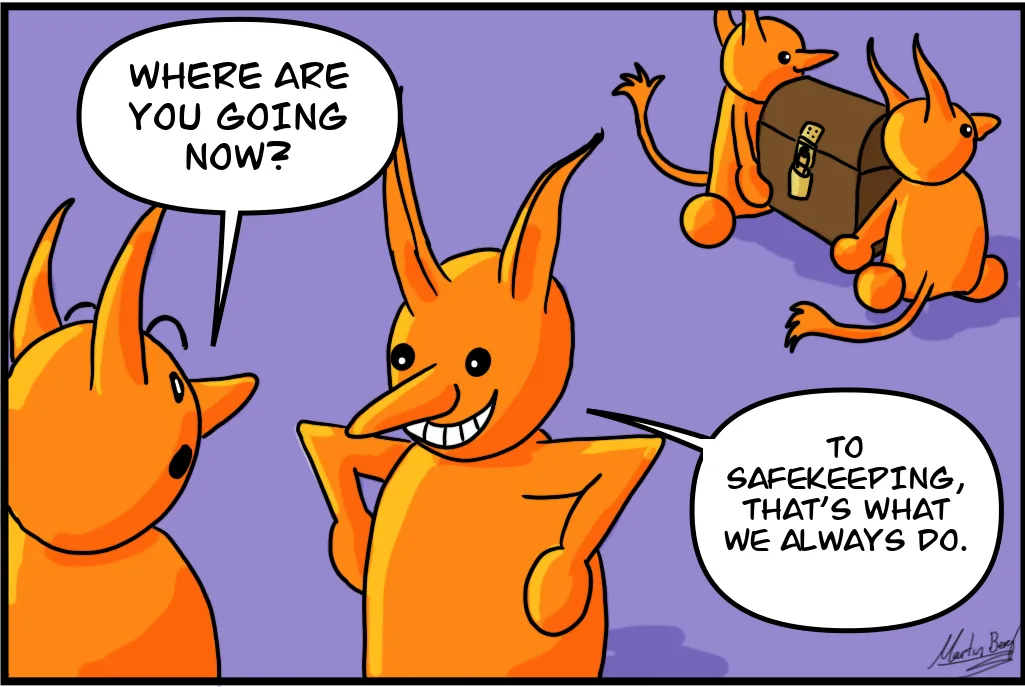
Panel 4. Vige: “Where are you going now?” He smiles: “To safekeeping, that’s what we always do.” Two others carry the chest away.

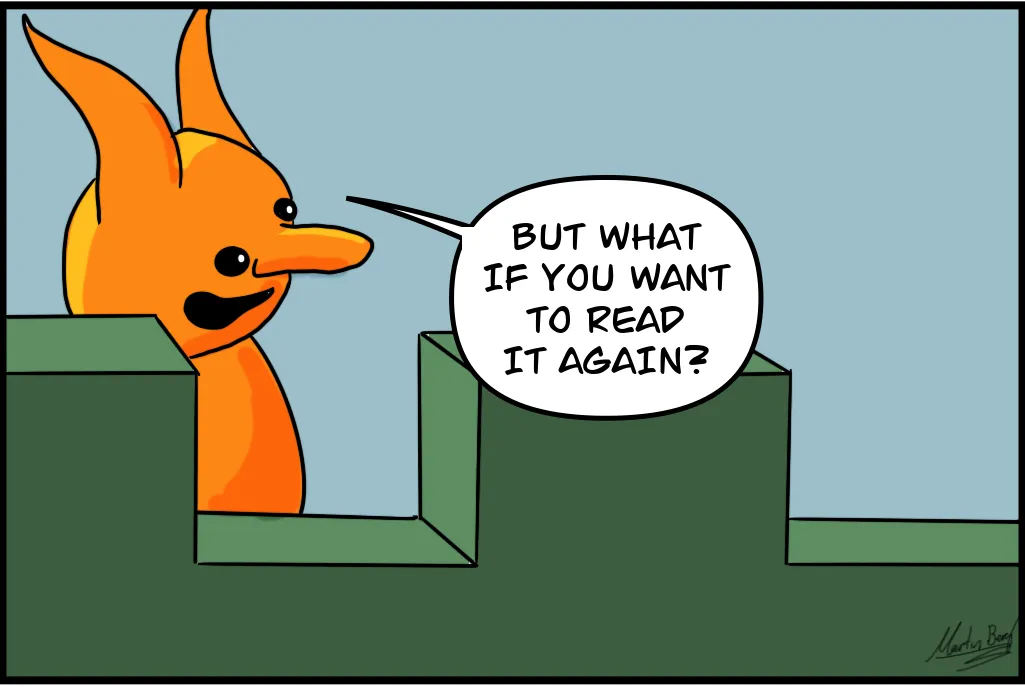
Panel 5. Vige calls up towards a castle wall: “But what if you want to read it again?”

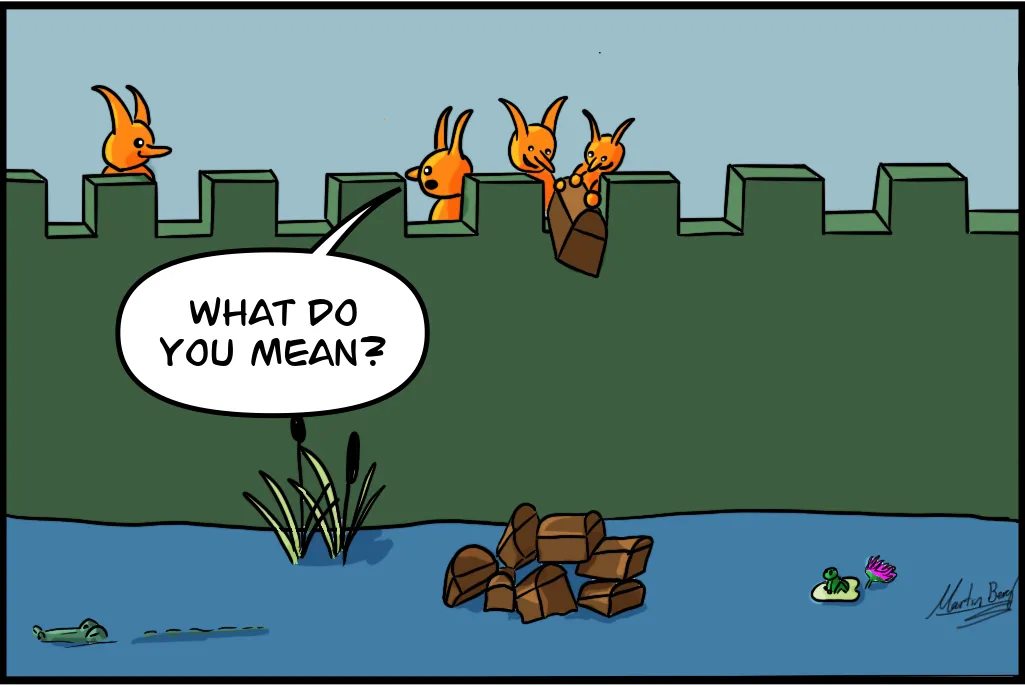
Panel 6. The group stands on the wall and has just tipped the chest into the moat, where a pile of identical chests lies. One of them: “What do you mean?”