The power of a story
To understand a system you need the stories in the system, it is these stories that makes it possible for us to navigate in the system, may it be the company you are working in, the community you are in or your own family, any system that we are interacting within. The stories are what makes us understand and feel the culture of the system. But what happens when we encounter stories that is not longer valid, maybe they are so old that it is not possible to understand them anymore, we lost the context of where they where created.
Here is an old Swedish story from Österlen in Skåne, first in Swedish and then an attempt on translating:
“De fostras upp i kobläddor och är en halv näve långa, de är röda och i ena änden är det ett kattahuve och i andra ett hungahuve. Blir man biden av en sån så dör man, såna har jag slagit ihjäl många.”
“They are raised in cowpat and are half a fist long, they are red and at one end it is a cat head and at the other a scoundrels head. If you are bitten by someone like that, you die, I have killed many.”
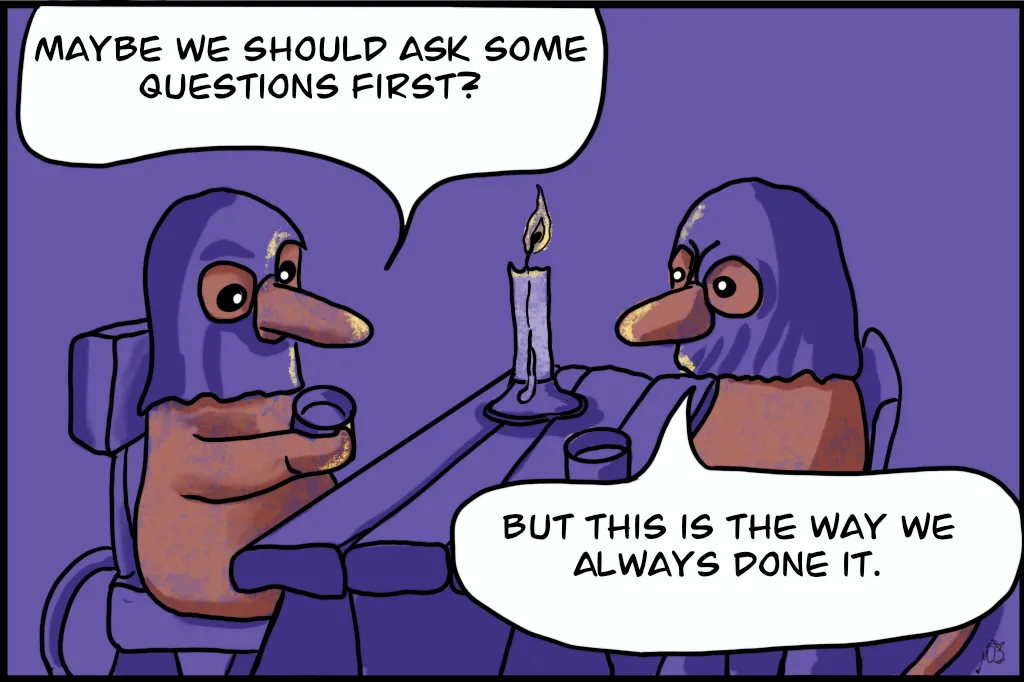
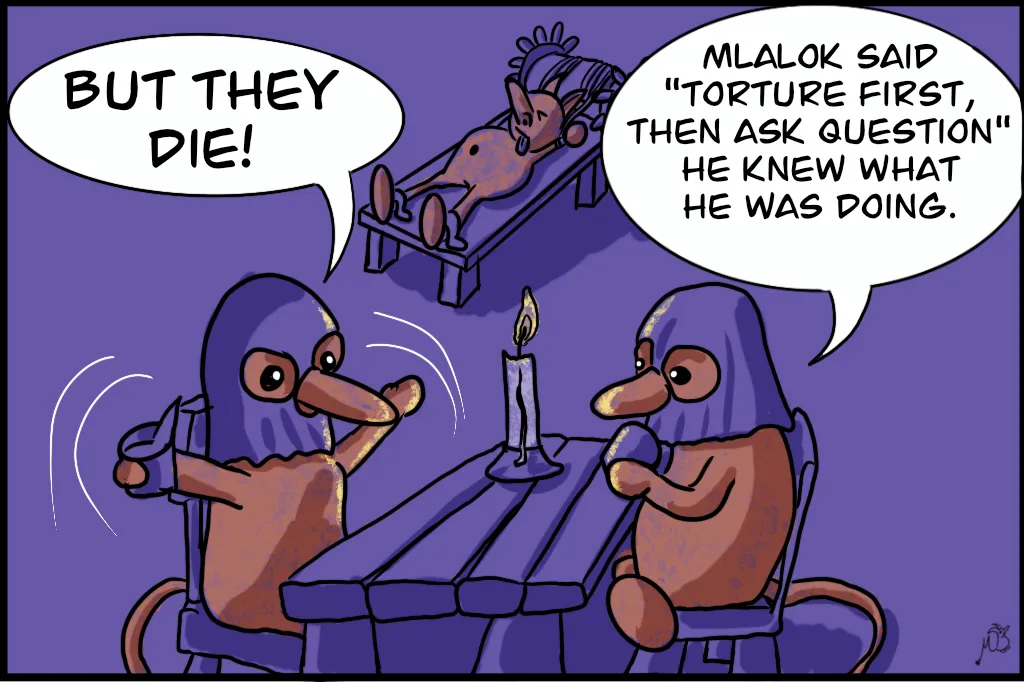
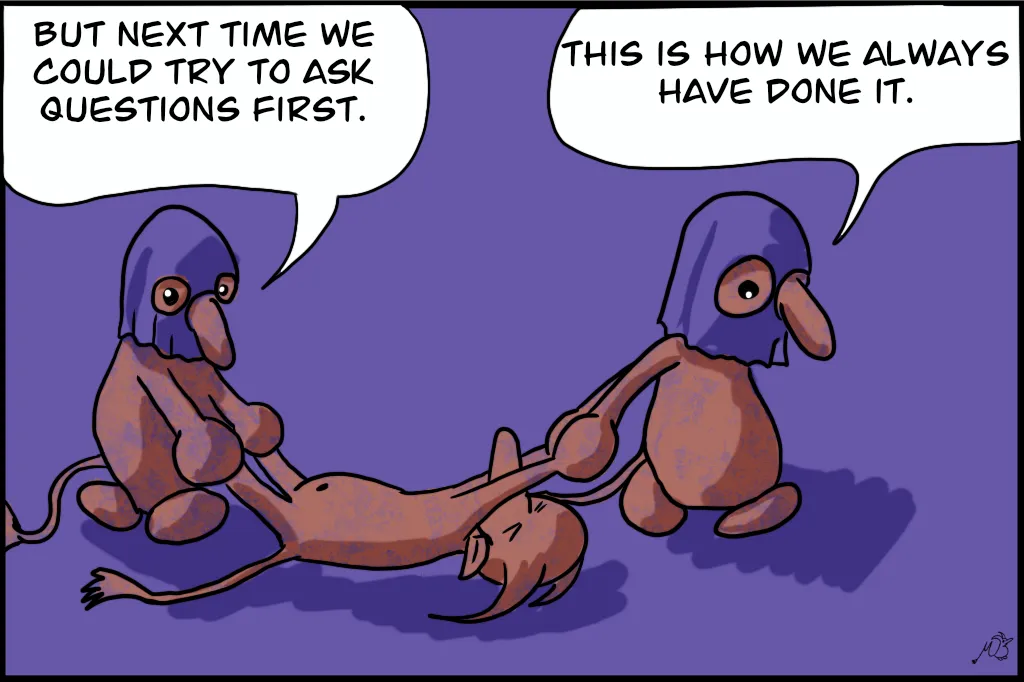
For most of us this is not easy to decipher and understand. We do not have the context nor the vocabulary needed and this is the case in all systems. Stories that are alive and valid change to make the point that they are supposed to but sometimes they freeze. What was once true and important turns stale and becomes an invalid old truth. But that doesn’t mean that they are buried and forgotten, they can still live there in a zombie like state affecting and blocking the system. I guess most of you have heard a story that starts or ends like this “we have already tried that….”. What is needed is the will to understand, question and change. A god way of doing that is to use the pattern from Sociocracy 3.0 called Navigate via tension. In brief it is a way to make use of tensions in order to understand and to modify the system bit by bit so that it eventually fit better to the need and purpose of those within the system.