Skip to content
Menu
Vige
Quick foot

Bloggtoons

Team autonomy doesn't work

I often hear “All our teams are autonomous.” but what does that mean? The word autonomy means “able to do things and make decisions without help from anyone else” or “freedom from external control or influence.”, in other words autonomous teams have the power to form their own path without control from external influence to the team. But that is utopian in the sense of most company cultures. Why?

Because most of us do not believe it is possible, “at least not here…” and because of that we unwillingly and unknowingly put obstacles in the way. These obstacles originate from all sources all the way from cultural rules, via leadership in an organization all the way to the individuals within the team.


———————

It is easy to say the word “autonomous teams” or “empowered teams” and then give the team some power on how to implement some code. That is as much autonomy as giving pocket money for bus trip home to your 12 year old kid. As a parent that might be scary enough both for the kid and the parent. But for a team with a good knowledge set of grown up people, can’t we can’t trust them with more than pocket money have really made the effort to create the best conditions for the team to thrive?
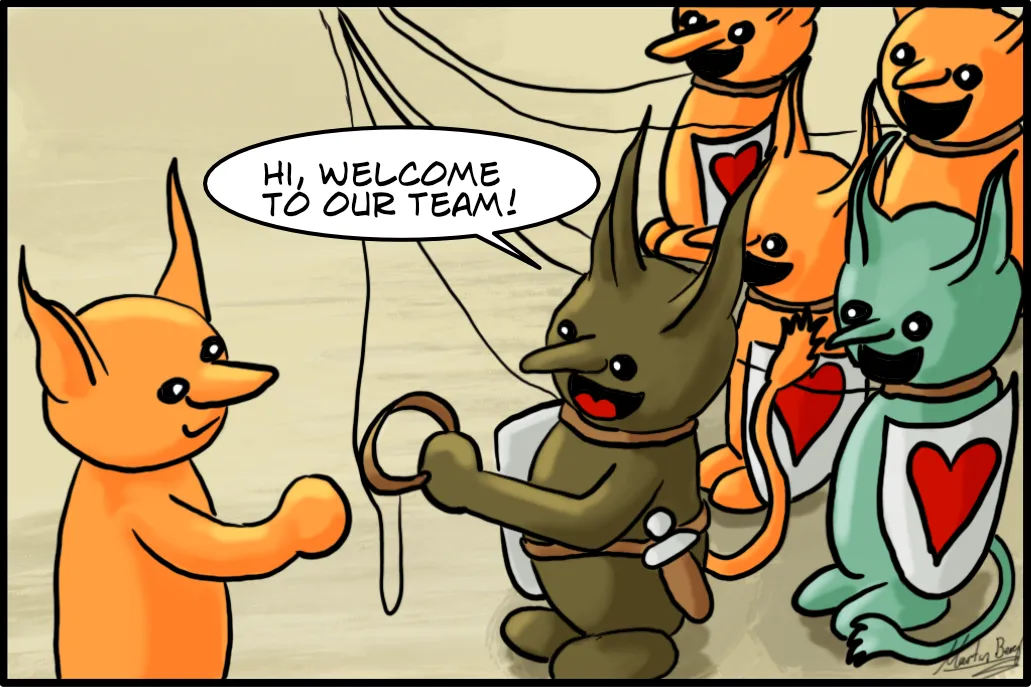
Comic, panel 1. A brown figure holding a loop of rope welcomes a new member to a group with heart shields: “Hi, welcome to our team!”

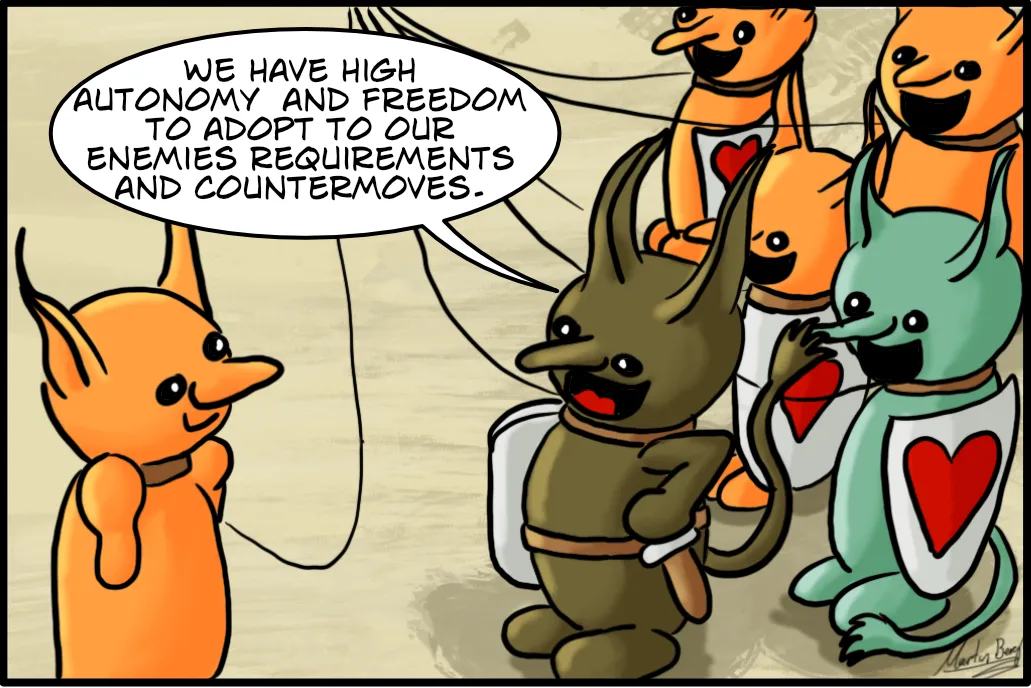
Panel 2. The brown figure: “We have high autonomy and freedom to adopt to our enemies requirements and countermoves.”

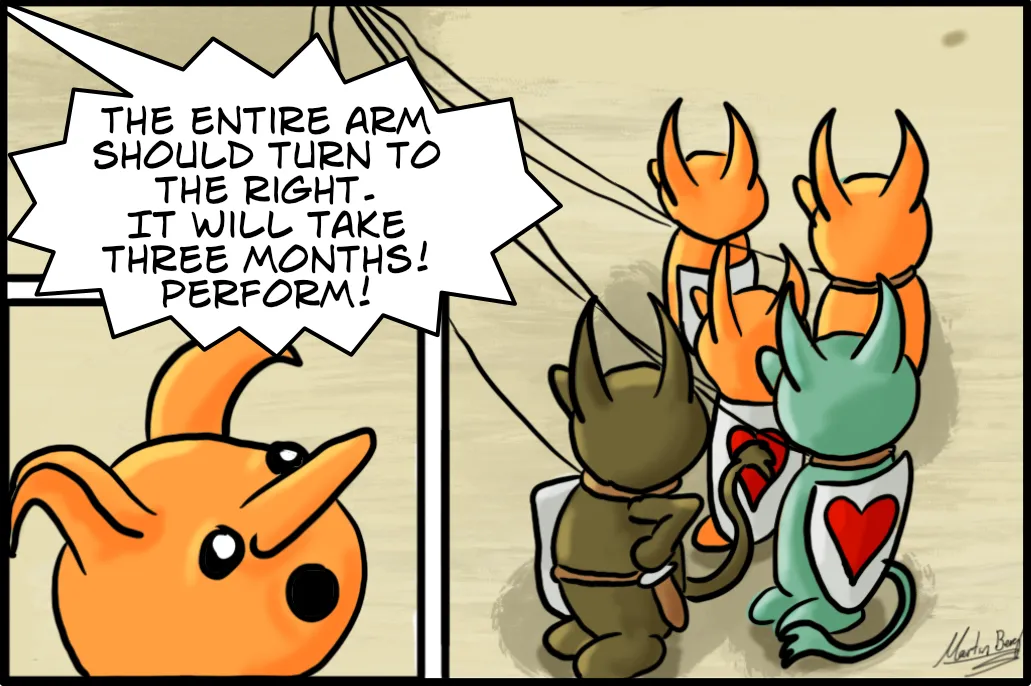
Panel 3. A voice from outside the panel shouts: “The entire arm should turn to the right. It will take three months! Perform!”

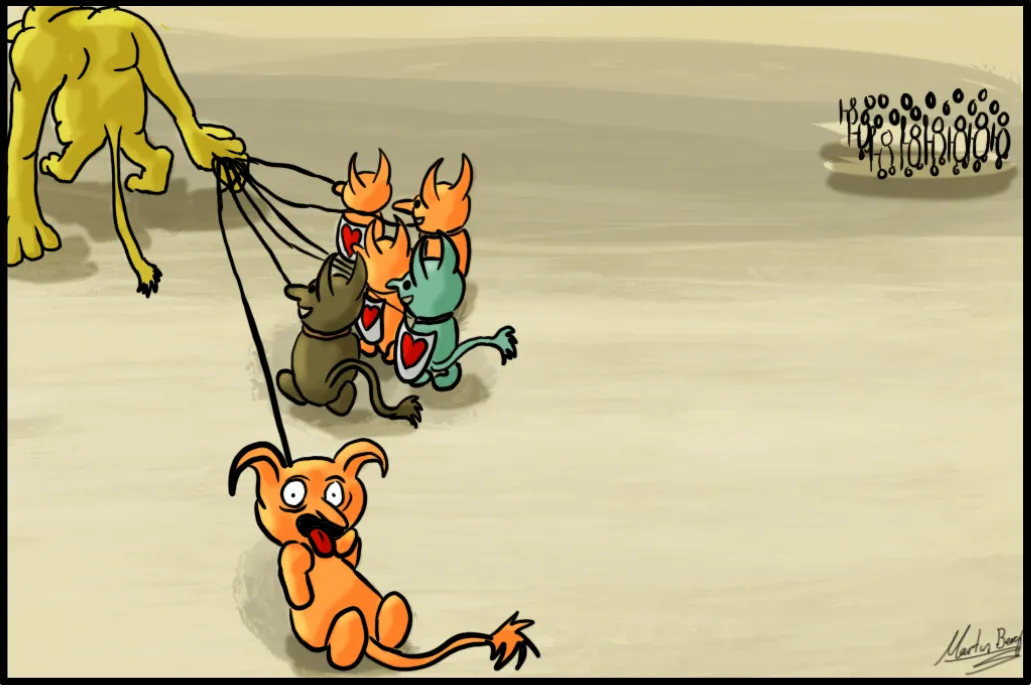
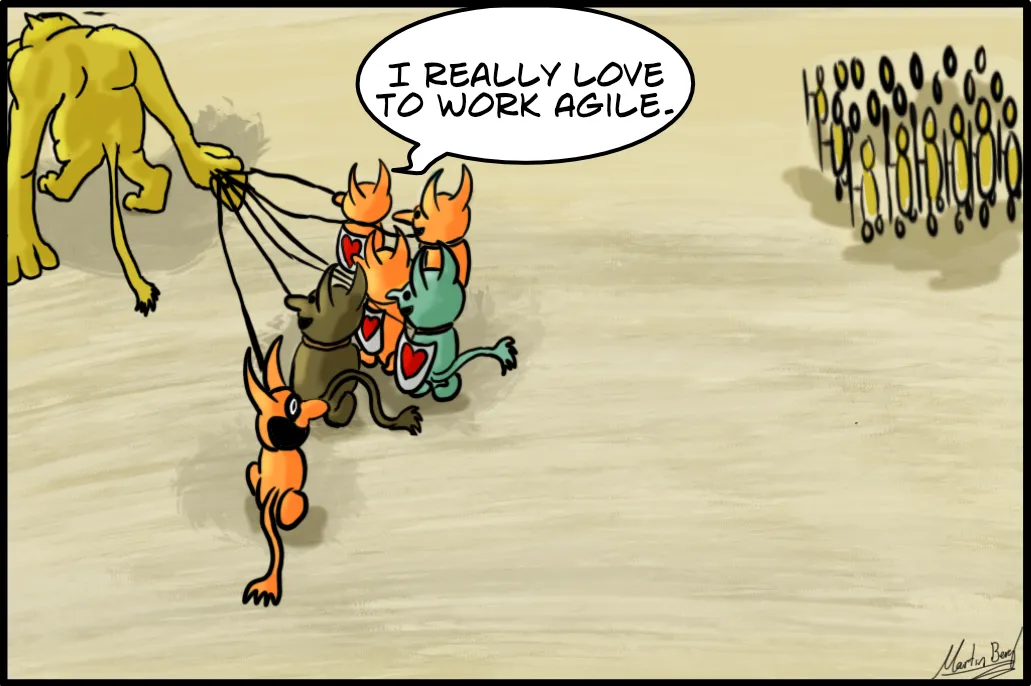
Panel 4. A giant pulls the whole group by ropes round their necks. The new member is yanked backwards, terrified. Far away stands a large enemy army.

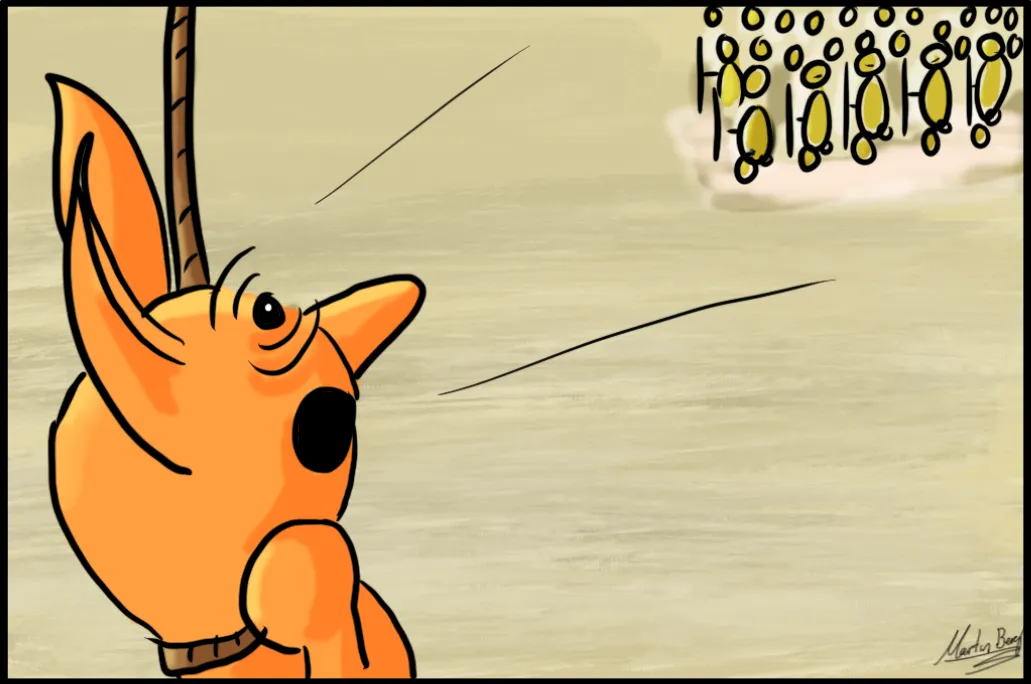
Panel 5. The new member looks up the rope in shock, towards the enemy army.

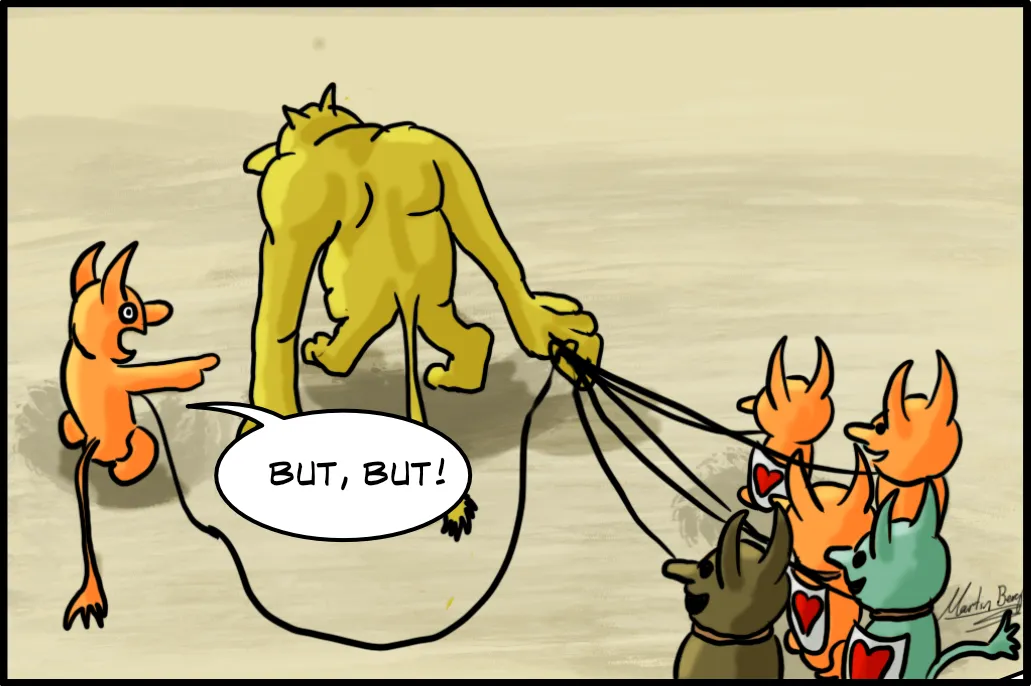
Panel 6. The new member points at the enemy and calls to the giant: “But, but!”

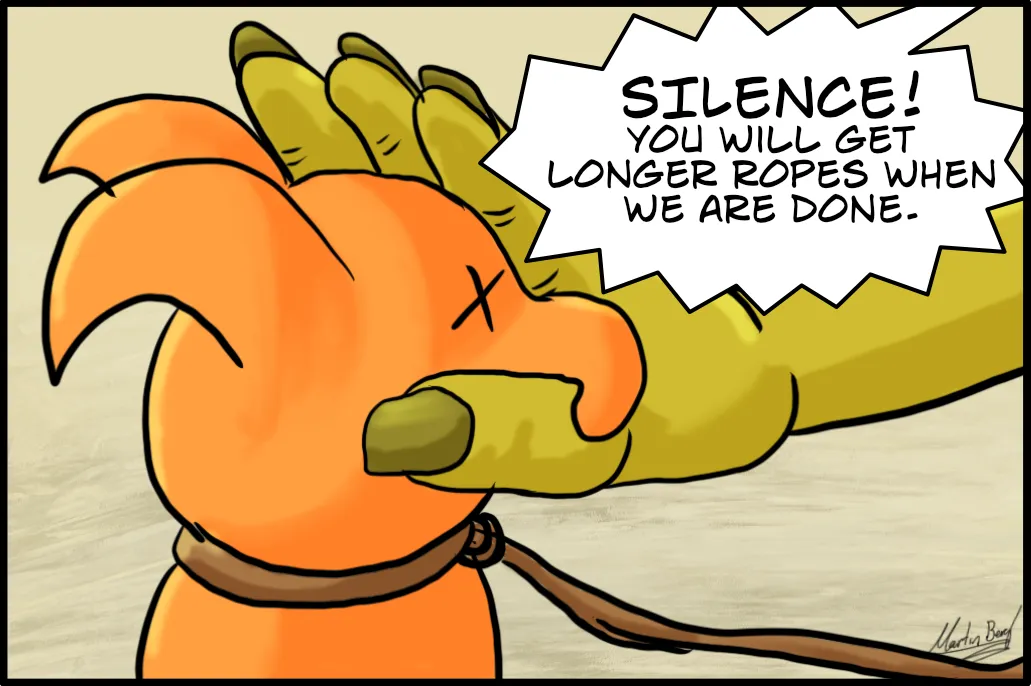
Panel 7. The giant presses a hand over his face: “Silence! You will get longer ropes when we are done.”

Panel 8. The group is dragged on by the ropes. Someone in the group says: “I really love to work agile.”

The art of concentration or the path to multifailing

Right now when writing this text my kids wants to get my attention, “what is the color of the Pokemon Feraligatr, dad?”, “can I see again please?”, “What are you doing, dad?”, “I want to print another color paper” of course I want to help them, they are the most important part of my life. But somewhere from whithin my brain I hear “I have a tried to get this cartoon ready since February 2019, get it done god damn it!” And then it struck me, this cartoon is about me, but I suspect Im not alone on this? At work Im also always eager to get involved, interested in most things and always trying to help when I can and I love it, but it has a cost. Too little time for self reflection or actually having time to finish things. It is a fine balance between multitasking and multifailing. So now I have decided, this week I will work from home one day to make sure that I have time to think or at least give myself time to finish a couple of things.

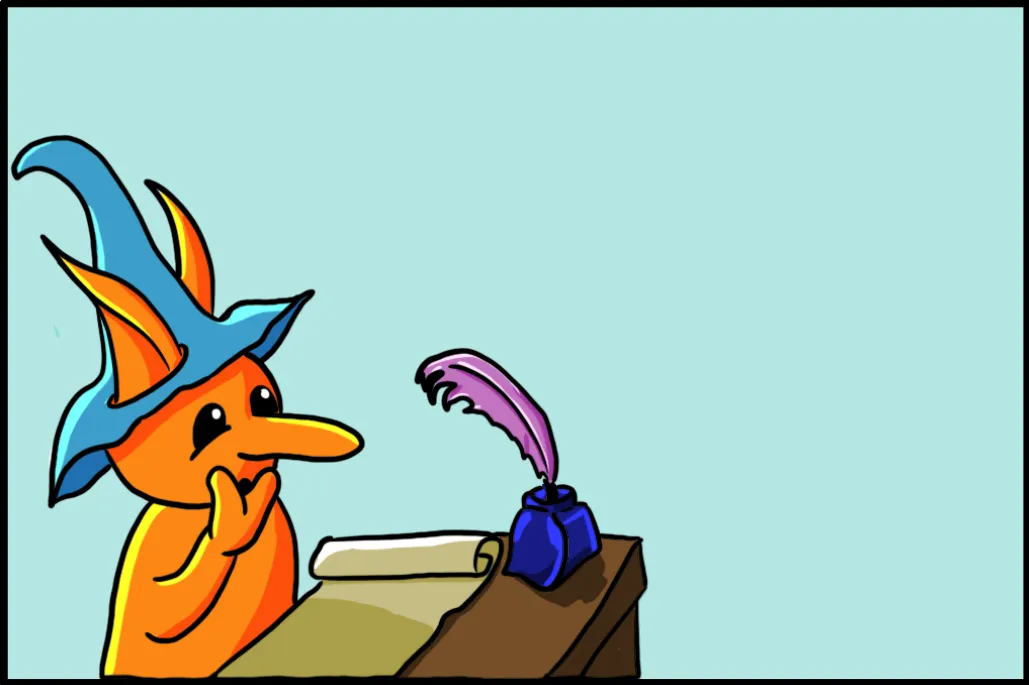
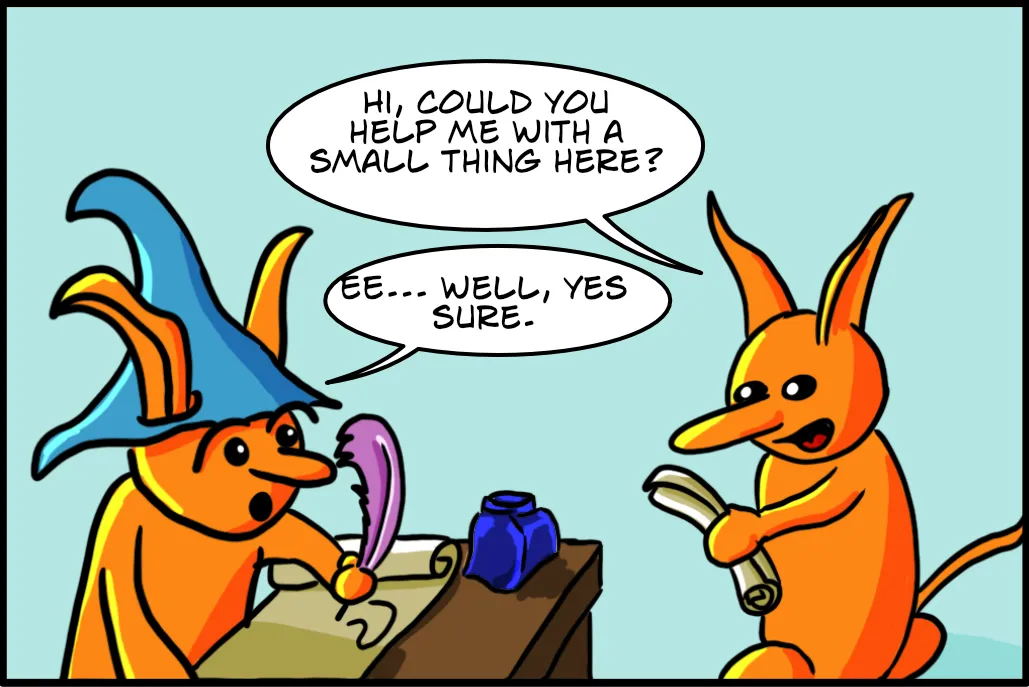
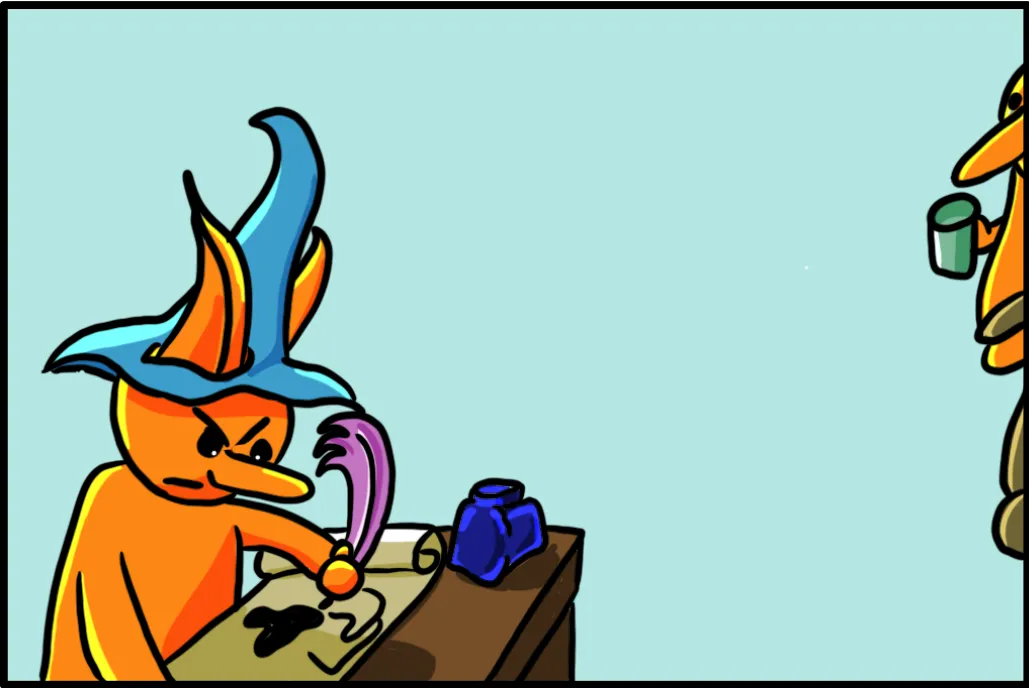
Comic, panel 1. A magician in a blue hat sits at a desk with a scroll, a quill and an inkpot, thinking.

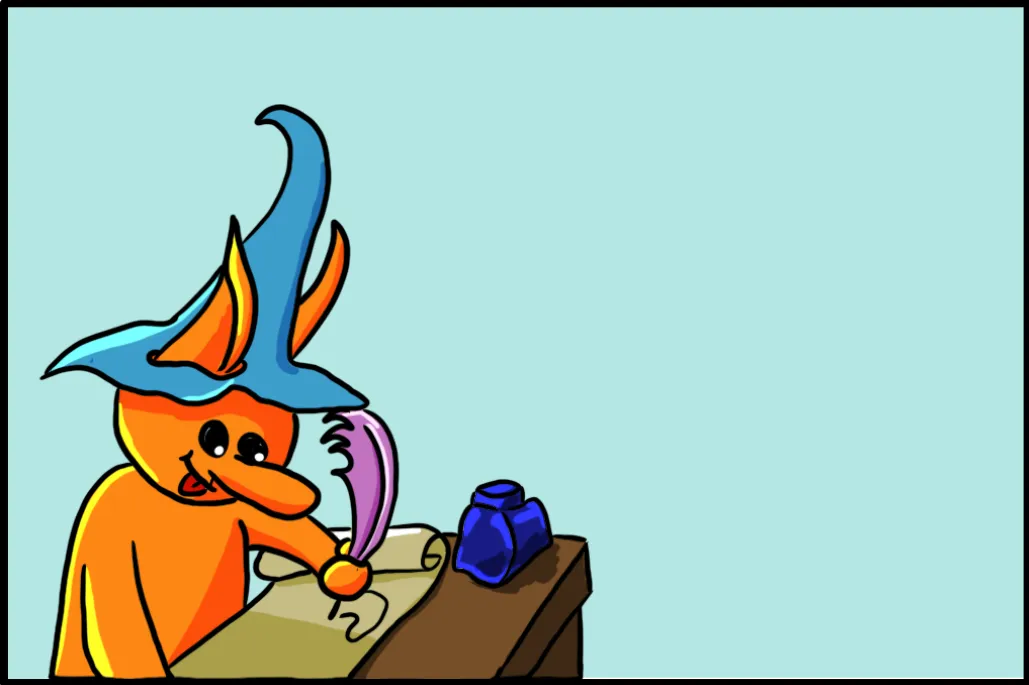
Panel 2. The magician smiles and starts writing.

Panel 3. A colleague with a scroll: “Hi, could you help me with a small thing here?” The magician: “Ee... well, yes sure.”

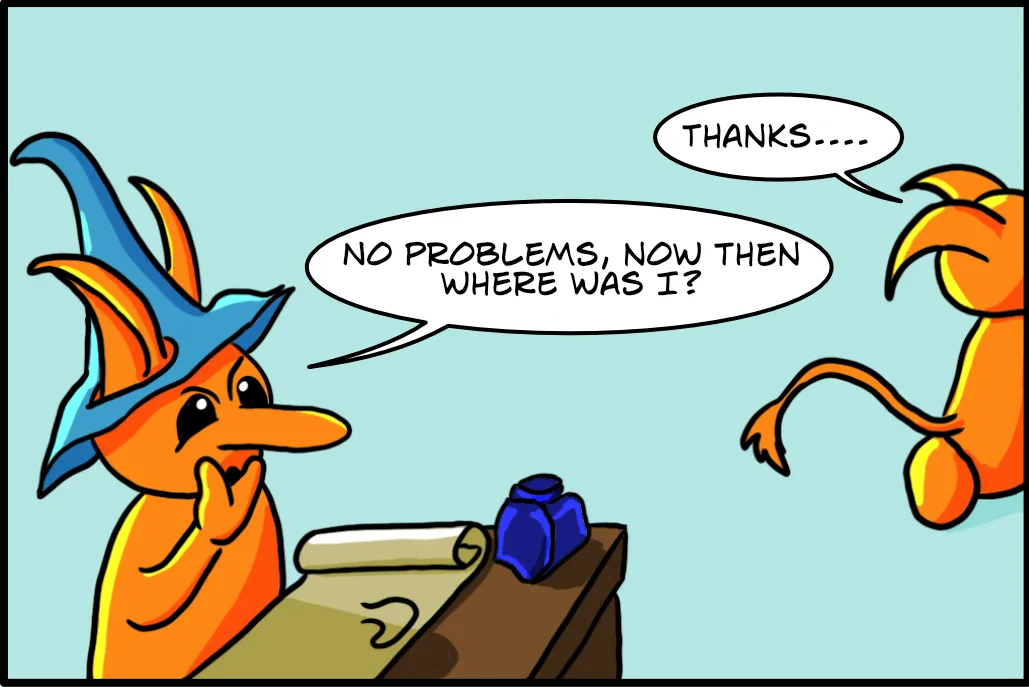
Panel 4. The magician: “No problems, now then where was I?” The colleague, leaving: “Thanks....”

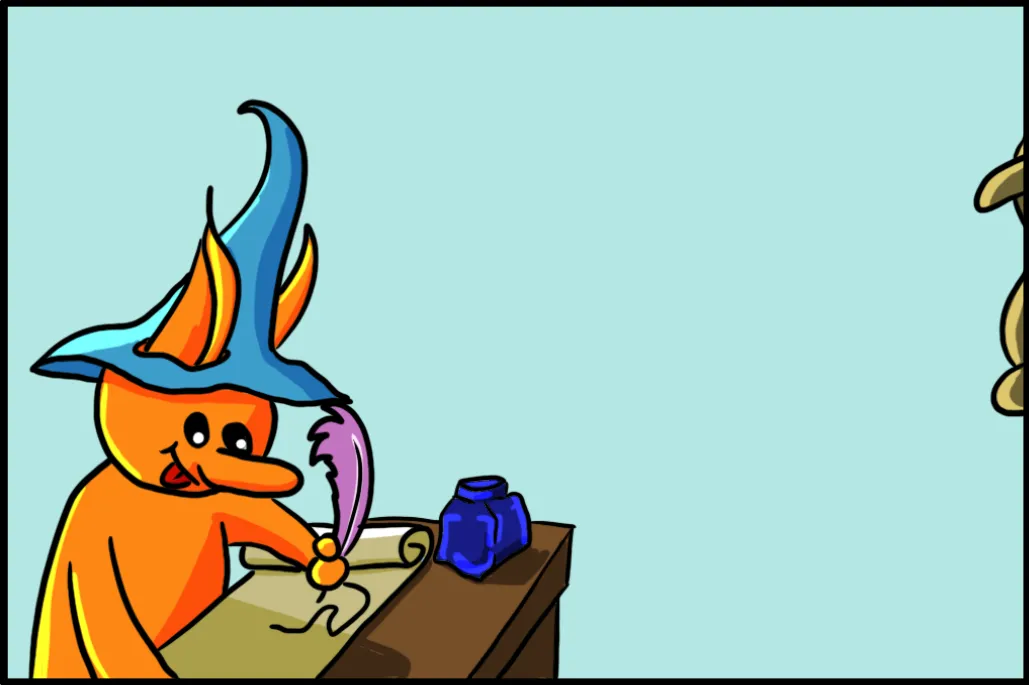
Panel 5. The magician writes again, smiling.

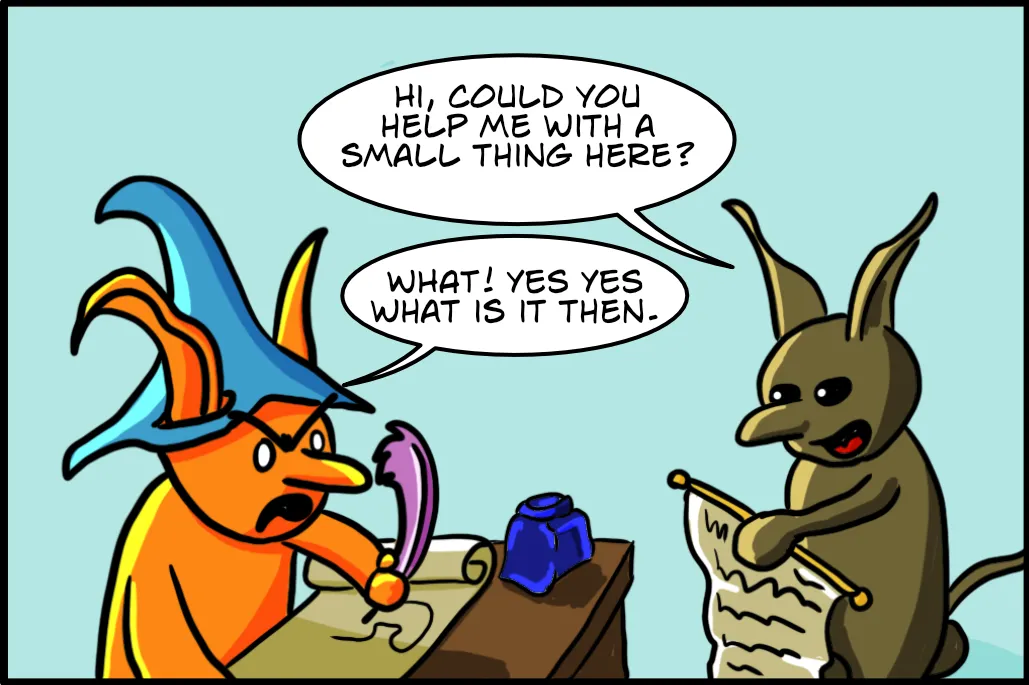
Panel 6. Another colleague with a long scroll: “Hi, could you help me with a small thing here?” The magician, annoyed: “What! Yes yes what is it then.”

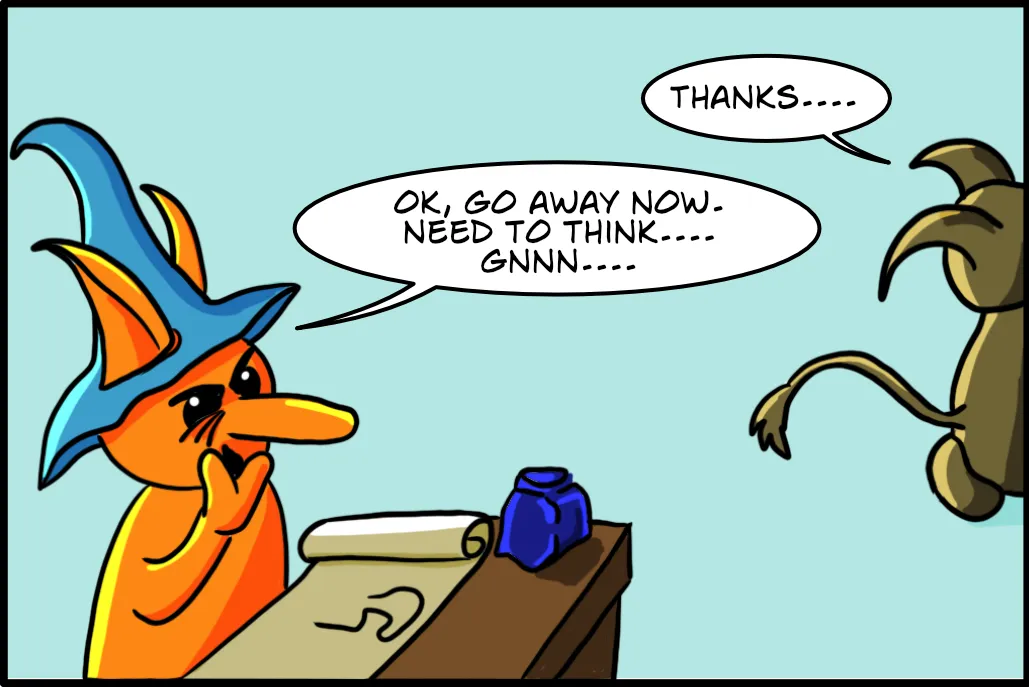
Panel 7. The magician: “Ok, go away now. Need to think.... Gnnn....” The colleague, leaving: “Thanks....”

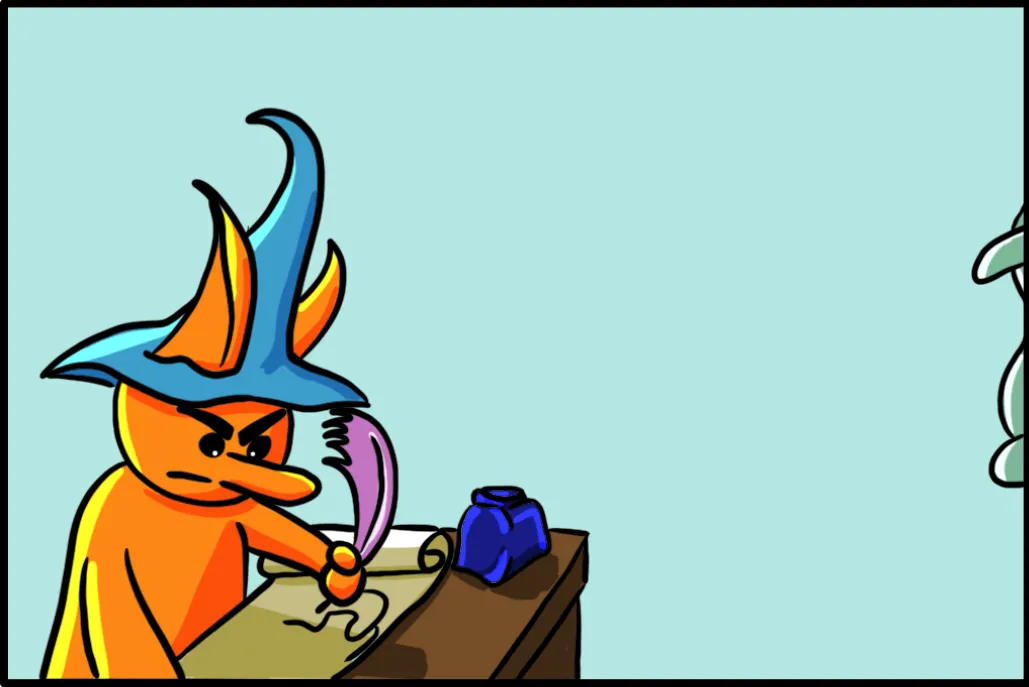
Panel 8. The magician frowns and writes.

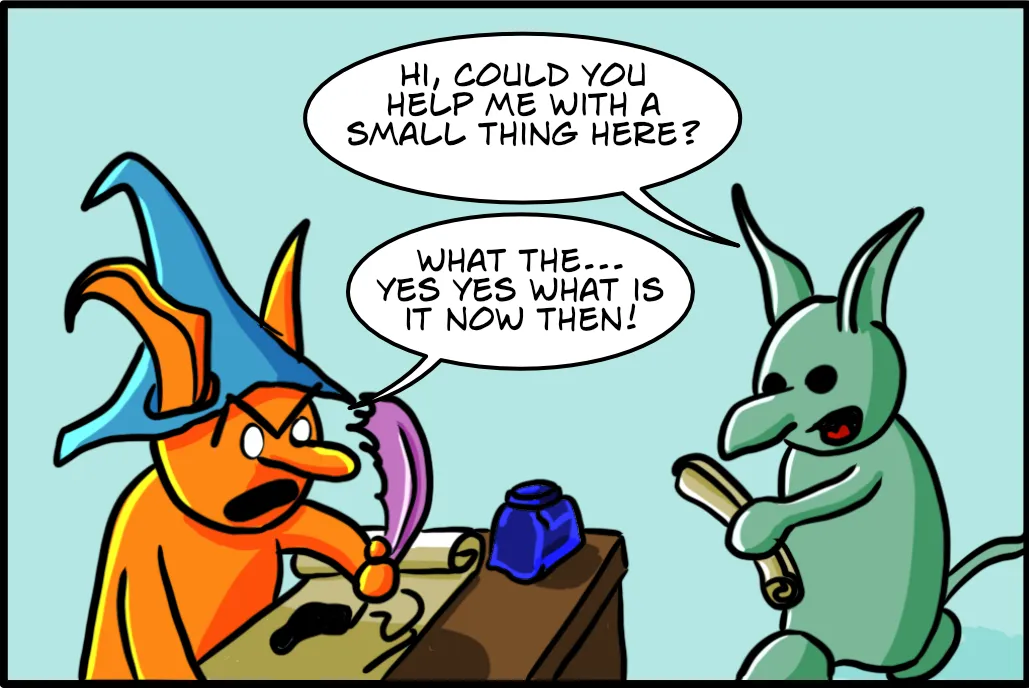
Panel 9. A third colleague: “Hi, could you help me with a small thing here?” The magician, angry, has spilled ink on the scroll: “What the... yes yes what is it now then!”

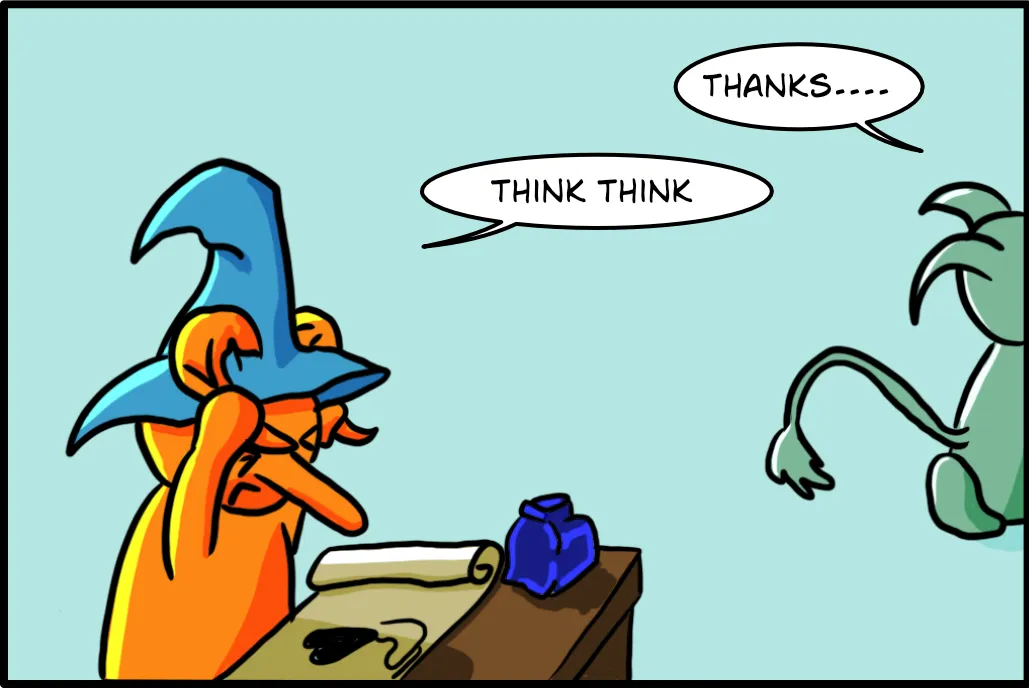
Panel 10. The magician holds his head: “Think think” The colleague, leaving: “Thanks....”

Panel 11. The magician writes grimly next to an ink blot. Someone with a mug appears at the edge.

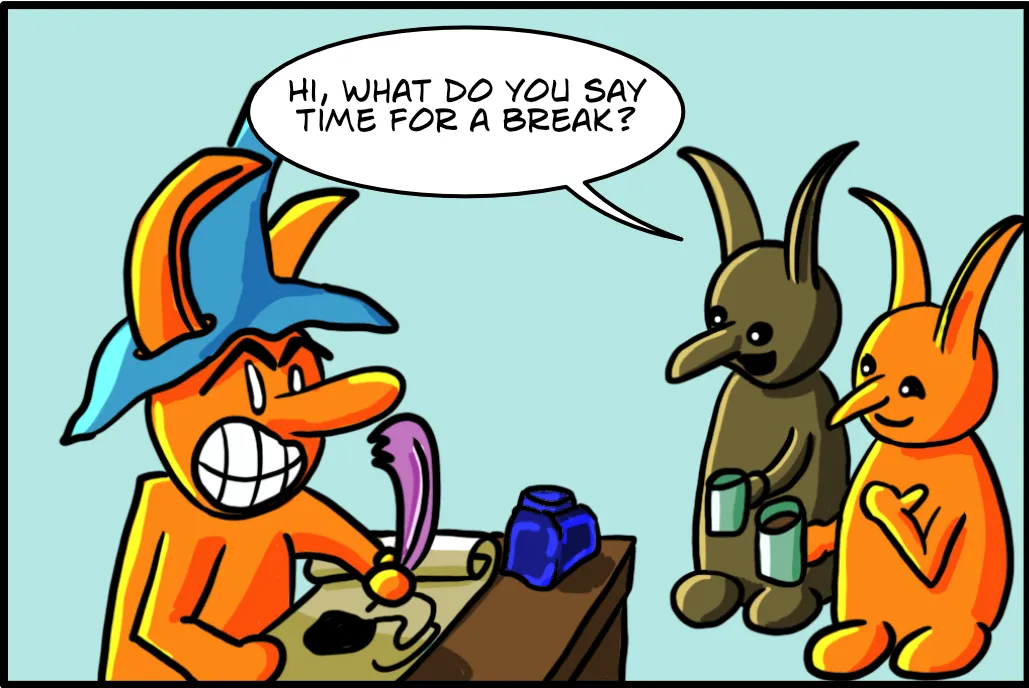
Panel 12. Two colleagues with mugs: “Hi, what do you say time for a break?” The magician grits his teeth.

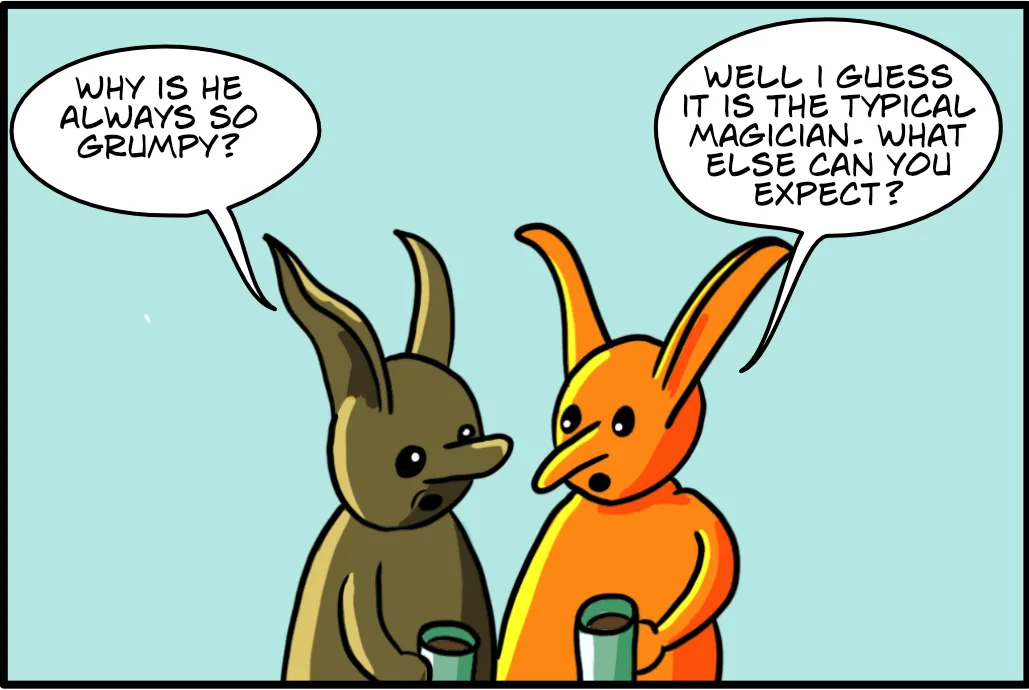
Panel 13. The two colleagues with their mugs. One: “Why is he always so grumpy?” The other: “Well I guess it is the typical magician. What else can you expect?”

Mistakes are easy to make, let's celebrate that

We often hear that you should be a learning organization but where does this learning take place? Learning is when you do things that you don’t fully master. It is here, on the boarder of your knowledge, right outside your safety zone, where you make mistakes. If you at that time acknowledge and reflect on your mistake it will turn into learning and you can start to form a new understanding. At the same time your safety zone will grow. If you on the other had shy away from the mistake no progress will be made. In an organization that helps each others to learn from the mistakes that is made the whole organization will benefit, this is a learning organization.

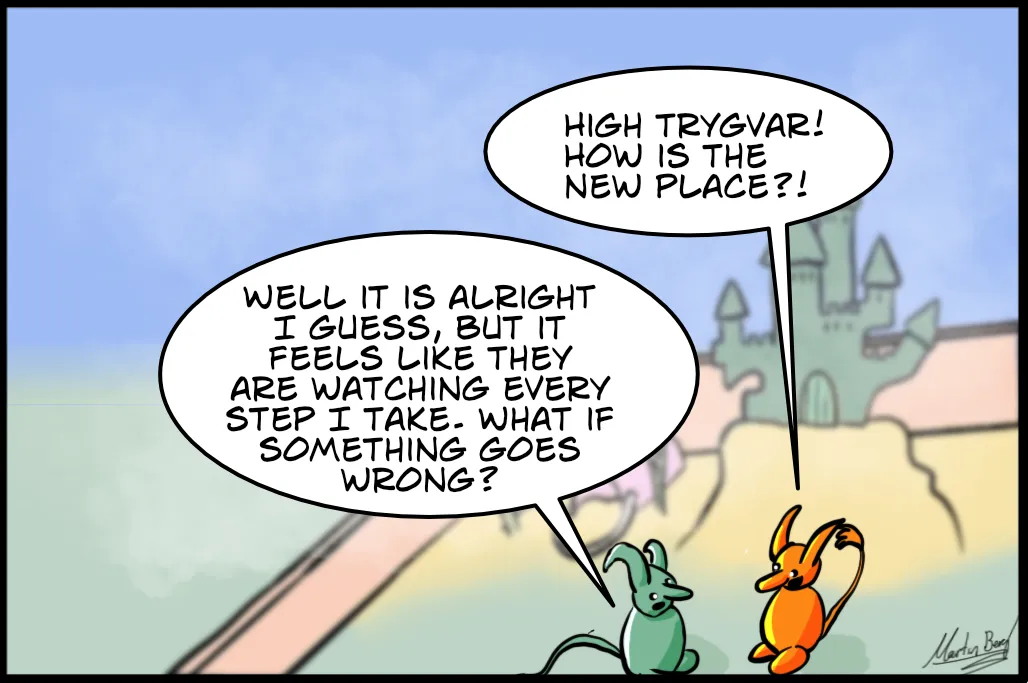
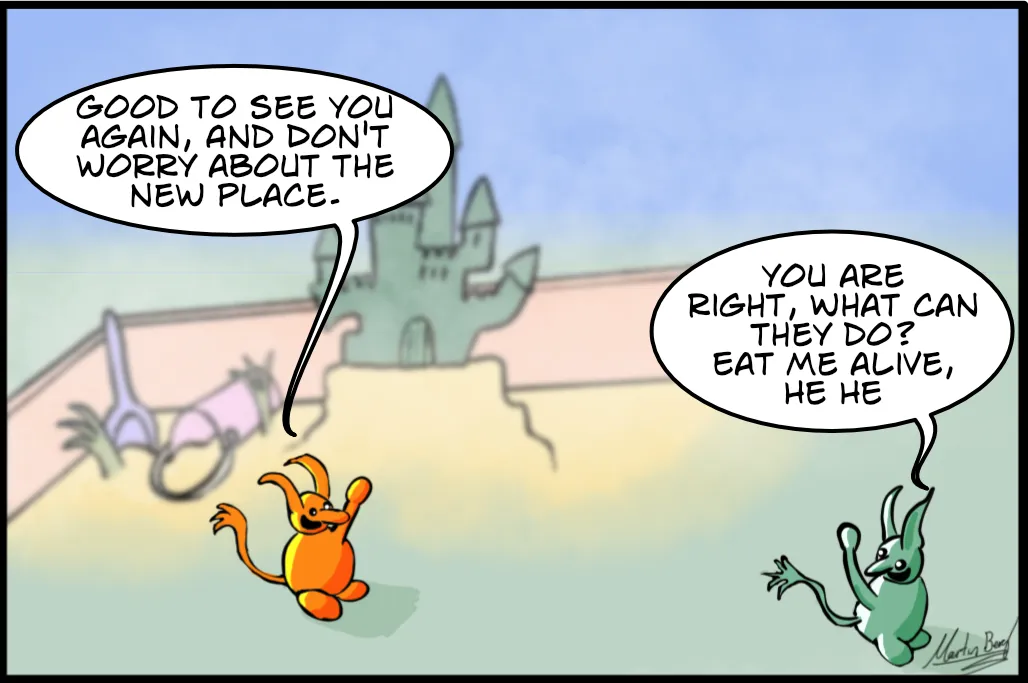
Comic, panel 1. Vige meets a small green figure, Trygvar, in front of a castle: “High Trygvar! How is the new place?!” Trygvar: “Well it is alright I guess, but it feels like they are watching every step I take. What if something goes wrong?”

Panel 2. Vige waves: “Good to see you again, and don’t worry about the new place.” Trygvar waves back: “You are right, what can they do? Eat me alive, he he”

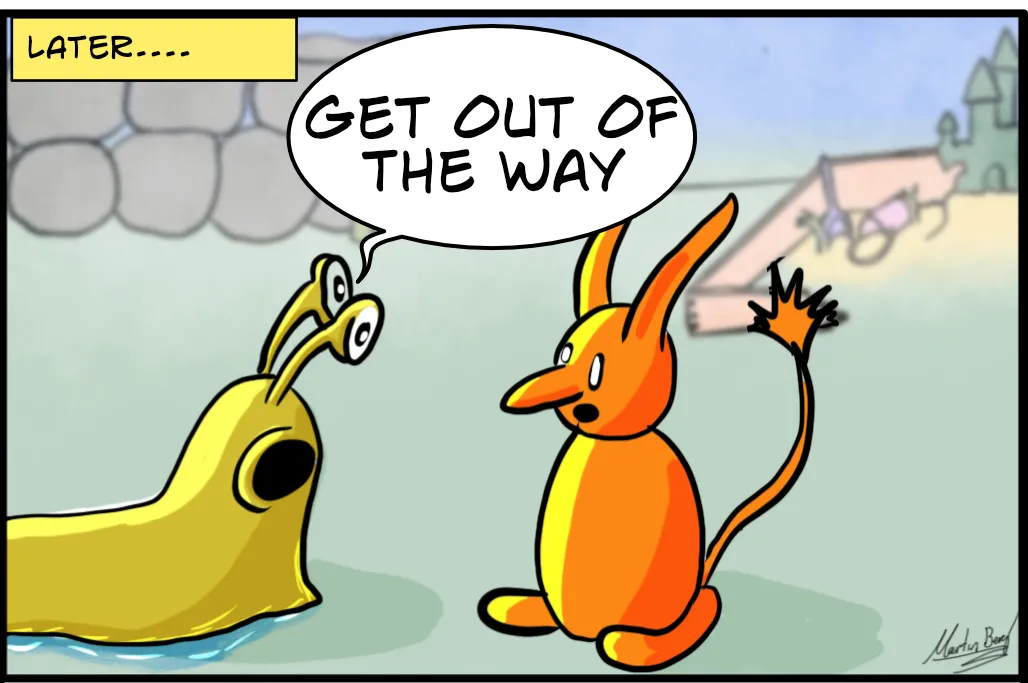
Panel 3. Caption: “Later....” A big yellow slug says to Vige: “Get out of the way”

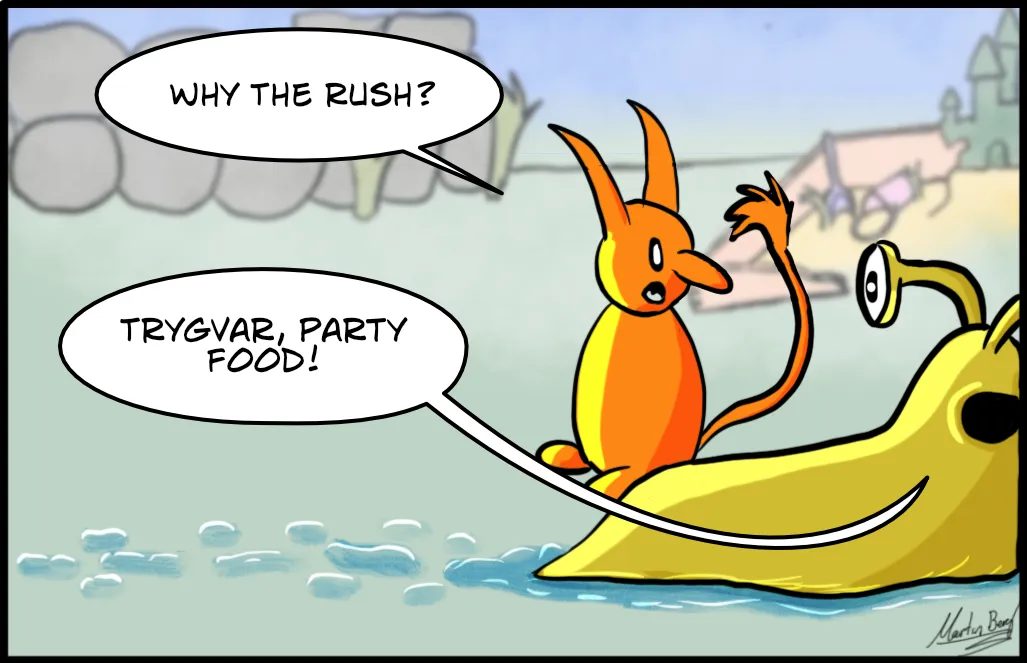
Panel 4. Vige: “Why the rush?” The slug, sliding past: “Trygvar, party food!”

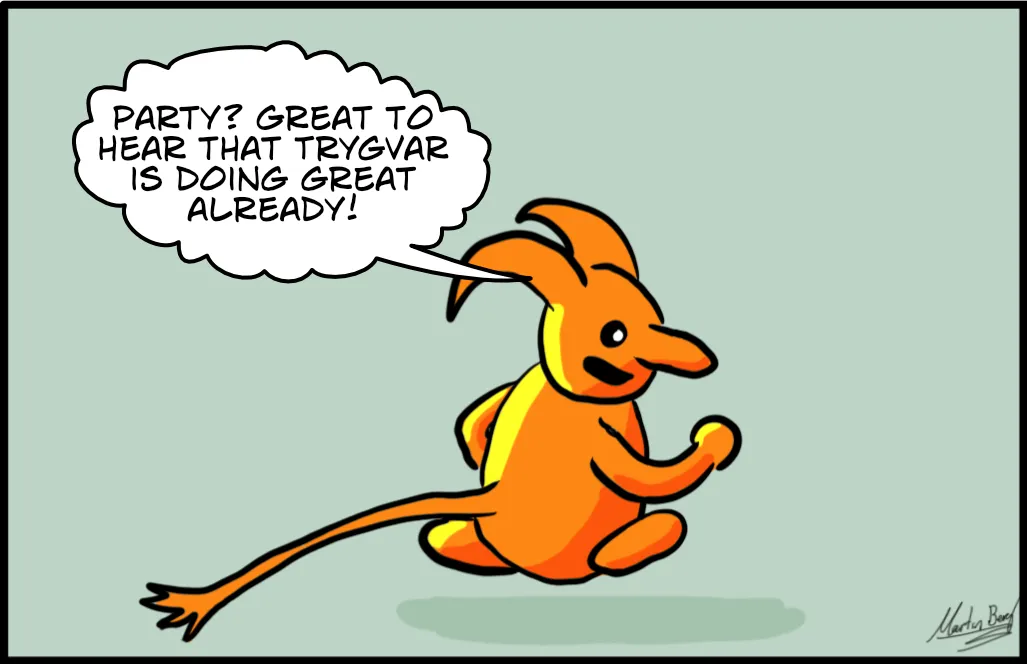
Panel 5. Vige runs off: “Party? Great to hear that Trygvar is doing great already!”

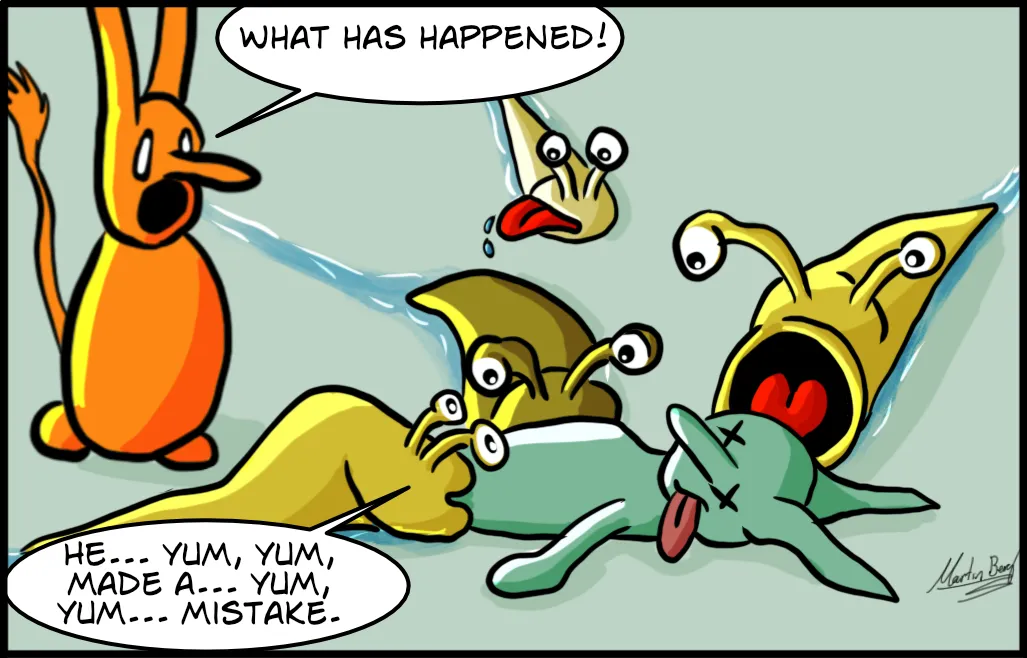
Panel 6. Vige, shocked: “What has happened!” Several slugs are eating the knocked-out Trygvar. One of them: “He... yum, yum, made a... yum, yum... mistake.”

Dependencies - be humble

In any type of development, or any form of complex systems, you will always have dependencies to others. Dependencies will be in the whole range, from the obvious to those that you only know when they hit you in the face. This is also the case for others that might have dependencies to you, so be humble and helpful when a dependency has been identified and try your best to help.

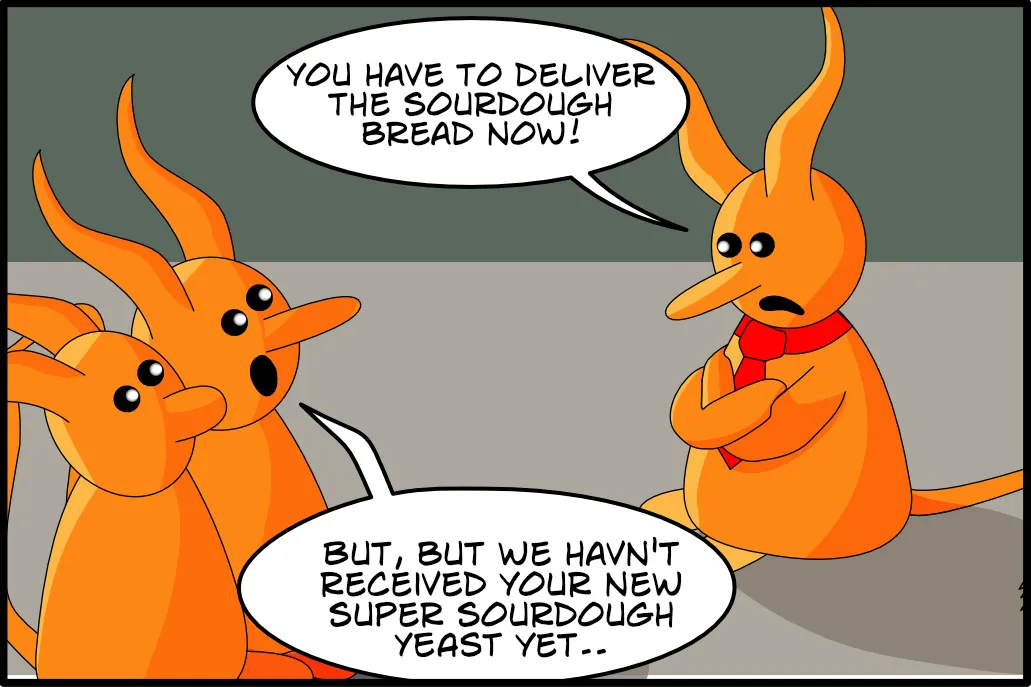
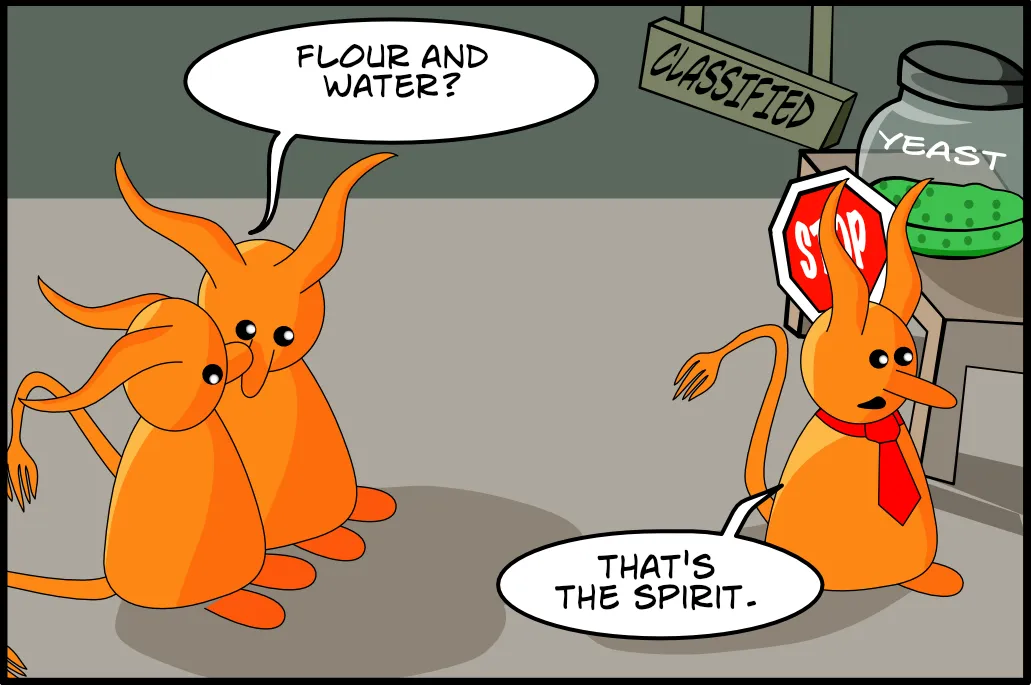
Comic, panel 1. A boss in a red tie with crossed arms: “You have to deliver the sourdough bread now!” Two bakers: “But, but we havn’t received your new super sourdough yeast yet..”

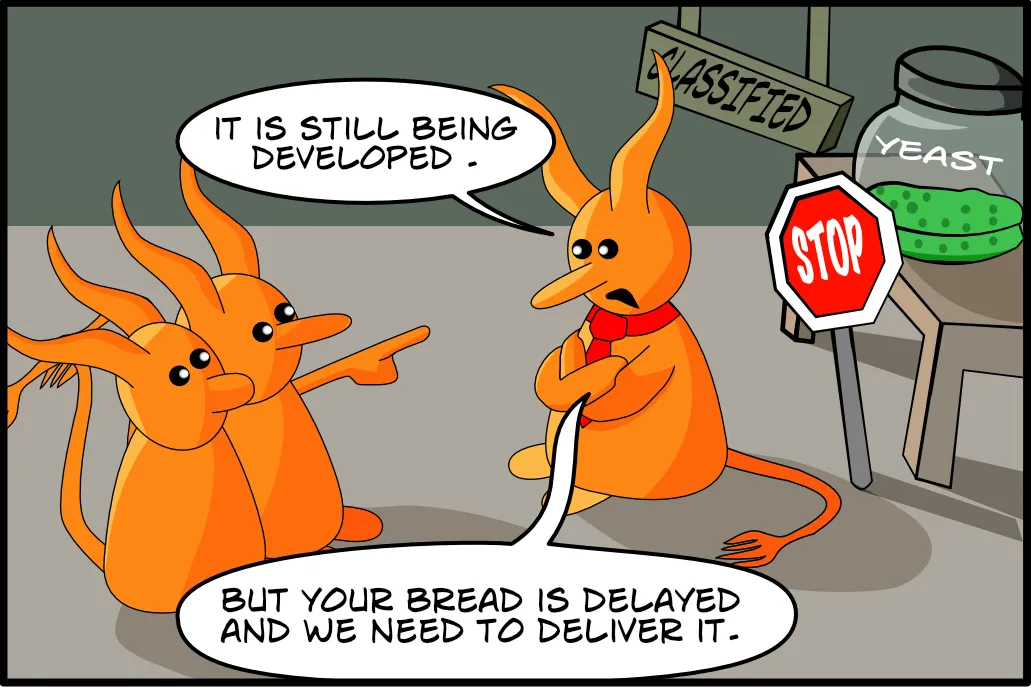
Panel 2. The boss stands in front of a jar of yeast with a stop sign and a sign saying “Classified”: “It is still being developed.” The bakers point at it: “But your bread is delayed and we need to deliver it.”

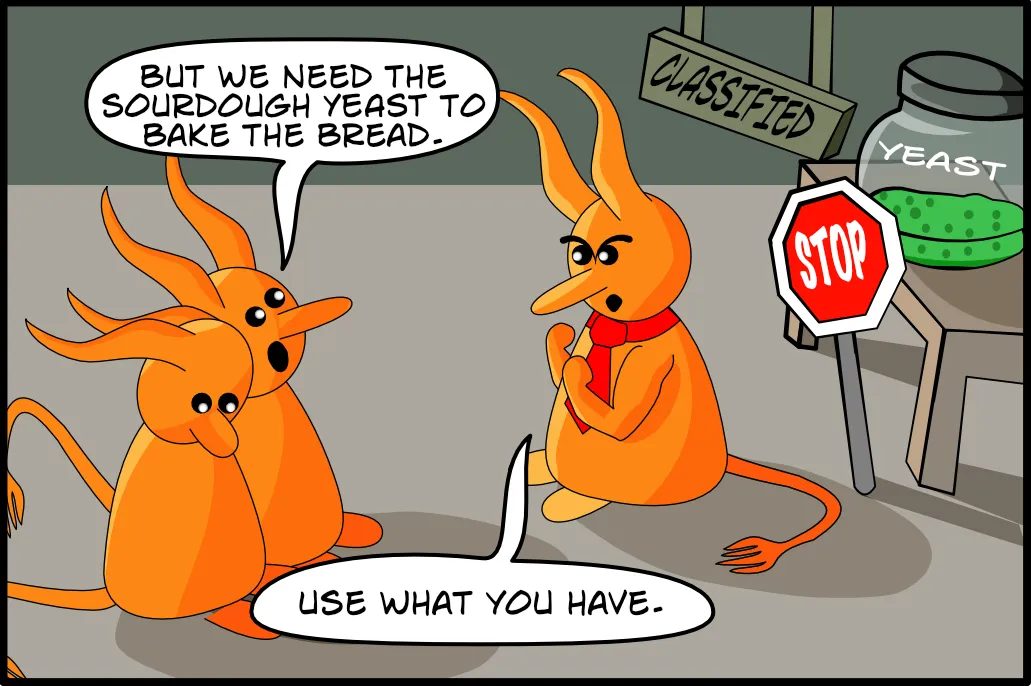
Panel 3. A baker: “But we need the sourdough yeast to bake the bread.” The boss, angry: “Use what you have.”

Panel 4. The bakers: “Flour and water?” The boss, walking off: “That’s the spirit.”