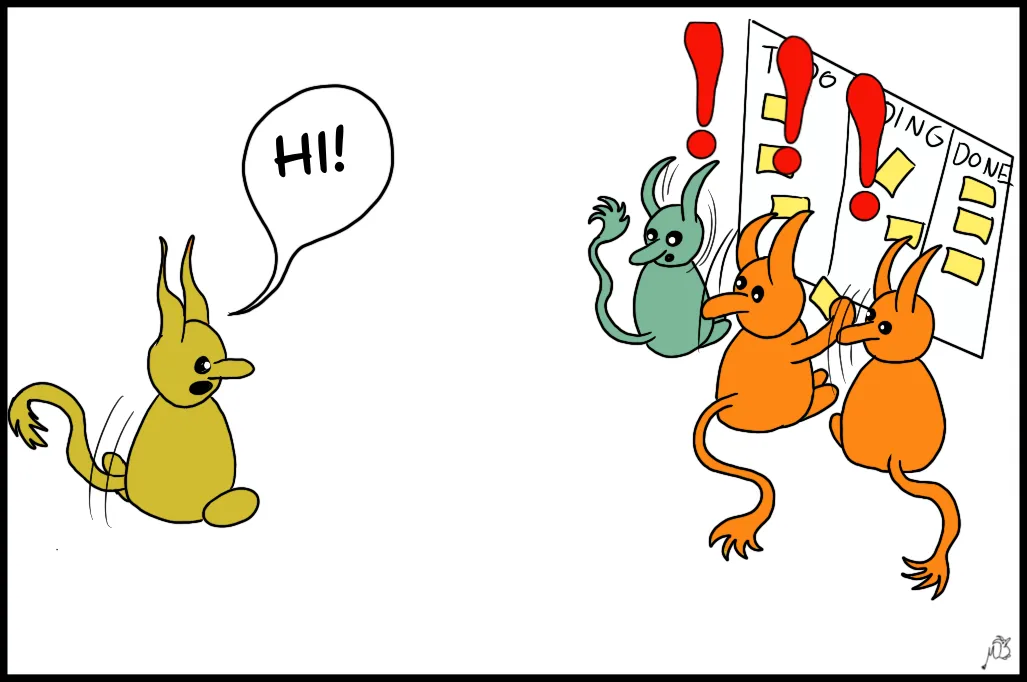
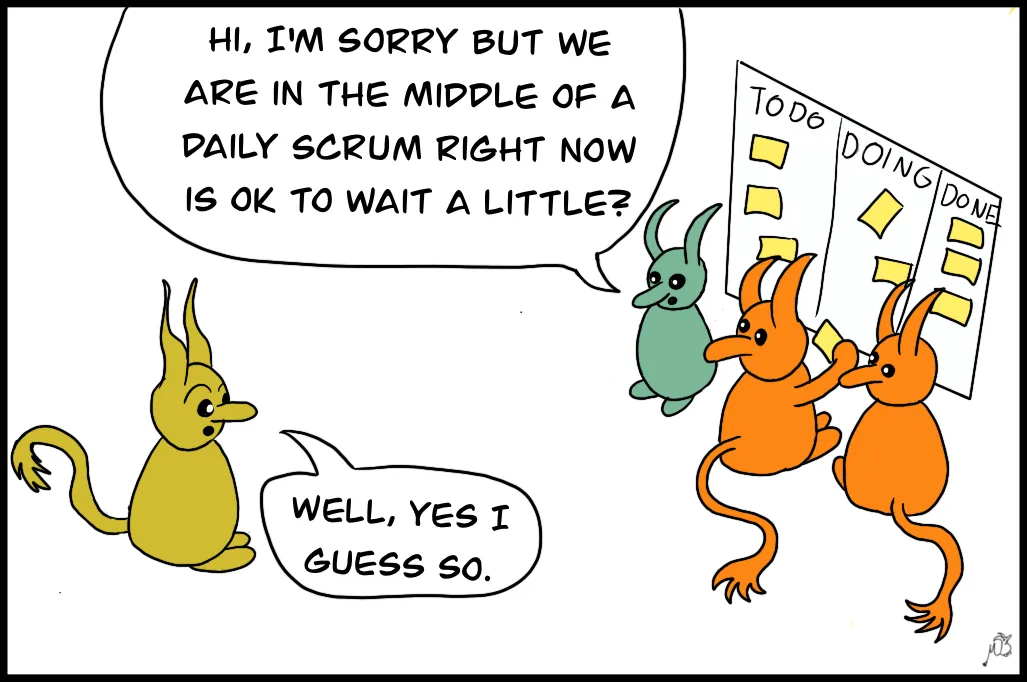
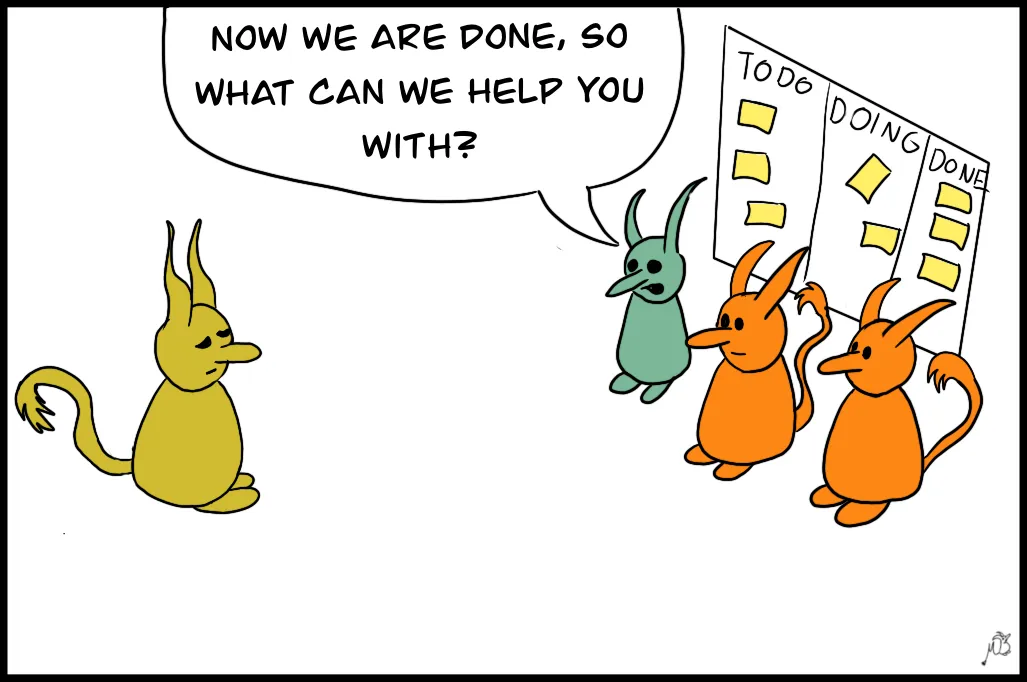
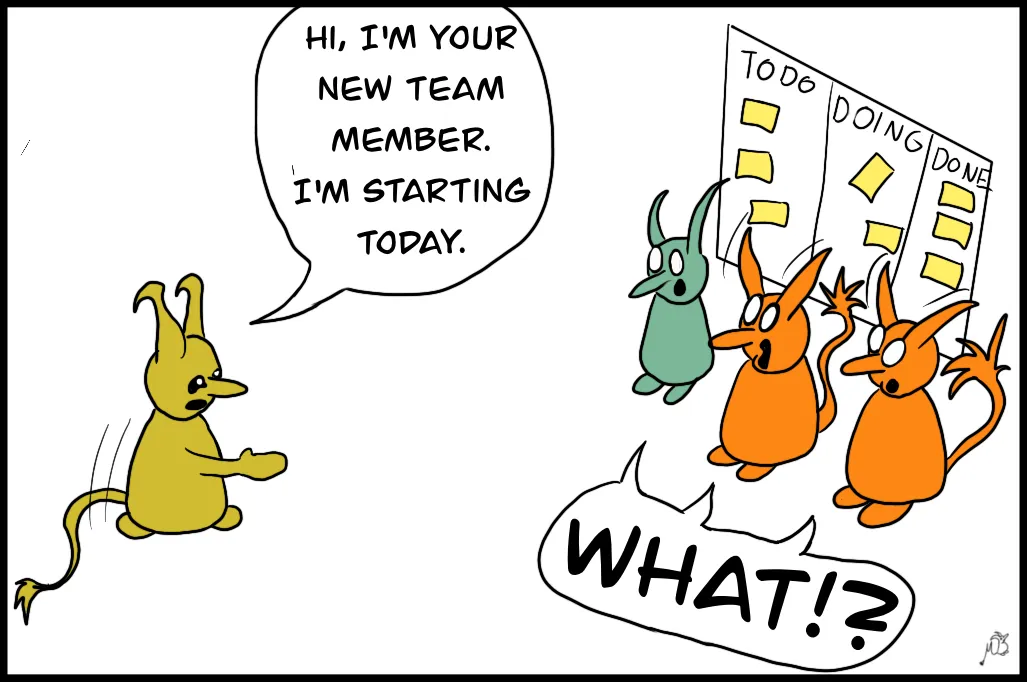
Onboarding with a surprise
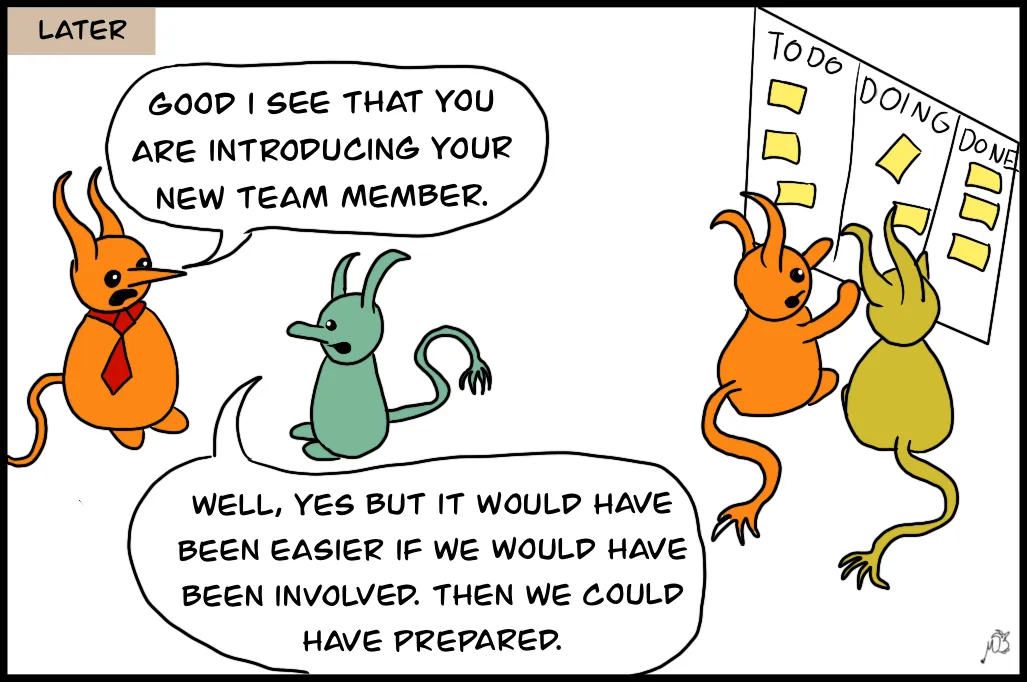
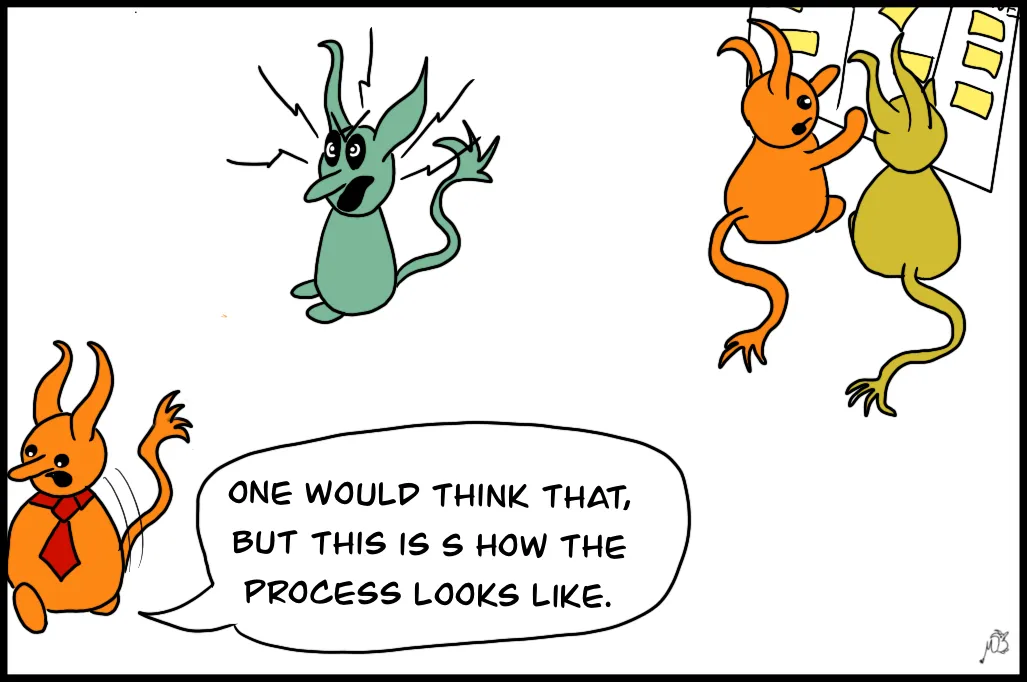
Most people in the agile community agrees that a fundamental concept is team autonomy*. But where is that degree of autonomy in regards of adding people to the team? This is a traditional HR responsibility and the recruitment process is often both time consuming and complex. To me the key word here is “complex”, thing that is complex needs more brains rather than pure specialist, or in other words multiple perspectives is better than one. Does that mean that everything should be done by the team then? No I don’t think so, this is a collaborative process, the knowledge from a person in HR gives a feeling of safety to the team, they provide important knowledge and experience to the process. It is the combination of perspectives and knowledges that gives the edge needed to navigate the recruitment. In the picture “Recruiting in VUCA in a nutshell” put together by Nils Hallén, Thomas Eklöf, Mia Kolmodin, Björn Sandberg, and Frida Mangen, and recently presented in the Swedish podcast Agile HR podden, you can find the statement “from specialist doing all recruiting to facilitator of the process.” and I think that gives a good input on how I view this, HR and Scrum Master/Agile coach can collaboratively, with their knowledge, facilitate the recruitment together with the team.
* LeSS about autonomous teams “The Team …. is “self-organizing” (self-managing), with a very high degree of autonomy and accountability.” - https://less.works/less/scrum/roles.html
* SAFe about autonomous teams “Provide Autonomy with Purpose, Mission, and Minimum Possible Constraints - Pink asserts that knowledge workers have a need for autonomy—the ability to self-direct and to manage their own lives. Providing autonomy, while harnessing it to the larger aim of the enterprise, is an important leadership responsibility [1]” - https://www.scaledagileframework.com/unlock-the-intrinsic-motivation-of-knowledge-workers/